
Chronologically, we return to Matthew's text. We have already noted the preceding passages. The passage in Matthew 12.1-8 was classified under pericope PER076, that in Matthew 12.9-13 under pericope PER077, Matthew 12.14-15 under pericope PER078, and finally, Matthew 12.15-21 under pericope PER079.
The word "then" in this context does not connect this event to the preceding passage in which Jesus quotes Isaiah, but to another, unknown event. Matthew does not strictly follow the sequence of events, preferring to record information that supports his argument.
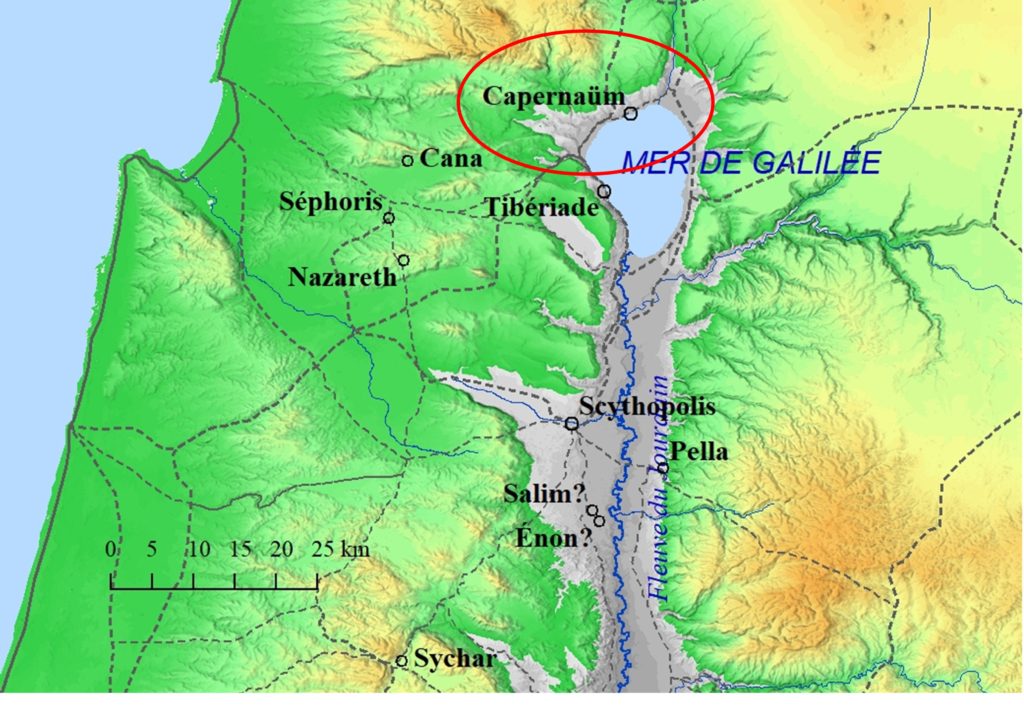
As for the location, the information provided by Mark 3.20-71 and its connection with the text of Matthew 12.24-30 allows us to conclude that Jesus the Messiah has now returned to Capernaum (PER121, PER122, PER123 and PER124).
It is now October or November, when temperatures begin to fall, making sleeping outdoors more difficult.
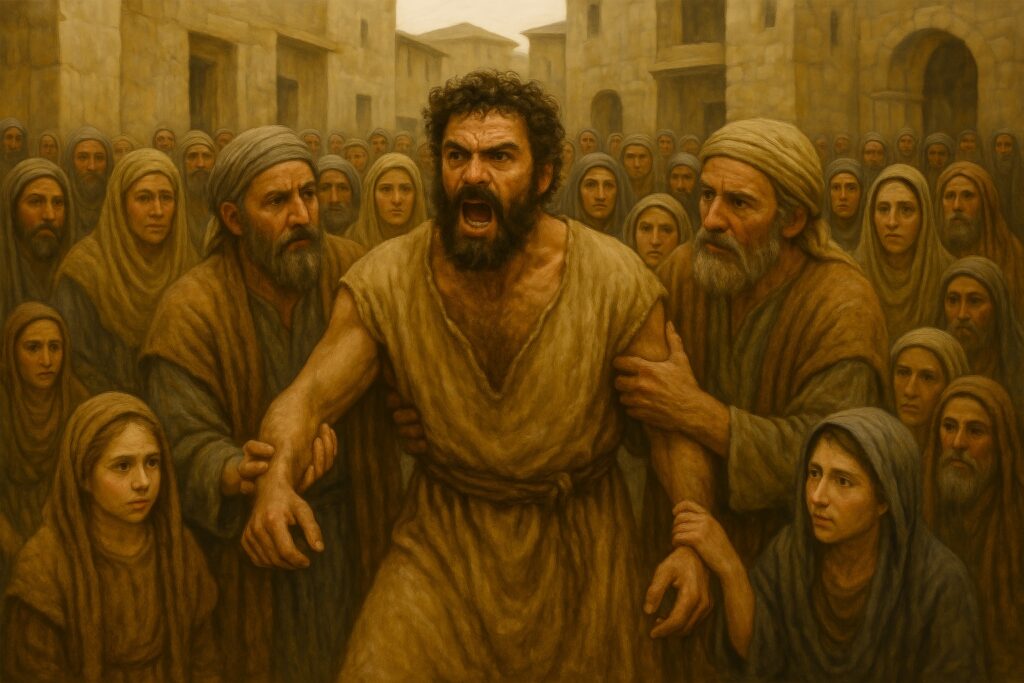
This passage illustrates an important phase in the ministry of Jesus the Messiah. It reveals the changing opinions of the , who eventually acknowledge that the miracles performed by Jesus cannot be attributed to a mere man. Yet instead of acknowledging God's work, they prefer to attribute it to Satan.
Jesus the Messiah will denounce this groundless position adopted by some . It is important to emphasize that this criticism is directed only at some of the , rather than all of them.
The accusation made by the is exceptionally serious. Jesus the Messiah quickly addresses this issue, which he calls blasphemy against the Holy Spirit (PER122).
Faced with an increasingly complex situation, Jesus adapts his approach to evangelism by using to convey his message. This approach allows each person to understand according to their own feelings and perceptions.