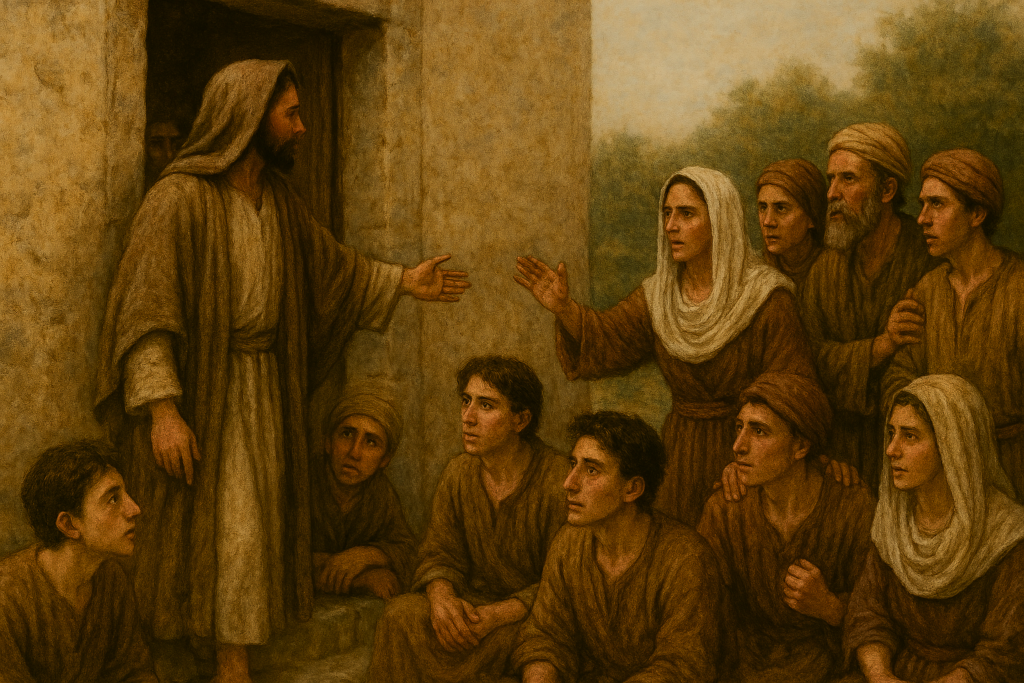


Mark refers to a particular house in Capernaum, probably made available by the disciples, where Jesus could rest. This was where the disciples would join him.
Local residents also knew this house and gathered around Jesus the Messiah, so that the constant demands left him no time to eat. This success seems to have encouraged the to try to discredit Jesus out of jealousy.
This situation may explain why Mark reported the views of Jesus' family. One particular point about the Master's family deserves emphasis: they considered him mentally unstable. The opposition of the that Jesus faces seems to affect his family, who feel compelled to distance themselves to avoid reprisals of the authorities.
We are told that they wanted to seize him, apparently to take him back to Nazareth.
These statements probably came from Jesus' half-brothers and half-sisters. Given Mary's understanding of her son's destiny, it seems unlikely that she would have approved such a statement. We believe she was absent.
Those concerned, who came from Nazareth, had been brought by the Jewish religious authorities. How should he respond to this situation? In this atmosphere of conflict, it could be interpreted as an attempt at strategic manipulation.
After the resurrection, several of these half-brothers would be converted. As for his half-sisters, there is no specific information about what became of them; we may suppose that they could have followed a similar path.
We wish to add this observation: Jesus' family, aware of the worsening situation and the power of the to condemn him to death, may have tried to find a way to protect him. The claim of madness could then serve as an excuse.