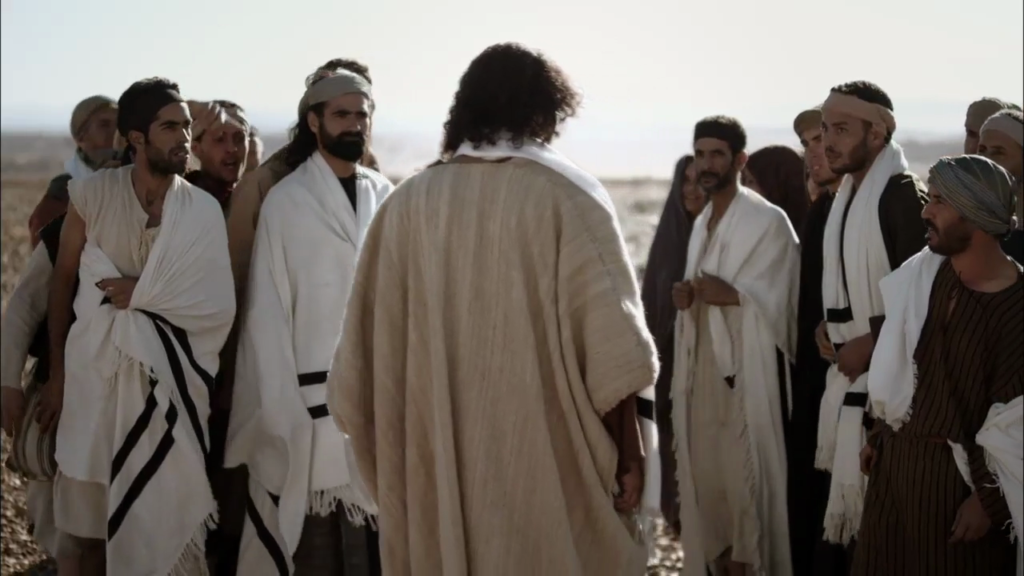
The article examines Jesus’ use of parables, defined as symbolic spiritual narratives. Used to teach profound truths, parables also served to circumvent hostile opposition. This method enabled Jesus to convey his teachings effectively to those sincerely seeking the truth.
368 min
parablesJesusteachingspiritualallegory
524 verses
9 books
Jesus used parables to teach, a figurative language that may seem obscure today. This study will seek to understand his reasons and when he adopted this form of expression, and to distinguish true parables from simple metaphors in order to draw up a complete list.
Full text:
Jesus the Messiah often used parables to address his listeners, a style of communication that seems rather unusual to us today.
With this type of language, was he clearly seeking to make himself understood by his audience?
Could the use of figurative expression affect understanding?
We might even have the impression that the parable is a form of coded language whose meaning is reserved exclusively for the initiated.
In this study, we will seek to understand why Jesus the Messiah chose to communicate through parables, and also when he began to use this form of expression.
We will draw up an exhaustive list of parables, recognising the difficulty of deciding whether to call short texts that are merely metaphors parables.
I. Definition of a parable
Paragraph summary:
The French word parabole denotes both a symbolic story with a moral or spiritual meaning and a specific geometric figure. In the Bible and literature, a parable is a simple, familiar story with a profound meaning: its “body” is the accessible narrative, its “soul” the hidden teaching. It reveals while concealing, offering truth to those able to receive it, as in the parables of Jesus the Messiah. Derived from the Greek parabolê (“comparison”), it brings a heavenly reality alongside an everyday scene. By extension, “speaking in parables” means expressing oneself indirectly or enigmatically.
Full text:
A parable is an allegorical narrative with a moral or spiritual purpose, while the French word parabole also denotes a geometric figure with precise mathematical properties. The term therefore carries rich and distinct meanings in different fields.
Literary and theological meaning
In religion and literature, a parable is a symbolic story, often brief and familiar, that conveys moral or spiritual teaching through images drawn from everyday life. It differs from allegory through its narrative simplicity and its capacity to invite a reading on two levels:
The “body” of the parable is the story itself, accessible to everyone and often drawn from common experiences (sowing, banquets, journeys, and so on).
The “soul” of the parable is the hidden teaching, which requires attention and discernment to grasp.
In the biblical tradition, particularly among the prophets and in the Gospels, the parable is used to conceal while revealing: it reveals a truth to those ready to hear it, while hiding it from those who are not. Jesus the Messiah uses it extensively, as in the parables of the good , the prodigal son and the sower.
The Greek etymology parabolê (παραβολή) means “comparison” or “placing alongside”, highlighting its teaching function: bringing a heavenly or moral reality alongside an earthly situation to make it easier to understand.
Figurative use
In everyday language, “speaking in parables” means expressing oneself indirectly or enigmatically, often to avoid a direct statement or to encourage reflection
II. When did Jesus the Messiah use parables?
Paragraph summary:
Jesus begins his ministry by speaking directly and accessibly, but a turning point comes when he suddenly adopts the language of parables. This change surprises his disciples and is explained by the growing opposition of the religious authorities described in Matthew 12.
Faced with this hostility, Jesus uses parables for a dual purpose: to reveal the truth to those sincerely seeking it and to conceal it from his opponents. This shift, beginning in Capernaum with the parable of the sower, marks a decisive stage in his teaching approach, adapted to the new circumstances of his ministry.
Full text:
We thus observe a clear development in the way Jesus the Messiah conveys his teaching. During an initial period of his ministry, he spoke directly, using everyday language that made the spiritual realities he proclaimed accessible to everyone. However, a sudden turning point comes: to the general surprise of the disciples and apostles, Jesus the Messiah now adopts figurative language, that of parables.
This transition in his form of expression does not escape the notice of those close to him, who wonder why he has changed. Their surprise highlights how sharply this sudden use of parables differs from the direct method they were used to. The reasons that led Jesus the Messiah to alter his teaching approach thus remain central to understanding the scope and meaning of his teachings at this stage of his ministry.
Matthew’s Gospel sheds light on the circumstances surrounding the first parable, that of the sower (Matthew 13.1-23). Before this episode, chapter 12 reveals a change in attitude among the opponents of Jesus the Messiah, mainly the , the teachers of the law, and part of the crowd influenced by these religious leaders.
This context of growing opposition, described in detail in chapter 12, helps us understand why Jesus the Messiah chooses to use parables at this precise moment, beginning this new form of teaching with the parable of the sower. This shift to communicating through parables is significant: it responds to the increasing challenges orchestrated by the religious authorities and their manipulation of part of the crowd.
From then on, the parable becomes a dual-purpose tool: it enables Jesus the Messiah to convey his teaching to those sincerely seeking to understand, while concealing the deeper meaning of his words from opponents seeking to trap him. This shift occurs precisely in Capernaum, when the renown of Jesus the Messiah reaches its height and his opponents are actively organising to counter his influence.
The use of parables thus appears as a strategy perfectly suited to the new reality of the ministry of Jesus the Messiah. This choice marks a decisive stage in how he addresses his audience, responding both to the disciples’ needs and to the challenges posed by his opponents.
III. The disciples’ question
Paragraph summary:
The disciples, accustomed to direct teaching, are bewildered by the sudden use of parables. Unable to grasp their meaning—particularly that of the sower—they question Jesus about this change. Matthew thus highlights their lack of understanding and the importance of grasping the deeper reasons behind this new teaching approach.
Full text:
The change in the teaching approach of Jesus the Messiah does not leave his disciples unmoved. Accustomed to direct teaching, they are bewildered by the sudden appearance of parables in his discourse. Their surprise is clear, as they encounter a form of expression they were not used to.
Matthew describes this lack of understanding precisely. The perplexed disciples decide to question their Master to understand why he speaks in this indirect way. They therefore approach him and ask:
Matthew 13.10 (King James Version) :
And the disciples came, and said unto him, Why speakest thou unto them in parables?
King James Version (1769), domaine public — texte : eBible.org
The to this question, as recounted in Matthew 13.10-16, is particularly important. It brings to light the deeper reasons for using parables and clarifies the teaching purpose behind this choice. This explanation will be examined in greater detail later.
The disciples of Jesus the Messiah are not unfamiliar with parables: they know that teachers of the law frequently used this kind of teaching when speaking. What deeply surprises them, however, is that their Master, who until then had customarily used simple, direct language, suddenly adopts this figurative form of expression. This change in teaching approach seems all the more bewildering because they understand neither its reason nor its significance.
Faced with the parable of the sower, the disciples are at a loss. Not only do they fail to understand its deeper meaning, but they also remain perplexed by this unexpected change in the way Jesus the Messiah teaches. This lack of understanding leads them to question their Master later in the day, seeking a clear explanation of the parable’s meaning.
The fact that Matthew recounts this episode precisely highlights the unease this change of strategy caused, both among the disciples as a whole and in Matthew himself. The account thus brings out the impact of this teaching transition and the importance the disciples placed on understanding Jesus’ teachings.
IV. The Master’s answer
Paragraph summary:
Jesus the Messiah explains that parables reveal the truth to those whose hearts are receptive, while concealing it from those who reject it. This deliberate teaching choice distinguishes two kinds of listeners and fulfils Isaiah’s prophecy, highlighting the continuity between his teaching and Scripture.
Full text:
The Master’s answer seems unusual.
Matthew 13.11-17 (King James Version) :
He answered and said unto them, Because it is given unto you to know the mysteries of the kingdom of heaven, but to them it is not given.For whosoever hath, to him shall be given, and he shall have more abundance: but whosoever hath not, from him shall be taken away even that he hath.Therefore speak I to them in parables: because they seeing see not; and hearing they hear not, neither do they understand.And in them is fulfilled the prophecy of Esaias, which saith, By hearing ye shall hear, and shall not understand; and seeing ye shall see, and shall not perceive:For this people’s heart is waxed gross, and their ears are dull of hearing, and their eyes they have closed; lest at any time they should see with their eyes, and hear with their ears, and should understand with their heart, and should be converted, and I should heal them.But blessed are your eyes, for they see: and your ears, for they hear.For verily I say unto you, That many prophets and righteous men have desired to see those things which ye see, and have not seen them; and to hear those things which ye hear, and have not heard them.
King James Version (1769), domaine public — texte : eBible.org
Mark 4.11-12 (King James Version) :
And he said unto them, Unto you it is given to know the mystery of the kingdom of God: but unto them that are without, all these things are done in parables:That seeing they may see, and not perceive; and hearing they may hear, and not understand; lest at any time they should be converted, and their sins should be forgiven them.
King James Version (1769), domaine public — texte : eBible.org
In his answer to his disciples, Jesus the Messiah does not emphasise the overt or aggressive opposition of the religious authorities. He simply stresses that his teaching is intended for a particular audience: those who are receptive and well disposed, namely his disciples, rather than others such as the hypocritical . His message is thus not accessible to everyone; it is aimed specifically at those whose hearts are open to understanding, while remaining hidden from those who refuse to receive it.
This principle, clearly stated by Jesus the Messiah, establishes a clear distinction between two categories of people. The parables are deliberately designed to enlighten some while remaining obscure to others. There is nothing accidental about this approach: Jesus the Messiah fully embraces this teaching choice, in which the clarity of his message depends on his listeners’ inward disposition.
Furthermore, Jesus the Messiah draws on a prophecy of Isaiah to support his words. Faithful to his approach of highlighting the links between the Master’s life and the words of the prophets, Matthew emphasises this parallel. He thus shows the continuity between the teaching of Jesus the Messiah and the fulfilment of Scripture, demonstrating that this way of teaching through parables forms part of an already announced prophetic perspective.
V. The fulfilment of a prophecy
Paragraph summary:
Parables already existed in the biblical tradition, particularly in Asaph’s Psalms. Jesus continues this tradition: he uses parables to reveal the truth to receptive hearts and conceal it from those who refuse to hear, thus fulfilling Isaiah’s prophecies. This method becomes a sign of judgment for a hardened people, while revelation remains accessible to those who truly wish to listen.
Full text:
The book of Psalms explicitly mentions the use of parables, showing that this form of expression was not only known but also recognised within the biblical tradition. This reference shows that parables did not originate in the time of Jesus the Messiah, but belong to an older historical continuity. The Psalms already used this method to convey wisdom and teachings, illustrating the use of indirect, symbolic teaching to reach the listener at a deeper level.
Psalms 78.1-2 (King James Version) :
Give ear, O my people, to my law: incline your ears to the words of my mouth.aNoteMaschil…: or, A Psalm for Asaph to give instructionI will open my mouth in a parable: I will utter dark sayings of old:
King James Version (1769), domaine public — texte : eBible.org
Matthew 13.34-35 (King James Version) :
All these things spake Jesus unto the multitude in parables; and without a parable spake he not unto them:That it might be fulfilled which was spoken by the prophet, saying, I will open my mouth in parables; I will utter things which have been kept secret from the foundation of the world.
King James Version (1769), domaine public — texte : eBible.org
Luke 8.9-10 (King James Version) :
And his disciples asked him, saying, What might this parable be?And he said, Unto you it is given to know the mysteries of the kingdom of God: but to others in parables; that seeing they might not see, and hearing they might not understand.
King James Version (1769), domaine public — texte : eBible.org
Matthew, addressing his Jewish contemporaries, seeks to show the continuities between the deeds of Jesus the Messiah and Old Testament prophecies. Here he therefore refers to Asaph, a Levite and son of Berechiah, whom King David had appointed chief of the singers responsible for music in the Temple in Jerusalem. Asaph, recognised as the author of several psalms, including Psalm 50 and Psalms 73 to 83, embodies the enduring prophetic and musical tradition in Israel’s history.
It is therefore clear that expression through parables did not originate in the time of Jesus the Messiah. This method was already used in King David’s time, about a thousand years before the Messiah’s coming. Jesus thus develops an existing principle rather than introducing an entirely new mode of communication. Matthew, recounting the words of Jesus the Messiah, also establishes a link with the prophet Isaiah, highlighting the consistency between the teaching of Jesus the Messiah and the prophetic tradition passed down through the generations.
This consistency is clearly shown in the following quotation, where Jesus the Messiah states:
Matthew 13.14 (King James Version) :
And in them is fulfilled the prophecy of Esaias, which saith, By hearing ye shall hear, and shall not understand; and seeing ye shall see, and shall not perceive:
King James Version (1769), domaine public — texte : eBible.org
Through this reference, he explains why he uses parables: he does so because of the hardening of the people’s hearts, as they refuse to see and understand.
The source of this quotation is found in:
Isaiah 6.9-10 (King James Version) :
And he said, Go, and tell this people, Hear ye indeed, but understand not; and see ye indeed, but perceive not.aNoteindeed, but understand: or, without ceasing, etc: Heb. in hearing, etcbNoteutterly…: Heb. desolate with desolationMake the heart of this people fat, and make their ears heavy, and shut their eyes; lest they see with their eyes, and hear with their ears, and understand with their heart, and convert, and be healed.
King James Version (1769), domaine public — texte : eBible.org
In the context of the book of Isaiah, this prophetic form is paradoxical: it involves proclaiming a message that will not be received, which becomes the sign of divine judgment on the people’s hardening.
Jesus the Messiah therefore takes up this prophecy to justify his use of parables: their function is to reveal the truth to the humble while remaining veiled to those whose hearts are closed. This quotation thus becomes pivotal to understanding the biblical text, linking Isaiah’s mission to that of Jesus the Messiah. It brings to light the tension between divine revelation and humanity’s wilful blindness.
In the prophecy of Isaiah 6.9-10, there is clear reference to a punishment resulting from the attitude adopted by the people. This judgment is expressed in the fact that, faced with their persistent refusal to listen to the divine voice, God chooses no longer to impose his words on those who reject them. In other words, having decided to stop paying attention to the message conveyed, the people now face a form of silence God: he will not force them to hear what they no longer wish to receive.
However, this withdrawal does not prevent the proclamation of the message. God continues to speak his word, but only those who show a real willingness to listen and understand will perceive its meaning. This principle emphasises the voluntary dimension of spiritual listening: revelation remains accessible, but is understood only by those who open their hearts and minds to the message offered.
VI. The parable as a literary form
Paragraph summary:
Parables, frequent in the Gospels, are short stories rooted in everyday life that convey spiritual teaching. Inherited from a long rabbinic tradition, they offer a lively, memorable teaching approach that Jesus the Messiah perfected.
Their strength lies in the central image; grasping the essence of the message does not require interpreting every detail.
Full text:
The parable is a form of expression frequently used in the Gospels, with around forty-two occurrences recorded in Holy Scripture. It is a brief story, rooted in everyday situations, intended to illustrate a teaching, most often spiritual in nature. Unlike the fable, which readily draws on the imaginary or supernatural, the parable remains firmly attached to concrete reality.
This method allows for a more engaging and lively presentation than a traditional academic demonstration. It also makes it possible to deliver judgments or teachings that may be difficult to hear. By using this form of communication, Jesus the Messiah thus sought to make a lasting impression on his listeners.
This teaching dimension echoes an insight found in the famous saying attributed to Napoleon Bonaparte: “A good sketch is better than a long speech.” The saying highlights how an image or visual representation can sometimes express a concept more clearly than a detailed spoken description. This perspective emphasises the impact and power of visualisation in conveying complex ideas, thus underlining the role of imagery in communication.
In the time of Jesus the Messiah, a parable could be compared to a simple diagram. Listeners could thus easily picture the situations described, strengthening the message’s impact and helping them remember it.
Jesus the Messiah is recognised for his exceptional communication skills, as John 7.46 attests. His use of parables belongs to an already well-established tradition: at that time, rabbinic literature listed nearly 4,000 parables. Rabbis frequently used this method to instruct an often illiterate audience, generally concluding their teachings with one or two parables to make them easier to understand.
The teaching approach of Jesus the Messiah thus continues an existing concept. He would perfect this method to make his teachings accessible to all who were well disposed and to imprint them enduringly on his listeners’ memories.
Although Jesus the Messiah did not originate the use of parables, he used them extensively and perfected them, particularly during the second half of his ministry. Today, the term “parable” is generally associated with the Gospels.
It is essential not to try to connect every detail of a parable to non-existent prior events, as this would project personal interpretations onto the text. Just as an observer may discern elements in a work of art that the artist had not envisaged, it is vital, when studying parables, to focus on the central idea. Moving away from this focus can lead to mistaken interpretations and divert attention from the true teaching conveyed.
VII. The parable frequently used by Jesus the Messiah.
Paragraph summary:
The Gospels contain around forty-two parables, but only twenty-one are explicitly named as such. The rest depend on scholarly interpretation, which explains variations in the lists. John’s Gospel contains none, and metaphors that are too short are excluded from this classification.
Full text:
The Gospels record around forty-two distinct parables. However, it is important to emphasise that an exhaustive list reveals differences in scholarly judgment. Of these stories, only twenty-one are explicitly identified as parables in the text, while the others, though often regarded as such, fall within a broader and less formal classification.
This distinction explains the considerable variation in the total number of parables found in the Gospels, since counting them relies mainly on scholarly analysis and interpretation. It should also be clarified that the Gospel according to John contains no parables. Finally, some very brief metaphors are excluded from this classification, in accordance with our analyses and adopted conclusions.
VIII. List of parables explicitly identified as such in the text
Paragraph summary:
Twenty-three stories are explicitly called parables in the Bible, but some do not fully meet the criteria of the genre. Other texts of Jesus, although not named “parables”, adopt their structure and can be interpreted as such.
Full text:
Here is a selection of parables of Jesus the Messiah in the Gospels where the text explicitly states that it is a parable (often introduced by expressions such as “He told them this parable” or “He put another parable before them”):
Parables explicitly identified in the Gospels
1/ PAR001 – The sower — Matthew 13.3, Mark 4.2, Luke 8.4 “He spoke to them in parables…”.
2/ PAR004 – The weeds — Matthew 13.24 “He put another parable before them…”.
3/ PAR005 – The mustard seed — Matthew 13.31, Mark 4.30, Luke 13.18 “He put another parable before them…”.
4/ PAR006 – The leaven — Matthew 13.33, Luke 13.20 “He told them this other parable…”.
5/ PAR007 – The hidden treasure — Matthew 13.44 “Again, the kingdom of heaven is like…”.
6/ PAR008 – The pearl of great price — Matthew 13.45 “Again, the kingdom of heaven is like…”.
7/ PAR009 – The net — Matthew 13.47 “Again, the kingdom of heaven is like…”.
8/ PAR010 – The — Matthew 18.23 “Therefore the kingdom of heaven is like…”.
9/ PAR013 – The wicked tenants — Matthew 21.33, Mark 12.1, Luke 20.9 “Listen to another parable…”.
10/ PAR015 – The and all the trees — Luke 21.29 “He told them a parable…”.
11/ PAR017 – The ten virgins — Matthew 25.1 “Then the kingdom of heaven will be like…”.
12/ PAR018 – The talents — Matthew 25.14 “It will be like a man…”.
13/ PAR019 – The seed growing in secret — Mark 4.26 “He also said: The kingdom of God is like…”.
14/ PAR025 – The rich fool — Luke 12.16 “He told them this parable…”
15/ PAR026 – The barren — Luke 13.6 “He also told this parable…”.
16/ PAR028 – The instructed scribe / master of the house — Matthew 13.52 “Therefore I tell you this parable…”.
17/ PAR027 – The places at the table — Luke 14.7-14 “He noticed how the guests chose the places of honour…”
18/ PAR031 – The lost sheep — Luke 15.3, Matthew 18.12 “He told them this parable…”.
19/ PAR033 – The lost — Luke 15.8 “Or what woman…” (continuing the parables).
20/ PAR034 – The prodigal son — Luke 15.11 “Jesus also said…” (in a series of parables).
21/ PAR035 – The dishonest manager — Luke 16.1 “Jesus also said to his disciples…”.
22/ PAR038 – The unjust judge — Luke 18.1 “Jesus told them a parable…”.
23/ PAR039 – The Pharisee and the tax collector — Luke 18.9 “He also told this parable…”.
The twenty-three parables mentioned are explicitly identified as such in the biblical text. This clarification is intended to emphasise their symbolic and spiritual significance within the narrative. However, among these twenty-three texts described as parables, some appear not to meet all the criteria required to be considered true parables, as will be detailed later. Moreover, other stories attributed to Jesus the Messiah have a narrative structure typical of parables and can be interpreted as such, even though they are not explicitly called parables in the biblical text.
IX. Parables recognised by their narrative structure (not explicitly identified
Paragraph summary:
Although not called “parables” in the text, these 19 stories have the structure and symbolic significance of the genre, leading most scholars to include them in the list. Together with the 23 explicitly identified parables, this gives a consolidated total of 42 parables attributed to Jesus in the Gospels.
Full text:
These parables are not introduced by the word “parable” in the text, but their narrative structure, symbolic purpose and use in Christian tradition identify them as such. They feature characters, a plot, tension and a resolution, often with a spiritual or moral meaning.
Some of the most significant examples:
01/ PAR002 – The house built on the rock — Matthew 7.24-27, Luke 6.47-49 “Everyone who hears these words and puts them into practice…”
02/ PAR003 – The new cloth and the wineskins — Matthew 9.16-17, Mark 2.21-22, Luke 5.36-38 “No one puts a piece of new cloth…”
03/ PAR011 – The workers hired at different hours — Matthew 20.1-16 “The kingdom of heaven is like a landowner…”
04/ PAR012 – The two sons — Matthew 21.28-32 “A man had two sons…”
05/ PAR014 – The great banquet — Luke 14.16-24, Matthew 22.1-14 “A man gave a great banquet…”
06/ PAR016 – The faithful servant — Matthew 24.45-51, Luke 12.42-48 “Who then is the faithful and wise servant…”.
07/ PAR020 – The absent master — Mark 13.34-37, Luke 12.35-38 “It is like a man going on a journey…”
08/ PAR021 – The children in the marketplace — Matthew 11.16-19, Luke 7.31-35 “To what shall I compare this generation? …”
09/ PAR022 – The two debtors — Luke 7.36-50 “A creditor had two debtors…”
10/ PAR023 – The good — Luke 10.25-37 “A man was going down from Jerusalem to Jericho…”
11/ PAR024 – The persistent friend — Luke 11.5-8 “Suppose one of you has a friend…”
12/ PAR029 – The unfinished tower — Luke 14.28-30 “Which of you, wishing to build a tower…”
13/ PAR030 – The king’s ill-advised war — Luke 14.31-33 “What king, going to war…”
14/ PAR032 – The sheep and the goats — Matthew 25.31-46 “When the Son of Man comes in his glory…”
15/ PAR036 – The rich man and Lazarus — Luke 16.19-31 “There was a rich man…”
16/ PAR037 – The unworthy servants — Luke 17.7-10 “Which of you, having a servant…”
17/ PAR040 – The ten minas — Luke 19.11-27 “A nobleman went to a distant country…”
18/PAR041 – The lamp on the stand — Matthew 5.15, Mark 4.21-22 “Is a lamp brought in to be put under a basket or under a bed? …”
19/PAR042 – The strong man and his possessions — Matthew 12.29, Mark 3.27 “No one can enter a strong man’s house and plunder his possessions…”
These 19 parables, which are not identified as such in the text, are nevertheless regarded as parables by most scholars.
We thus arrive at the consolidated version of the complete list of the parables of Jesus the Messiah in the Gospels, with:
23 parables explicitly designated as a “parable” in the text
19 narrative or illustrative parables (not named as such, but structurally parabolic)
This gives us a total of 42 actual parables.
X. Texts often regarded as parables
Paragraph summary:
Some texts called “parables” do not meet the criteria of a true narrative parable: they are closer to analogy, aphorism or simple illustration. Although retained out of respect for the biblical designation, they complicate the exhaustive list.
Depending on the criteria used, specialists count between 37 and 45 parables; this study retains 42.
Full text:
We will now identify several texts defined as parables that are not really parables. As we will see, they do not meet all the conditions for inclusion in this list. Nevertheless, we have retained them in view of the biblical statement. Their inclusion also complicates the exhaustive list of parables.
01/ PAR015 – The budding (Matthew 24.32-36, etc.) ➤ This is an illustrative comparison, not a structured story. Jesus the Messiah simply says: “Learn this lesson from the …” Observation: This is an analogy rather than a narrative parable.
02/ PAR015 – The and all the trees (Luke 21.29) ➤ A variation on the preceding example, also an illustrative image without narrative development. Observation: This is an analogy rather than a narrative parable.
03/ PAR003 – The new cloth and the new wineskins (Matthew 9.16-17, etc.) ➤ These are two very brief parabolic maxims, without plot or characters. Observation: This is not a narrative parable; they belong to the category of symbolic aphorisms.
04/PAR005 – The mustard seed and PAR006 – The leaven ➤ Although the text calls them “parables”, they are comparisons or images of the Kingdom, without a narrative. Observation: They are accepted as parables by extension, but are not narrative.
05/ PAR021 – The children in the marketplace (Luke 7.31-35) ➤ Jesus the Messiah uses an image of behaviour to illustrate the attitude of his generation. Observation: This is not a complete parable.
Depending on the criteria used, most specialists identify between 37 and 45 parables in the Gospels. For this study, we have selected a total of 42 parables.
XI. Presentation of the selected parables
Paragraph summary:
The list brings together 42 parables of Jesus the Messiah, each summarised, referenced and accompanied by an observation. It distinguishes explicit parables from parabolic narratives, offering a structured overview of the narrative teaching of Jesus the Messiah in the Gospels.
Full text:
Below we offer a list of the 42 selected parables, with a brief summary, biblical references and an observation for each. You can deepen your understanding of each parable by consulting the dedicated study through the hyperlink attached to its title. This analysis aims to offer a detailed exploration of the text, to grasp all the nuances of the teaching of Jesus the Messiah.
PAR001 – The sower: Jesus the Messiah describes a sower scattering seed on different soils, illustrating the different ways the Word is received according to the heart’s disposition. References: Matthew 13.1-23, Mark 4.1-20, Luke 8.4-15. Observation: Introduced as a “parable” in all three Synoptic Gospels, it inaugurates the teaching of the Kingdom.
PAR002 – The house built on the rock: Jesus the Messiah compares those who put his words into practice to a man building his house on rock, able to withstand storms. References: Matthew 7.24-27, Luke 6.47-49. Observation: Not identified as a parable in the text, but structurally a parable. It concludes the Sermon on the Mount.
PAR003 – The new cloth and the wineskins: Jesus the Messiah illustrates the incompatibility of old and new through the image of a patched garment and new wineskins. References: Matthew 9.16-17, Mark 2.21-22, Luke 5.36-38. Observation: Identified as a parable in Luke 5.36. It teaches the radical newness of the Kingdom.
PAR004 – The wheat and the weeds: Jesus the Messiah tells how the master lets the wheat and weeds grow until harvest, an image of the final discernment between the righteous and the wicked. References: Matthew 13.24-30, Matthew 13.36-43. Observation: Explicitly presented as a parable in Matthew 13.24, with a private explanation.
PAR005 – The mustard seed: Jesus the Messiah compares the Kingdom to a tiny seed that becomes a large tree, welcoming the birds of the air. References: Matthew 13.31-32, Mark 4.30-32, Luke 13.18-19. Observation: Identified as a parable in all three Gospels. It emphasises the quiet but powerful growth of the Kingdom.
PAR006 – The leaven: Jesus the Messiah compares the Kingdom to leaven that a woman mixes into dough until it has all risen. References: Matthew 13.33, Luke 13.20-21. Observation: Identified as a parable in both Gospels. It evokes the inward, invisible transformation of the Kingdom.
PAR007 – The hidden treasure: Jesus the Messiah compares the Kingdom to buried treasure that a man discovers and sells everything to obtain. Reference: Matthew 13.44. Observation: Identified as a parable. It emphasises the absolute value of the Kingdom.
PAR008 – The pearl of great price: Jesus the Messiah compares the Kingdom to a precious pearl sought by a merchant willing to sell everything to acquire it. Reference: Matthew 13.45-46. Observation: Identified as a parable. It complements that of the hidden treasure.
PAR009 – The net: Jesus the Messiah compares the Kingdom to a net cast into the sea, gathering all kinds of fish that are sorted at the end. Reference: Matthew 13.47-50. Observation: Identified as a parable. It evokes eschatological judgment.
PAR010 – The : Jesus the Messiah tells the story of a servant pardoned by his master but unmerciful towards his fellow servant. Reference: Matthew 18.23-35. Observation: Identified as a parable. It illustrates the logic of forgiveness in the Kingdom.
PAR011 – The workers hired at different hours: Jesus the Messiah tells how a master hires workers at different hours of the day but gives them all the same wage. Reference: Matthew 20.1-16. Observation: Not identified as a parable in the text, but introduced by “The kingdom of heaven is like…”. It teaches divine grace independent of human merit.
PAR012 – The two sons: Jesus the Messiah describes a father asking his two sons to go to the vineyard: one refuses and then obeys, while the other agrees but does not act. Reference: Matthew 21.28-32. Observation: Not identified as a parable, but has a clear narrative structure. It illustrates true obedience and repentance.
PAR013 – The wicked tenants: Jesus the Messiah tells how a master entrusts his vineyard to violent tenants who reject his messengers and kill his son. References: Matthew 21.33-46, Mark 12.1-12, Luke 20.9-19. Observation: Identified as a parable in all three Gospels. It announces the rejection of the Messiah and the transfer of the Kingdom.
PAR014 – The great banquet: Jesus the Messiah describes a man inviting people to a great meal, but the guests decline and the poor are called in their place. References: Luke 14.16-24, Matthew 22.1-14. Observation: Not identified as a parable in Luke, but identified as such in Matthew. It illustrates the opening of the Kingdom to the excluded.
PAR015 – The and all the trees: Jesus the Messiah compares observing signs in nature to spiritual watchfulness as the Kingdom approaches. Reference: Luke 21.29-31. Observation: Identified as a parable in Luke. It calls for discernment of the times.
PAR016 – The faithful servant: Jesus the Messiah describes a servant whom the master finds faithful on his return, in contrast to one who abuses his authority. References: Matthew 24.45-51, Luke 12.42-48. Observation: Not identified as a parable, but has an obvious narrative structure. It calls for faithfulness while waiting.
PAR017 – The ten virgins: Jesus the Messiah tells the story of ten young women awaiting the bridegroom, five prepared and five careless. Reference: Matthew 25.1-13. Observation: Identified as a parable. It teaches watchfulness while awaiting the Kingdom.
PAR018 – The talents: Jesus the Messiah describes a master entrusting talents to his servants according to their abilities and rewarding them according to their faithfulness. Reference: Matthew 25.14-30. Observation: Identified as a parable. It emphasises responsibility and fruitfulness in the Kingdom.
PAR019 – The seed growing in secret: Jesus the Messiah compares the Kingdom to a seed growing without the man knowing how, until the harvest. Reference: Mark 4.26-29. Observation: Identified as a parable. It evokes the mysterious, autonomous growth of the Kingdom.
PAR020 – The absent master: Jesus the Messiah describes a man going on a journey and entrusting his servants with the responsibility of keeping watch until his return. References: Mark 13.34-37, Luke 12.35-38. Observation: Not identified as a parable, but has a clear narrative structure. It calls for watchfulness and faithfulness.
PAR021 – The children in the marketplace: Jesus the Messiah compares his generation to children complaining that others neither dance nor mourn. References: Matthew 11.16-19, Luke 7.31-35. Observation: Not identified as a parable in the text, but clearly illustrative. It criticises the spiritual inconsistency of the contemporary generation.
PAR022 – The two debtors: Jesus the Messiah tells how a creditor forgives two debtors, one owing a larger debt. Reference: Luke 7.36-50. Observation: Not identified as a parable, but introduced in a dialogue with Simon the Pharisee. It sheds light on the dynamics of forgiveness and gratitude.
PAR023 – The good : Jesus the Messiah describes a man injured on the road, ignored by religious people but helped by a . Reference: Luke 10.25-37. Observation: Not identified as a parable, but has an exemplary narrative structure. It redefines the neighbour from the perspective of the Kingdom.
PAR024 – The persistent friend: Jesus the Messiah tells how a man persistently asks his friend for bread. Reference: Luke 11.5-8. Observation: Not identified as a parable, but introduced immediately after teaching on prayer. It encourages confident boldness.
PAR025 – The rich fool: Jesus the Messiah describes a man accumulating possessions without concern for his soul. References: Luke 12.16-21. Observation: Identified as a parable in Luke 12.16. It warns against the illusion of material security.
PAR026 – The barren : Jesus the Messiah tells how a barren is given a reprieve before being cut down. Reference: Luke 13.6-9. Observation: Identified as a parable in Luke 13.6. It calls for conversion before it is too late.
PAR027 – The places at the table: Jesus the Messiah observes guests choosing the places of honour and teaches humility. Reference: Luke 14.7-14. Observation: Identified as a parable in Luke 14.7. It values humility and selfless generosity.
PAR028 – The instructed scribe / master of the house: Jesus the Messiah compares the scribe instructed about the Kingdom to a master of the house bringing out new and old things. Reference: Matthew 13.52. Observation: Identified as a parable. It emphasises the richness of the teaching of the Kingdom.
PAR029 – The unfinished tower: Jesus the Messiah describes a man beginning to build a tower without calculating the cost. Reference: Luke 14.28-30. Observation: Not identified as a parable, but has a clear narrative structure. It calls for clear-sighted commitment.
PAR030 – The king’s ill-advised war: Jesus the Messiah tells how a king goes to war without assessing his forces. Reference: Luke 14.31-33. Observation: Not identified as a parable, but linked to the preceding one. It complements the call to total commitment.
PAR031 – The lost sheep: Jesus the Messiah tells how a shepherd leaves his 99 sheep to search for the lost one. References: Luke 15.3-7, Matthew 18.12-14. Observation: Identified as a parable in Luke. It begins the trilogy of mercy.
PAR032 – The sheep and the goats: Jesus the Messiah describes the final judgment, when the nations are separated as a shepherd separates sheep from goats. Reference: Matthew 25.31-46. Observation: Not identified as a parable in the text, but has a clear narrative structure. It illustrates the concrete criterion of judgment.
PAR033 – The lost : Jesus the Messiah tells how a woman carefully searches for a lost coin. Reference: Luke 15.8-10. Observation: Identified as a parable. It complements the trilogy of mercy.
PAR034 – The prodigal son: Jesus the Messiah describes a son who leaves his father, squanders his inheritance and then returns repentant. Reference: Luke 15.11-32. Observation: Identified as a parable. It brings the trilogy of mercy to its climax.
PAR035 – The dishonest manager: Jesus the Messiah tells how an unjust manager acts shrewdly to make friends before being dismissed. Reference: Luke 16.1-13. Observation: Identified as a parable. It prompts reflection on the management of resources.
PAR036 – The rich man and Lazarus: Jesus the Messiah describes an insensitive rich man and a poor man named Lazarus, whose fates are reversed after death. References: Luke 16.19-31, Matthew 25.31-46, Mark 10.21-31. Observation: Not identified as a parable, but has a strong narrative structure. It teaches eschatological justice.
PAR037 – The unworthy servants: Jesus the Messiah states that servants must acknowledge that they have only done their duty. Reference: Luke 17.7-10. Observation: Not identified as a parable, but illustrative in form. It teaches humility in service.
PAR038 – The unjust judge: Jesus the Messiah tells how a widow obtains justice from an indifferent judge through her persistence. Reference: Luke 18.1-8. Observation: Identified as a parable. It encourages prayer without growing weary.
PAR039 – The Pharisee and the tax collector: Jesus the Messiah describes two men praying in the temple, one boasting and the other repenting. Reference: Luke 18.9-14. Observation: Identified as a parable. It overturns religious appearances.
PAR040 – The ten minas: Jesus the Messiah tells how a nobleman entrusts minas to his servants before leaving. Reference: Luke 19.11-27. Observation: Not identified as a parable, but has a clear narrative structure. It emphasises responsibility while waiting.
PAR041 – The lamp on the stand: Jesus the Messiah states that a lamp is meant to give light rather than be hidden. References: Matthew 5.15, Mark 4.21-22. Observation: Not identified as a parable in the text, but clearly illustrative in form. It emphasises the Word’s visible, illuminating vocation.
PAR042 – The strong man and his possessions: Jesus the Messiah evokes a strong man whose possessions are plundered by someone stronger, an image of his victory over opposing powers. References: Matthew 12.29, Mark 3.27. Observation: Not identified as a parable, but a striking illustrative image. It belongs to a polemical context concerning Jesus’ spiritual authority.
XII. Complete list of parables arranged by theme
Paragraph summary:
The 42 parables are grouped into major themes—Kingdom, spiritual growth, mercy, judgment, prayer, conversion, humility and the management of possessions—showing the diversity and consistency of Jesus’ teaching.
Each parable illuminates an essential aspect of the Kingdom and contributes to a rich, nuanced overall view of his preaching.
Full text:
We offer the list of the 42 parables we have selected, arranged by theme.
A careful examination of the parables recounted shows that Jesus the Messiah addressed a wide variety of themes. In the selection presented, some parables emphasise the management of resources and faithfulness (for example, the dishonest manager); others illustrate humility (the unworthy servants, the Pharisee and the tax collector), or highlight perseverance in prayer (the unjust judge). Several stories emphasise the need to be watchful and responsible while waiting (the ten virgins, the ten minas), or the quiet transformation and growth of the Kingdom (the mustard seed, the leaven). Finally, others invite reflection on the value of the Kingdom (the hidden treasure, the pearl of great price) and eschatological justice (the rich man and Lazarus, the net).
The range of themes addressed in these parables reveals that no subject is treated exclusively or to the exclusion of others. On the contrary, their diversity highlights the richness of the teaching of Jesus the Messiah and the importance of each aspect in understanding the nature of the Kingdom, its demands and its promises. It therefore appears that Jesus did not favour a single theme, but wished to offer a comprehensive, nuanced vision, giving each subject a significant place in his preaching.
1- The kingdom of heaven: its nature, growth and access
PAR001 – The sower: Jesus the Messiah describes a sower scattering seed on different soils, illustrating the different ways the Word is received according to the heart’s disposition. References: Matthew 13.1-23, Mark 4.1-20, Luke 8.4-15. Observation: Introduced as a “parable” in all three Synoptic Gospels, it inaugurates the teaching of the Kingdom.
PAR004 – The wheat and the weeds: Jesus the Messiah tells how the master lets the wheat and weeds grow until harvest, an image of the final discernment between the righteous and the wicked. References: Matthew 13.24-30, Matthew 13.36-43. Observation: Explicitly presented as a parable in Matthew 13.24, with a private explanation.
PAR005 – The mustard seed: Jesus the Messiah compares the Kingdom to a tiny seed that becomes a large tree, welcoming the birds of the air. References : Matthew 13.31-32, Mark 4.30-32, Luke 13.18-19. Observation : Identified as a parable in all three Gospels. It emphasises the quiet but powerful growth of the Kingdom.
PAR006 – The leaven: Jesus the Messiah compares the Kingdom to leaven that a woman mixes into dough until it has all risen. References : Matthew 13.33, Luke 13.20-21, Mark 8.15 (mention of leaven, but not the complete parable). Observation: Identified as a parable in both Gospels. It evokes the inward, invisible transformation of the Kingdom.
PAR007 – The hidden treasure: Jesus the Messiah compares the Kingdom to buried treasure that a man discovers and sells everything to obtain. Reference: Matthew 13.44. Observation: Identified as a parable. It emphasises the absolute value of the Kingdom.
PAR008 – The pearl of great price: Jesus the Messiah compares the Kingdom to a precious pearl sought by a merchant willing to sell everything to acquire it. Reference : Matthew 13.45-46. Observation : Identified as a parable. It complements that of the hidden treasure.
PAR009 – The net: Jesus the Messiah compares the Kingdom to a net cast into the sea, gathering all kinds of fish that are sorted at the end. Reference : Matthew 13.47-50. Observation: Identified as a parable. It evokes eschatological judgment.
PAR011 – The workers hired at different hours: Jesus the Messiah tells how a master hires workers at different hours of the day but gives them all the same wage, illustrating the sovereign generosity of the Kingdom. Reference : Matthew 20.1-16. Observation: Not identified as a parable in the text, but introduced by “The kingdom of heaven is like…”.
PAR017 – The ten virgins: Jesus the Messiah tells the story of ten young women awaiting the bridegroom, five prepared and five careless. Reference: Matthew 25.1-13. Observation: Identified as a parable. It teaches watchfulness while awaiting the Kingdom.
PAR018 – The talents: Jesus the Messiah describes a master entrusting talents to his servants according to their abilities and rewarding them according to their faithfulness. Reference: Matthew 25.14-30. Observation: Identified as a parable. It emphasises responsibility and fruitfulness in the Kingdom.
PAR019 – The seed growing in secret: Jesus the Messiah compares the Kingdom to a seed growing without the man knowing how, until the harvest. Reference: Mark 4.26-29. Observation: Identified as a parable. It evokes the mysterious, autonomous growth of the Kingdom.
PAR028 – The instructed scribe / master of the house: Jesus the Messiah compares the scribe instructed about the Kingdom to a master of the house bringing new and old things out of his treasure. Reference : Matthew 13.52. Observation: Identified as a parable. It emphasises the richness of the teaching of the Kingdom.
PAR032 – The sheep and the goats: Jesus the Messiah describes the final judgment, when the nations are separated as a shepherd separates sheep from goats, according to their deeds towards the least. Reference : Matthew 25.31-46. Observation: Not identified as a parable in the text, but has a clear narrative structure.
2- Spiritual growth and fruitfulness
PAR001 – The sower: Jesus the Messiah describes a sower scattering seed on different soils, illustrating the different ways the Word is received according to the heart’s disposition. References: Matthew 13.1-23, Mark 4.1-20, Luke 8.4-15. Observation: Introduced as a “parable” in all three Synoptic Gospels, it inaugurates the teaching of the Kingdom.
PAR005 – The mustard seed: Jesus the Messiah compares the Kingdom to a tiny seed that becomes a large tree, welcoming the birds of the air. References : Matthew 13.31-32, Mark 4.30-32, Luke 13.18-19. Observation: Identified as a parable in all three Gospels. It emphasises the quiet but powerful growth of the Kingdom.
PAR006 – The leaven: Jesus the Messiah compares the Kingdom to leaven that a woman mixes into dough until it has all risen. References : Matthew 13.33, Luke 13.20-21, Mark 8.15 (mention of leaven, but not the complete parable). Observation: Identified as a parable in both Gospels. It evokes the inward, invisible transformation of the Kingdom.
PAR019 – The seed growing in secret: Jesus the Messiah compares the Kingdom to a seed growing without the man knowing how, until the harvest. Reference: Mark 4.26-29. Observation: Identified as a parable. It evokes the mysterious, autonomous growth of the Kingdom.
PAR018 – The talents: Jesus the Messiah describes a master entrusting talents to his servants according to their abilities and rewarding them according to their faithfulness. Reference: Matthew 25.14-30. Observation: Identified as a parable. It emphasises responsibility and fruitfulness in the Kingdom.
PAR040 – The ten minas: Jesus the Messiah tells how a nobleman entrusts minas to his servants before leaving, then judges them on his return according to their faithfulness. Reference : Luke 19.11-27. Observation: Not identified as a parable, but has a clear narrative structure. It parallels that of the talents and emphasises responsibility while waiting.
PAR026 – The barren : Jesus the Messiah tells how a barren is threatened with being cut down, but receives a reprieve, an image of divine patience. Reference : Luke 13.6-9. Observation: Identified as a parable in Luke 13.6. It calls for conversion before it is too late.
PAR041 – The lamp on the stand: Jesus the Messiah states that a lamp is meant to give light rather than be hidden, illustrating the revealing nature of the Kingdom. References : Matthew 5.15, Mark 4.21-22. Observation: Not identified as a parable in the text, but clearly illustrative in form. It emphasises the Word’s visible, illuminating vocation.
3- Mercy, forgiveness and compassion
PAR010 – The : Jesus the Messiah tells the story of a servant pardoned by his master but unmerciful towards his fellow servant, an image of forgiveness received and refused. Reference : Matthew 18.23-35. Observation: Identified as a parable. It illustrates the logic of forgiveness in the Kingdom.
PAR022 – The two debtors: Jesus the Messiah tells how a creditor forgives two debtors, one owing a larger debt, to illustrate love in response to forgiveness. Reference : Luke 7.36-50. Observation: Not identified as a parable, but introduced in a dialogue with Simon the Pharisee. It sheds light on the dynamics of forgiveness and gratitude.
PAR023 – The good : Jesus the Messiah describes a man injured on the road, ignored by religious people but helped by a , an image of true compassion. Reference : Luke 10.25-37. Observation: Not identified as a parable, but has an exemplary narrative structure. It redefines the neighbour from the perspective of the Kingdom.
PAR031 – The lost sheep: Jesus the Messiah tells how a shepherd leaves his 99 sheep to search for the lost one, an image of heavenly joy over a single sinner who repents. References : Luke 15.3-7, Matthew 18.12-14. Observation: Identified as a parable in Luke. It begins the trilogy of mercy in Luke 15.
PAR033 – The lost : Jesus the Messiah tells how a woman carefully searches for a lost coin, an image of divine joy over a sinner found again. Reference : Luke 15.8-10. Observation: Identified as a parable. It complements the trilogy of mercy with the sheep and the prodigal son.
PAR034 – The prodigal son: Jesus the Messiah describes a son who leaves his father, squanders his inheritance, then returns repentant and is joyfully welcomed. Reference : Luke 15.11-32. Observation: Identified as a parable. It brings the trilogy of mercy to its climax and reveals the Father’s heart.
PAR036 – The rich man and Lazarus: Jesus the Messiah describes an insensitive rich man and a poor man named Lazarus, whose fates are reversed after death. References : Luke 16.19-31, Matthew 25.31-46, Mark 10.21-31 (themes of wealth and reversal). Observation: Not identified as a parable, but has a strong narrative structure. It teaches eschatological justice and listening to the Word.
PAR042 – The strong man and his possessions: Jesus the Messiah evokes a strong man whose possessions are plundered by someone stronger, an image of his victory over opposing powers. References: Matthew 12.29, Mark 3.27. Observation: Not identified as a parable, but a striking illustrative image. It belongs to a polemical context concerning Jesus’ spiritual authority.
4- Judgment, discernment and eschatology
PAR004 – The wheat and the weeds: Jesus the Messiah tells how the master lets the wheat and weeds grow until harvest, an image of the final discernment between the righteous and the wicked. References : Matthew 13.24-30, Matthew 13.36-43. Observation: Explicitly presented as a parable in Matthew 13.24, with a private explanation.
PAR009 – The net: Jesus the Messiah compares the Kingdom to a net cast into the sea, gathering all kinds of fish that are sorted at the end. Reference : Matthew 13.47-50. Observation: Identified as a parable. It evokes eschatological judgment.
PAR017 – The ten virgins: Jesus the Messiah tells the story of ten young women awaiting the bridegroom, five prepared and five careless. Reference : Matthew 25.1-13. Observation: Identified as a parable. It teaches watchfulness while awaiting the Kingdom.
PAR032 – The sheep and the goats: Jesus the Messiah describes the final judgment, when the nations are separated as a shepherd separates sheep from goats, according to their deeds towards the least. Reference : Matthew 25.31-46. Observation: Not identified as a parable in the text, but has a clear narrative structure.
PAR036 – The rich man and Lazarus: Jesus the Messiah describes an insensitive rich man and a poor man named Lazarus, whose fates are reversed after death. References : Luke 16.19-31, Matthew 25.31-46, Mark 10.21-31 (themes of wealth and reversal). Observation: Not identified as a parable, but has a strong narrative structure. It teaches eschatological justice and listening to the Word.
PAR039 – The Pharisee and the tax collector: Jesus the Messiah describes two men praying in the temple, one boasting and the other repenting, an image of true righteousness before God. Reference : Luke 18.9-14. Observation: Identified as a parable. It overturns religious appearances and values humility.
PAR041 – The lamp on the stand: Jesus the Messiah states that a lamp is meant to give light rather than be hidden, illustrating the revealing nature of the Kingdom. References : Matthew 5.15, Mark 4.21-22. Observation: Not identified as a parable in the text, but clearly illustrative in form. It emphasises the Word’s visible, illuminating vocation.
5- Prayer, faith and perseverance
PAR024 – The persistent friend: Jesus the Messiah tells how a man persistently asks his friend for bread, illustrating perseverance in prayer. Reference: Luke 11.5-8. Observation: Not identified as a parable, but introduced immediately after teaching on prayer. It encourages confident boldness.
PAR038 – The unjust judge: Jesus the Messiah tells how a widow obtains justice from an indifferent judge through her persistence, an image of confident prayer. Reference: Luke 18.1-8. Observation: Identified as a parable. It encourages prayer without growing weary.
PAR037 – The unworthy servants: Jesus the Messiah states that servants must acknowledge, without pretension, that they have only done their duty. Reference: Luke 17.7-10. Observation: Not identified as a parable, but illustrative in form. It teaches humility in service and active faith.
PAR021 – The children in the marketplace: Jesus the Messiah compares his generation to children complaining that others neither dance nor mourn, illustrating the rejection of divine calls. References: Matthew 11.16-19, Luke 7.31-35. Observation: Not identified as a parable in the text, but clearly illustrative. It criticises spiritual inconsistency and lack of faith.
6- The call to conversion and watchfulness
PAR002 – The house built on the rock: Jesus the Messiah compares those who put his words into practice to a man building his house on rock, able to withstand storms. References: Matthew 7.24-27, Luke 6.47-49. Observation: Not identified as a parable in the text, but structurally a parable. It concludes the Sermon on the Mount.
PAR014 – The great banquet: Jesus the Messiah describes a man inviting people to a great meal, but the guests decline and the poor are called in their place. References: Luke 14.16-24, Matthew 22.1-14. Observation: Not identified as a parable in Luke, but identified as such in Matthew. It illustrates the opening of the Kingdom to the excluded and the urgency of responding to the call.
PAR015 – The and all the trees: Jesus the Messiah compares observing signs in nature to spiritual watchfulness as the Kingdom approaches. Reference: Luke 21.29-31. Observation: Identified as a parable in Luke. It calls for discernment of the times.
PAR016 – The faithful servant: Jesus the Messiah describes a servant whom the master finds faithful on his return, in contrast to one who abuses his authority. References: Matthew 24.45-51, Luke 12.42-48. Observation: Not identified as a parable, but has an obvious narrative structure. It calls for faithfulness while waiting.
PAR020 – The absent master: Jesus the Messiah describes a man going on a journey and entrusting his servants with the responsibility of keeping watch until his return. References: Mark 13.34-37, Luke 12.35-38. Observation: Not identified as a parable, but has a clear narrative structure. It calls for watchfulness and faithfulness.
PAR027 – The places at the table: Jesus the Messiah observes guests choosing the places of honour and teaches humility through a parable. Reference: Luke 14.7-14. Observation: Identified as a parable in Luke 14.7. It values humility and selfless generosity.
PAR029 – The unfinished tower: Jesus the Messiah describes a man beginning to build a tower without calculating the cost, an image of the disciple’s considered decision. Reference: Luke 14.28-30. Observation: Not identified as a parable, but has a clear narrative structure. It calls for clear-sighted commitment.
PAR030 – The king’s ill-advised war: Jesus the Messiah tells how a king goes to war without assessing his forces, an image of the wisdom needed before following the Messiah. Reference: Luke 14.31-33. Observation: Not identified as a parable, but linked to the preceding one. It complements the call to clear-sighted, total commitment.
PAR041 – The lamp on the stand: Jesus the Messiah states that a lamp is meant to give light rather than be hidden, illustrating the revealing nature of the Kingdom. References: Matthew 5.15, Mark 4.21-22. Observation: Not identified as a parable in the text, but clearly illustrative in form. It emphasises the Word’s visible, illuminating vocation.
7- Humility, service and true righteousness
PAR012 – The two sons: Jesus the Messiah describes a father asking his two sons to go to the vineyard: one refuses and then obeys, while the other agrees but does not act. Reference: Matthew 21.28-32. Observation: Not identified as a parable, but has a clear narrative structure. It illustrates true obedience and repentance.
PAR027 – The places at the table: Jesus the Messiah observes guests choosing the places of honour and teaches humility through a parable. Reference : Luke 14.7-14. Observation: Identified as a parable in Luke 14.7. It values humility and selfless generosity.
PAR037 – The unworthy servants: Jesus the Messiah states that servants must acknowledge, without pretension, that they have only done their duty. Reference : Luke 17.7-10. Observation: Not identified as a parable, but illustrative in form. It teaches humility in service.
PAR039 – The Pharisee and the tax collector: Jesus the Messiah describes two men praying in the temple, one boasting and the other repenting, an image of true righteousness before God. Reference : Luke 18.9-14. Observation: Identified as a parable. It overturns religious appearances and values humility.
PAR016 – The faithful servant: Jesus the Messiah describes a servant whom the master finds faithful on his return, in contrast to one who abuses his authority. References: Matthew 24.45-51, Luke 12.42-48. Observation: Not identified as a parable, but has an obvious narrative structure. It calls for faithfulness while waiting.
PAR042 – The strong man and his possessions: Jesus the Messiah evokes a strong man whose possessions are plundered by someone stronger, an image of his victory over opposing powers. References: Matthew 12.29, Mark 3.27. Observation: Not identified as a parable, but a striking illustrative image. It belongs to a polemical context concerning Jesus’ spiritual authority.
8- Managing possessions and choosing wisely
PAR025 – The rich fool: Jesus the Messiah describes a man accumulating possessions without concern for his soul, whose life is suddenly taken back. References : Luke 12.16-21, Matthew 6.19-21, Mark 10.17-25 (related themes, but not the complete parable). Observation: Identified as a parable in Luke 12.16. It warns against the illusion of material security.
PAR035 – The dishonest manager: Jesus the Messiah tells how an unjust manager acts shrewdly to make friends before being dismissed, an image of wisdom in the use of possessions. Reference : Luke 16.1-13. Observation: Identified as a parable. It prompts reflection on the management of resources and faithfulness.
PAR018 – The talents: Jesus the Messiah describes a master entrusting talents to his servants according to their abilities and rewarding them according to their faithfulness. Reference: Matthew 25.14-30. Observation: Identified as a parable. It emphasises responsibility and fruitfulness in the Kingdom.
PAR040 – The ten minas: Jesus the Messiah tells how a nobleman entrusts minas to his servants before leaving, then judges them on his return according to their faithfulness. Reference : Luke 19.11-27. Observation: Not identified as a parable, but has a clear narrative structure. It parallels that of the talents and emphasises responsibility while waiting.
PAR036 – The rich man and Lazarus: Jesus the Messiah describes an insensitive rich man and a poor man named Lazarus, whose fates are reversed after death. Reference : Luke 16.19-31. Observation: Not identified as a parable, but has a strong narrative structure. It teaches eschatological justice and listening to the Word.
PAR042 – The strong man and his possessions: Jesus the Messiah evokes a strong man whose possessions are plundered by someone stronger, an image of his victory over opposing powers. References: Matthew 12.29, Mark 3.27. Observation: Not identified as a parable, but a striking illustrative image. It belongs to a polemical context concerning Jesus’ spiritual authority.
XIII. The proverbs of Jesus the Messiah
Paragraph summary:
Some sayings of Jesus, sometimes counted as parables, are not really parables: they are closer to maxims, comparisons or illustrative images, since they contain neither a developed narrative nor characters.
A rigorous definition thus makes it possible to distinguish true parables from other forms of biblical teaching.
Full text:
It is important to emphasise that some statements, though sometimes included in the list of parables by commentators, do not actually meet the criteria defining a parable. According to the interpretive tradition and the expected narrative structure, a parable generally involves a developed story or narrative tension, together with identifiable characters. Several of these statements, however, are closer to maxims, comparisons or illustrative images than to true narrative parables.
This distinction avoids confusion in the literary and theological analysis of the biblical text. By retaining a rigorous definition, we distinguish parables in the strict sense from other forms of expression used by Jesus the Messiah, such as proverbs, metaphors and allegories, which, though conveying profound teaching, do not always fit the narrative framework characteristic of parables.
XIV. Does John recount parables?
Paragraph summary:
Here are some examples:
Matthew 5.14 (King James Version) :
Ye are the light of the world. A city that is set on an hill cannot be hid.
King James Version (1769), domaine public — texte : eBible.org
Matthew 13.57 (King James Version) :
And they were offended in him. But Jesus said unto them, A prophet is not without honour, save in his own country, and in his own house.
King James Version (1769), domaine public — texte : eBible.org
Matthew 15.14 (King James Version) :
Let them alone: they be blind leaders of the blind. And if the blind lead the blind, both shall fall into the ditch.
King James Version (1769), domaine public — texte : eBible.org
Luke 6.40 (King James Version) :
The disciple is not above his master: but every one that is perfect shall be as his master.
King James Version (1769), domaine public — texte : eBible.org
Luke 10.7 (King James Version) :
And in the same house remain, eating and drinking such things as they give: for the labourer is worthy of his hire. Go not from house to house.
King James Version (1769), domaine public — texte : eBible.org
Matthew 24.28 (King James Version) :
For wheresoever the carcase is, there will the eagles be gathered together.
King James Version (1769), domaine public — texte : eBible.org
Matthew 5.13 (King James Version) :
Ye are the salt of the earth: but if the salt have lost his savour, wherewith shall it be salted? it is thenceforth good for nothing, but to be cast out, and to be trodden under foot of men.
King James Version (1769), domaine public — texte : eBible.org
Mark 4.21 (King James Version) :
And he said unto them, Is a candle brought to be put under a bushel, or under a bed? and not to be set on a candlestick?
King James Version (1769), domaine public — texte : eBible.org
Matthew 7.16 (King James Version) :
Ye shall know them by their fruits. Do men gather grapes of thorns, or figs of thistles?
King James Version (1769), domaine public — texte : eBible.org
Luke 4.23 (King James Version) :
And he said unto them, Ye will surely say unto me this proverb, Physician, heal thyself: whatsoever we have heard done in Capernaum, do also here in thy country.
King James Version (1769), domaine public — texte : eBible.org
Unlike the Synoptic Gospels, John’s Gospel contains no narrative parables: it favours symbolic language—allegories, metaphors and “I am” declarations. Even passages sometimes presented as parables (John 10.1-6) actually belong to figurative, enigmatic language.
This choice reflects John’s aim: to reveal the identity of Jesus the Messiah directly in a more theological, spiritual and contemplative style.
Full text:
Unlike the Synoptic Gospels, Matthew, Mark and Luke, which offer many parables in their classical form, the Gospel according to John stands apart by not offering this kind of narrative story. Scholars agree that the author of the fourth Gospel favours other forms of teaching. He thus relies mainly on symbolic discourses, metaphors and allegories rather than the traditional parables found in the other Gospels.
However, one passage draws particular attention: the story of the gatekeeper and the good shepherd, recounted in John 10.1-6. This passage is sometimes presented as a parable, especially since the verse John 10.6 uses that term in some translations. However, it is essential to emphasise that the Greek text here uses the word paroimia (παροιμία), which can be translated as “figure of speech” or “riddle”. It is therefore not the Greek term parabolê (παραβολή), used in the other Gospels to denote a parable in the strict sense.
We also find the word paroimia in John 16.25 and John 16.29. Here again, it is figurative language, which does not correspond to a narrative parable such as the sower or the prodigal son. Relevant passages include: The good shepherd and the door (John 10.1-6): allegory. The grain of wheat that dies (John 12.24): metaphor. The vine and the branches (John 15.1-8): allegory.
The word “parable” therefore does not appear in John’s Greek text, except in John 10.6. Even in this case, it is figurative language rather than a narrative parable like those found throughout the Synoptic Gospels.
This difference is explained particularly by John’s intended audience: readers more open to philosophical and spiritual reflection. He favours profound images and theological declarations such as “I am the light of the world” (John 8.12), “I am the bread of life” (John 6.35), and “I am the door” (John 10.9).
These statements are certainly symbolic, but they do not follow the narrative structure characteristic of classical parables.
The absence of narrative parables is also explained by John’s wish to emphasise the direct revelation of the identity of Jesus the Messiah, chiefly through profound theological discourses. His style is less narrative, more symbolic and mystical, directed towards understanding the mystery of the incarnation and the relationship between the Father and the Son.
XV. The parables in each Gospel
Paragraph summary:
The study follows the traditional order of the Gospels—Matthew, Mark, Luke—to examine how each author selects, adds or omits parables according to his aims and audience. This comparison highlights the diversity of their approaches, the value of the shared parables and the influence of the material constraints that guided their editorial choices.
Full text:
In our study, we choose to follow the order of the Gospels as it traditionally appears in our Bibles. This methodological choice rests on the idea that this arrangement reflects their chronological order of composition, although the question remains debated among scholars. This approach will be explained in more detail in the chapter specifically devoted to presenting the Gospels.
We will therefore begin our analysis with the Gospel according to Matthew. We will then successively incorporate the Gospels according to Mark and Luke. This methodical progression aims to take account of the different sources and the distinctive features of each text, allowing a better understanding of the richness and diversity of the Gospel tradition.
In this comparative study, we seek to grasp each author’s approach to parables: each may choose to add or omit certain parables already recorded by his predecessors or contemporaries. This phenomenon highlights the importance each evangelist attaches to particular teachings according to his theological aims and intended audience. It is also interesting that several parables are repeated by all three authors, testifying to their value and major significance in the eyes of the earliest witnesses to the Christian tradition.
Finally, we should recall that the Gospel authors faced constraints on the length of their writings, a reality difficult to grasp in our contemporary context, where writing space seems virtually unlimited. This material limitation undoubtedly influenced their editorial choices and the selection of parables retained in their accounts.
What message did Jesus intend to convey through the parables?
The principle of the parable makes it possible to avoid direct, violent confrontation with opponents, thus allowing Jesus the Messiah to spread his message unhindered.
What was the content of this message, and why did it provoke such opposition the ?
We will now examine the themes of the 40 parables mentioned in the preceding section to understand the reasons for such opposition.
XVI. The parables in Matthew’s Gospel
Paragraph summary:
The twenty-four parables recounted by Matthew, some unique to this Gospel and others shared with Mark and Luke, offer a structured vision of the Kingdom: its value, its growth, its demands and its judgment.
Brief or developed, they emphasise personal responsibility, watchfulness, divine justice and the universal call, forming a coherent whole that serves the teaching of Jesus the Messiah.
Full text:
PAR001 – The sower: Summary: Jesus the Messiah describes a sower scattering seed on different soils, illustrating the different ways the Word is received. References : Matthew 13.1-23, Mark 4.1-20, Luke 8.4-15Observation: Identified as a parable. Present in all three Synoptic Gospels. Category: Illustrative narrative on receiving the Word
PAR002 – The house built on the rock: Summary: Jesus compares those who put his words into practice to a wise man building on rock. References : Matthew 7.24-27, Luke 6.47-49Observation: An illustrative parable. Shared with Luke. Category: Ethical illustration on putting teaching into practice
PAR003 – The new cloth and the wineskins: Summary: Jesus illustrates the incompatibility of old and new through images of cloth and winemaking. References : Matthew 9.16-17, Mark 2.21-22, Luke 5.36-38Observation: A brief, illustrative parable. Present in all three Synoptic Gospels. Category: Illustration on newness and rupture
PAR004 – The wheat and the weeds: Summary: An enemy sows weeds among the wheat; sorting will take place at harvest. References : Matthew 13.24-30, Matthew 13.36-43Observation: ? Unique to Matthew. An allegorical parable with an explanation. Category: Eschatological allegory on deferred judgment
PAR005 – The mustard seed: Summary: The Kingdom is compared to a tiny seed that becomes a large tree. References : Matthew 13.31-32, Mark 4.30-32, Luke 13.18-19Observation: A brief parable. Present in all three Synoptic Gospels. Category: Illustration on the growth of the Kingdom
PAR006 – The leaven: Summary: A woman mixes leaven into dough until it has all risen. References : Matthew 13.33, Luke 13.20-21, Mark 8.15Observation: A brief parable. Present in Matthew and Luke. Category: Illustration on invisible transformation
PAR007 – The hidden treasure: Summary: A man discovers treasure in a field and sells everything to acquire it. Reference : Matthew 13.44Observation: ? Unique to Matthew. A brief parable on the value of the Kingdom. Category: Parable on the value of the Kingdom
PAR008 – The pearl of great price: Summary: A merchant sells everything to acquire a pearl of priceless value. Reference : Matthew 13.45-46Observation: ? Unique to Matthew. Complements the hidden treasure. Category: Parable on the value of the Kingdom
PAR009 – The net: Summary: A net brings in all kinds of fish; the good are kept and the bad discarded. Reference : Matthew 13.47-50Observation: ? Unique to Matthew. An eschatological parable. Category: Eschatological allegory on the final sorting
PAR010 – The : Summary: A pardoned servant refuses to forgive his fellow servant and suffers severe judgment. Reference : Matthew 18.23-35Observation: A narrative parable on forgiveness. Unique to Matthew in this developed form. Category: Narrative on forgiveness and divine justice
PAR011 – The workers hired at different hours: Summary: All the workers receive the same wage, whatever their time of arrival. Reference : Matthew 20.1-16Observation: ? Unique to Matthew. A parable on divine grace. Category: Narrative on divine grace and fairness
PAR012 – The two sons: Summary: One says no but obeys; the other says yes but does nothing. Reference : Matthew 21.28-32Observation: ? Unique to Matthew. A parable on genuine obedience. Category: Ethical narrative on genuine obedience
PAR013 – The wicked tenants: Summary: Tenants kill the master’s servants and son to seize the vineyard. References : Matthew 21.33-46, Mark 12.1-12, Luke 20.9-19Observation: An allegorical parable. Present in all three Synoptic Gospels. Category: Prophetic allegory on rejecting the messengers
PAR014 – The great banquet: Summary: Guests refuse to come to the banquet; others, outsiders, are called in their place. Reference : Matthew 22.1-14Observation: A variation on Luke 14.15-24. An eschatological parable involving judgment. Category: Eschatology involving judgment and inclusion
PAR016 – The faithful servant: Summary: A master rewards the watchful servant and punishes the one who abuses his power. References : Matthew 24.45-51, Luke 12.42-48Observation: An eschatological parable. Present in Matthew and Luke. Category: Eschatology on watchfulness and responsibility
PAR017 – The ten virgins: Summary: Five prepared virgins enter the wedding feast; five others are excluded. Reference : Matthew 25.1-13Observation: ? Unique to Matthew. A parable on watchfulness. Category: Eschatology on preparation and exclusion
PAR018 – The talents: Summary: Three servants receive talents to put to productive use; one buries them. Reference : Matthew 25.14-30Observation: ? Unique to Matthew. Luke offers a parallel version with minas. Category: Eschatology on responsibility and faithfulness
PAR021 – The children in the marketplace: Summary: Jesus compares his generation to dissatisfied children, rejecting both John and himself. Reference : Matthew 11.16-19Observation: Also present in Luke. An illustrative parable. Category: Illustration on the reception of prophets
PAR025 – The rich fool: Summary: Jesus teaches people to store up heavenly rather than earthly treasures. Reference : Matthew 6.19-21Observation: An illustrative saying. Luke develops a narrative version (Luke 12.16-21). Category: Illustration on the vanity of earthly possessions
PAR028 – The instructed scribe / master of the house: Summary: The scribe trained for the Kingdom brings new and old things out of his treasure. Reference : Matthew 13.52Observation: ? Unique to Matthew. A brief teaching parable. Category: Teaching on the transmission of knowledge
PAR031 – The lost sheep: Summary: A shepherd leaves 99 sheep to find the lost one. Reference : Matthew 18.12-14Observation: Also present in Luke 15.3-7. A parable of mercy. Category: Narrative on mercy and seeking the lost
PAR032 – The sheep and the goats: Summary: The Son of Man separates the righteous from the unrighteous as a shepherd separates the flocks. Reference : Matthew 25.31-46Observation: ? Unique to Matthew. An eschatological parable. Category: Eschatology on the separation of the righteous and the unrighteous
PAR041 – The lamp on the stand: Summary: Jesus states that a lamp is meant to give light rather than be hidden, an image of the revelation of the Kingdom. References : Matthew 5.15, Mark 4.21-22Observation: An illustrative parable. Present in Matthew and Mark. It emphasises the visible vocation of the Word and of witness. Category: Illustration on revelation and witness
PAR042 – The strong man and his possessions: Summary: Jesus evokes a strong man whose possessions are plundered by someone stronger, an image of his victory over opposing powers. References : Matthew 12.29, Mark 3.27Observation: A brief, illustrative parable. Present in Matthew and Mark. It belongs to a polemical context concerning Jesus’ spiritual authority. Category: Polemical illustration on spiritual authority
The twenty-four parables mentioned here belong to the Gospel according to Matthew, who is considered the first to have written his Gospel account. Some of these parables would nevertheless later be taken up by the evangelists Mark and Luke. When the list states “unique to Matthew”, this indicates that neither Mark nor Luke included that parable in his own Gospel.
The twenty-four parables recounted by Matthew offer a dense, structured vision of the kingdom of heaven, centred on its value, growth, demands and judgment. They stand out for their diversity: some are brief and figurative (the leaven, the hidden treasure), while others develop complex narratives (the ten virgins, the talents, the wicked tenants). Matthew emphasises personal responsibility, eschatological watchfulness, divine justice and the universal call. These parables form a coherent whole combining spiritual teaching and theological revelation, closely linked to the mission of Jesus the Messiah and the expectation of the Kingdom.
The 24 parables in Matthew’s text
The
XVII. The parables in Mark’s Gospel
Paragraph summary:
The list brings together the parables Mark shares with Matthew and those unique to him. Seven stories pass from one Gospel to the other almost unchanged, while two parables—the seed growing in secret and the absent master—remain specific to Mark. He takes up and condenses several teachings from Matthew while making his own original contribution centred on the hidden growth of the Kingdom. At this stage, Luke has not yet added his own parables, so the collection remains focused on the Word, the Kingdom and watchfulness.
Full text:
Here is a list we consider exhaustive according to the criteria we apply.
PAR001 – The sower: Summary: Jesus the Messiah describes a sower scattering seed on different soils, illustrating the different ways the Word is received according to the heart’s disposition. References : Matthew 13.1-23, Mark 4.1-20. Observation: Introduced as a “parable” in all three Synoptic Gospels, it inaugurates the teaching of the Kingdom. Category: Illustrative narrative on receiving the Word
PAR003 – The new cloth and the wineskins: Summary: Jesus the Messiah illustrates the incompatibility of old and new through the image of a patched garment and new wineskins. References : Matthew 9.16-17, Mark 2.21-22. Observation: Identified as a parable in Luke 5.36. It teaches the radical newness of the Kingdom. Category: Illustration on newness and rupture
PAR005 – The mustard seed: Summary: Jesus the Messiah compares the Kingdom to a tiny seed that becomes a large tree, welcoming the birds of the air. References : Matthew 13.31-32, Mark 4.30-32. Observation: Identified as a parable in all three Gospels. It emphasises the quiet but powerful growth of the Kingdom. Category: Illustration on the growth of the Kingdom
PAR013 – The wicked tenants: Summary: Jesus the Messiah tells how a master entrusts his vineyard to violent tenants who reject his messengers and kill his son. References : Matthew 21.33-46, Mark 12.1-12. Observation: Identified as a parable in all three Gospels. It announces the rejection of the Messiah and the transfer of the Kingdom. Category: Prophetic allegory on rejecting the messengers
PAR015 – The and all the trees: Summary: Jesus the Messiah compares observing signs in nature to spiritual watchfulness as the Kingdom approaches. References : Matthew 24.32-35, Mark 13.28-31Observation: Identified as a parable in Luke. Also present in Mark. It calls for discernment of the times. Category: Eschatological parable on discerning the signs
PAR019 – The seed growing in secret: Summary: Jesus the Messiah compares the Kingdom to a seed growing without the man knowing how, until the harvest. Reference : Mark 4.26-29Observation: Identified as a parable. ? Unique to Mark at the time of writing. It evokes the mysterious, autonomous growth of the Kingdom. Category: Illustration on the hidden dynamics of the Kingdom
PAR020 – The absent master: Summary: Jesus the Messiah describes a man going on a journey and entrusting his servants with the responsibility of keeping watch until his return. References : Mark 13.34-37. Observation: Not identified as a parable, but has a clear narrative structure. ? Unique to Mark at the time of writing. It calls for watchfulness and faithfulness. Category: Eschatological narrative on watchfulness
PAR041 – The lamp on the stand: Summary: Jesus the Messiah states that a lamp is meant to give light rather than be hidden, illustrating the revealing nature of the Kingdom. References : Matthew 5.15, Mark 4.21-22Observation: Not identified as a parable in the text, but clearly illustrative in form. It emphasises the Word’s visible, illuminating vocation. Category: Illustration on revelation and witness
PAR042 – The strong man and his possessions: Summary: Jesus the Messiah evokes a strong man whose possessions are plundered by someone stronger, an image of his victory over opposing powers. References : Matthew 12.29, Mark 3.27Observation: Not identified as a parable, but a striking illustrative image. It belongs to a polemical context concerning Jesus’ spiritual authority. Category: Polemical illustration on spiritual authority
Analysis of the texts shows that seven parables are explicitly taken up in narrative form from the Gospel according to Mark into that according to Matthew. These parables thus appear in both Gospels with broadly similar structure and content. This phenomenon testifies to faithful or thematic transmission, highlighting continuity between these two Gospel accounts for these particular teachings.
By contrast, two parables, identified by the codes PAR019 and PAR020, are recounted only by Mark at this stage of the Gospels’ composition. They are absent from the Gospel according to Matthew, highlighting their distinctiveness within Mark’s text at this precise point in the Gospel tradition.
According to this analysis, Mark therefore knows Matthew’s Gospel: he takes up several major parables, condensing or rephrasing them in some cases. Mark tends to simplify or tighten the accounts, offering forms that are often shorter and more direct, sometimes even without explanation. He also introduces his own voice with parables PAR019 and PAR020, which centre on the mysterious growth of the Kingdom.
At this stage in the Gospel tradition, Luke has not yet enriched the collection with his own parables (such as the good , the prodigal son, the unjust judge, and so on), which explains why the collection remains very much centred on the proclamation of the Kingdom, the reception of the Word and the theme of eschatological watchfulness.
The
XVIII. The parables in Luke’s Gospel
Paragraph summary:
Luke brings together 30 parables: 14 taken from Matthew, 1 taken from Mark and 15 unique to his Gospel. This combination shows how Luke inherits the preceding tradition while greatly enriching it through original stories—particularly those of mercy, prayer and justice—giving his Gospel a unique narrative and theological identity.
Full text:
List of Luke’s 30 parables, indicating those taken from Matthew or Mark:
PAR001 – The sower: Summary: Jesus the Messiah describes a sower scattering seed on different soils, illustrating the different ways the Word is received according to the heart’s disposition. References : Luke 8.4-15, Matthew 13.1-23, Mark 4.1-20Observation: Identified as a parable in all three Synoptic Gospels. It provides a key to interpreting all the parables. Category: Illustrative narrative on receiving the Word. Origin: Taken from Matthew.
PAR002 – The house built on the rock: Summary: Jesus compares those who put his words into practice to a man building his house on rock. References : Luke 6.47-49, Matthew 7.24-27Observation: Not identified as a parable, but has a clear narrative structure. Category: Ethical illustration on putting teaching into practice. Origin: Taken from Matthew.
PAR003 – The new cloth and the wineskins: Summary: Jesus the Messiah illustrates the incompatibility of old and new through the image of a patched garment and new wineskins. References : Luke 5.36-38, Matthew 9.16-17, Mark 2.21-22Observation: Identified as a parable in Luke. Category: Illustration on newness and rupture. Origin: Taken from Matthew.
PAR005 – The mustard seed: Summary: The Kingdom is compared to a tiny seed that becomes a large tree. References : Luke 13.18-19, Matthew 13.31-32, Mark 4.30-32Observation: Identified as a parable in all three Gospels. Category: Illustration on the growth of the Kingdom. Origin: Taken from Matthew.
PAR006 – The leaven: Summary: The Kingdom is compared to leaven mixed into dough until it rises. References : Luke 13.20-21, Matthew 13.33Observation: Identified as a parable in Luke and Matthew. Category: Illustration on invisible transformation. Origin: Taken from Matthew.
PAR013 – The wicked tenants: Summary: Tenants kill the master’s messengers and son to seize the vineyard. References : Luke 20.9-19, Matthew 21.33-46, Mark 12.1-12Observation: Identified as a parable in all three Gospels. Category: Prophetic allegory on rejecting the messengers. Origin: Taken from Matthew.
PAR014 – The great banquet: Summary: Guests refuse to come to the banquet; others, outsiders, are called in their place. References : Luke 14.16-24, Matthew 22.1-14Observation: Not identified as a parable in Luke, but has a clear narrative structure. Category: Eschatology involving judgment and inclusion. Origin: Taken from Matthew.
PAR015 – The and all the trees: Summary: Jesus compares observing signs in nature to spiritual watchfulness. References : Luke 21.29-31, Mark 13.28-31, Matthew 24.32-35Observation: Identified as a parable in Luke. Category: Eschatological illustration on discerning the signs. Origin: Taken from Matthew.
PAR016 – The faithful servant: Summary: A master rewards the watchful servant and punishes the one who abuses his power. References : Luke 12.42-48, Matthew 24.45-51Observation: Clear narrative structure. Category: Eschatology on watchfulness and responsibility. Origin: Taken from Matthew.
PAR020 – The absent master: Summary: A man goes on a journey and entrusts his servants with the responsibility of keeping watch. References : Luke 12.35-38, Mark 13.34-37Observation: Clear narrative structure. Category: Eschatological narrative on watchfulness. Origin: Taken from Mark alone.
PAR021 – The children in the marketplace: Summary: Jesus compares his generation to dissatisfied children, rejecting both John and himself. References : Luke 7.31-35, Matthew 11.16-19Observation: Illustrative, not identified as a parable. Category: Illustration on the reception of prophets. Origin: Taken from Matthew.
PAR022 – The two debtors: Summary: A creditor forgives two debtors, illustrating love in response to forgiveness. Reference : Luke 7.36-50Observation: Clear narrative structure. Category: Illustration on gratitude and forgiveness. Origin: Unique to Luke.
PAR023 – The good : Summary: An injured man is ignored by religious people but helped by a . Reference : Luke 10.25-37Observation: Exemplary narrative structure. Category: Ethical narrative on active compassion. Origin: Unique to Luke.
PAR024 – The persistent friend: Summary: A man persistently asks his friend for bread, an image of perseverance in prayer. Reference : Luke 11.5-8Observation: Illustrative, not identified as a parable. Category: Illustration on confident prayer. Origin: Unique to Luke.
PAR025 – The rich fool: Summary: A man accumulates possessions without concern for his soul and dies suddenly. Reference : Luke 12.16-21Observation: Identified as a parable in Luke. Category: Illustration on the vanity of earthly possessions. Origin: Unique to Luke.
PAR026 – The barren : Summary: A that is barren is given a reprieve before being cut down, an image of divine patience. Reference : Luke 13.6-9Observation: Identified as a parable in Luke. Category: Illustration on the call to conversion. Origin: Unique to Luke.
PAR027 – The places at the table: Summary: Jesus observes guests choosing the places of honour and teaches humility. Reference : Luke 14.7-14Observation: Identified as a parable in Luke. Category: Illustration on humility and generosity. Origin: Unique to Luke.
PAR029 – The unfinished tower: Summary: A man begins to build a tower without calculating the cost, an image of the disciple’s considered decision. Reference : Luke 14.28-30Observation: Clear narrative structure. Category: Illustration on clear-sighted commitment. Origin: Unique to Luke.
PAR030 – The king’s ill-advised war: Summary: A king goes to war without assessing his forces, an image of the wisdom needed before following the Messiah. Reference : Luke 14.31-33Observation: Clear narrative structure. Category: Illustration on renunciation and wisdom. Origin: Unique to Luke.
PAR031 – The lost sheep: Summary: A shepherd leaves 99 sheep to find the lost one. References : Luke 15.3-7, Matthew 18.12-14Observation: Identified as a parable in Luke. Category: Narrative on mercy and seeking the lost. Origin: Taken from Matthew.
PAR033 – The lost : Summary: A woman carefully searches for a lost coin, an image of divine joy over a sinner found again. Reference : Luke 15.8-10Observation: Identified as a parable. Category: Narrative on mercy and seeking the lost. Origin: Unique to Luke.
PAR034 – The prodigal son: Summary: A son leaves his father, squanders his inheritance, then returns repentant and is joyfully welcomed. Reference : Luke 15.11-32Observation: Identified as a parable. Category: Narrative on mercy and reconciliation. Origin: Unique to Luke.
PAR035 – The dishonest manager: Summary: Jesus the Messiah tells how an unjust manager acts shrewdly to make friends before being dismissed, an image of wisdom in the use of possessions. Reference : Luke 16.1-13Observation: Identified as a parable. It prompts reflection on the management of resources and faithfulness. Category: Paradoxical narrative on wisdom and responsibility. Origin: Unique to Luke.
PAR036 – The rich man and Lazarus: Summary: Jesus the Messiah describes an insensitive rich man and a poor man named Lazarus, whose fates are reversed after death. Reference : Luke 16.19-31Observation: Not identified as a parable, but has a strong narrative structure. Category: Eschatological narrative on the reversal of fortunes. Origin: Unique to Luke.
PAR037 – The unworthy servants: Summary: Jesus the Messiah states that servants must acknowledge, without pretension, that they have only done their duty. Reference : Luke 17.7-10Observation: Not identified as a parable, but illustrative in form. Category: Illustration on selfless service. Origin: Unique to Luke.
PAR038 – The unjust judge: Summary: Jesus the Messiah tells how a widow obtains justice from an indifferent judge through her persistence, an image of confident prayer. Reference : Luke 18.1-8Observation: Identified as a parable. Category: Narrative on perseverance in prayer. Origin: Unique to Luke.
PAR039 – The Pharisee and the tax collector: Summary: Jesus the Messiah describes two men praying in the temple, one boasting and the other repenting, an image of true righteousness before God. Reference : Luke 18.9-14Observation: Identified as a parable. Category: Narrative on justice and humility. Origin: Unique to Luke.
PAR040 – The ten minas: Summary: A nobleman entrusts minas to his servants before leaving, then judges them on his return according to their faithfulness. Reference : Luke 19.11-27Observation: Not identified as a parable, but has a clear narrative structure. Category: Eschatological narrative on fruitfulness and responsibility. Origin: Unique to Luke (Matthew has a distinct version with the talents).
PAR041 – The lamp on the stand: Summary: Jesus the Messiah teaches that light should not be hidden but placed where it is visible, like a lamp on a stand. References : Luke 8.16, Luke 11.33, Matthew 5.15, Mark 4.21-22Observation: Not identified as a parable in the text, but clearly illustrative in form. Category: Illustration on revelation and witness. Origin: Taken from Matthew.
PAR042 – The strong man and his possessions: Summary: Jesus the Messiah evokes a strong man whose possessions are plundered by someone stronger, an image of his victory over opposing powers. References : Luke 11.21-22, Matthew 12.29, Mark 3.27Observation: Not identified as a parable, but a striking illustrative image. Category: Polemical illustration on spiritual authority. Origin: Taken from Matthew.
1- List of Luke’s 30 parables taken from Matthew
PAR001 – The sower References: Matthew 13.1-23, Mark 4.1-20, Luke 8.4-15 ✔ Taken from Matthew
PAR002 – The house built on the rock References: Matthew 7.24-27, Luke 6.47-49 ✔ Taken from Matthew
PAR003 – The new cloth and the wineskins References: Matthew 9.16-17, Mark 2.21-22, Luke 5.36-38 ✔ Taken from Matthew
PAR005 – The mustard seed References: Matthew 13.31-32, Mark 4.30-32, Luke 13.18-19 ✔ Taken from Matthew
PAR006 – The leaven References: Matthew 13.33, Luke 13.20-21, Mark 8.15 ✔ Taken from Matthew
PAR013 – The wicked tenants References: Matthew 21.33-46, Mark 12.1-12, Luke 20.9-19 ✔ Taken from Matthew
PAR014 – The great banquet References: Luke 14.16-24, Matthew 22.1-14 ✔ Taken from Matthew
PAR015 – The and all the trees Reference: Luke 21.29-31 ✔ Taken from Matthew (cf. .32-35)
PAR016 – The faithful servant References: Matthew 24.45-51, Luke 12.42-48 ✔ Taken from Matthew
PAR021 – The children in the marketplace References: Matthew 11.16-19, Luke 7.31-35 ✔ Taken from Matthew
PAR031 – The lost sheep References: Luke 15.3-7, Matthew 18.12-14 ✔ Taken from Matthew
PAR041 – The lamp on the stand References: Matthew 5.15, Mark 4.21-22, Luke 8.16, Luke 11.33 ✔ Taken from Matthew
PAR042 – The strong man and his possessions References: Matthew 12.29, Mark 3.27, Luke 11.21-22 ✔ Taken from Matthew
2- Parables taken from Mark
PAR020 – The absent master References: Mark 13.34-37, Luke 12.35-38 ✔ Taken from Mark.
3- Parables unique to Luke (absent from Matthew and Mark)
PAR022 – The two debtors Reference: Luke 7.36-50
PAR023 – The good Reference: Luke 10.25-37
PAR024 – The persistent friend Reference: Luke 11.5-8
PAR025 – The rich fool Reference: Luke 12.16-21
PAR026 – The barren Reference: Luke 13.6-9
PAR027 – The places at the table Reference: Luke 14.7-14
PAR029 – The unfinished tower Reference: Luke 14.28-30
PAR030 – The king’s ill-advised war Reference: Luke 14.31-33
PAR033 – The lost Reference: Luke 15.8-10
PAR034 – The prodigal son Reference: Luke 15.11-32
PAR035 – The dishonest manager Reference: Luke 16.1-13
PAR036 – The rich man and Lazarus Reference: Luke 16.19-31
PAR037 – The unworthy servants Reference: Luke 17.7-10
PAR038 – The unjust judge Reference: Luke 18.1-8
PAR039 – The Pharisee and the tax collector Reference: Luke 18.9-14
PAR040 – The ten minas Reference: Luke 19.11-27 Observation: Matthew has a distinct version with the talents (Matthew 25.14-30).
4- Summary
14 parables taken from Matthew
1 parable taken from Mark (PAR020)
15 parables unique to Luke
XIX. Parables common to the Gospels of Matthew, Mark and Luke
Paragraph summary:
Eight parables appear in Matthew, Mark and Luke: they form the shared core of Jesus’ teaching. They concern receiving the Word, the growth of the Kingdom, revealed light, discerning the times and judgment.
Their presence in all three Gospels emphasises their fundamental importance and their formative role in the early Christian tradition.
Full text:
Here is the complete list of the parables of Jesus the Messiah found in all three Synoptic Gospels: Matthew, Mark and Luke.
PAR001 – The sower: Jesus the Messiah describes a sower scattering seed on different soils, illustrating the different ways the Word is received according to the heart’s disposition. References : Matthew 13.1-23 ; Mark 4.1-20 ; Luke 8.4-15Observation: Identified as a parable in all three Gospels. It inaugurates the teaching of the Kingdom and opens the series of agricultural parables.
PAR002 – The lamp on the stand: Jesus the Messiah teaches that light should not be hidden but placed where it is visible, like a lamp on a stand, to give light to those who enter. References : Matthew 5.15 ; Mark 4.21-22 ; Luke 8.16 / Luke 11.33Observation: Identified as a parable in Matthew and Luke. Illustrative in Mark. It illustrates the Word’s vocation to be revealed and fully received.
PAR003 – The new cloth and the wineskins: Jesus the Messiah illustrates the incompatibility between the newness of the Kingdom and old religious structures through the image of new cloth sewn onto an old garment and new wine in old wineskins. References : Matthew 9.16-17 ; Mark 2.21-22 ; Luke 5.36-38Observation: Identified as a parable in Luke. Illustrative in Matthew and Mark. The two images are grouped under a single identifier.
PAR005 – The mustard seed: Jesus the Messiah compares the Kingdom to a tiny seed that becomes a large tree, welcoming the birds of the air in its branches. References : Matthew 13.31-32 ; Mark 4.30-32 ; Luke 13.18-19Observation: Identified as a parable in all three Gospels. It emphasises the disproportion between the Kingdom’s modest beginnings and its final extent.
PAR006 – The leaven: Jesus the Messiah compares the Kingdom to leaven that a woman mixes into dough until the whole batch has risen. References : Matthew 13.33 ; Luke 13.20-21 ; Mark 8.15 (allusion only) Observation: Identified as a parable in Matthew and Luke. In Mark, leaven is mentioned in teaching. Its inclusion is debated according to the boundary between illustration and narrative.
PAR013 – The wicked tenants: Jesus the Messiah tells how a master entrusts his vineyard to tenants who mistreat his servants and kill his son, announcing judgment. References : Matthew 21.33-46 ; Mark 12.1-12 ; Luke 20.9-19Observation: Identified as a parable in all three Gospels. It illustrates the religious authorities’ rejection of the prophets and the Messiah.
PAR015 – The and all the trees: Jesus the Messiah uses the image of the budding to teach discernment of the signs announcing the coming of the Kingdom. References : Matthew 24.32-35 ; Mark 13.28-29 ; Luke 21.29-31Observation: Identified as a parable in Luke. Illustrative in Matthew and Mark. It calls for eschatological watchfulness and a spiritual reading of events.
PAR025 – The rich fool (illustrative function: the strong man and his possessions): Jesus the Messiah teaches that to plunder a strong man’s house, one must first bind him, an image of his victory over demonic powers. References : Matthew 12.29 ; Mark 3.27 ; Luke 11.21-22Observation: Not identified as a parable. A powerful doctrinal illustration in all three Gospels. It illustrates spiritual warfare and Christ’s sovereignty over evil.
The 8 parables repeated in all three Gospels, Matthew, Mark and Luke, form a shared core of the teaching of Jesus the Messiah on the Kingdom. They address fundamental themes such as receiving the Word (the sower), spiritual growth (the mustard seed), revealed light (the lamp), discernment (the net) and judgment (the wicked tenants). Their presence in all three testifies to their importance in the early tradition and their universal teaching value. These parables constitute a shared doctrinal foundation while also revealing nuances distinctive to each evangelist in the way he conveys them.
XX. The usefulness of the parable
Paragraph summary:
In a context of growing tensions with the religious authorities, Jesus uses parables to teach without direct confrontation, lead his listeners to reflect and help them remember.
This accessible, engaging method reaches every audience, but also carries a risk of misunderstanding, as the disciples’ frequent requests for explanations show.
Full text:
To understand the usefulness of the parable as a form of expression, it is essential to return to the historical context of the time. Relations between Jesus the Messiah and the Jewish religious authorities have deteriorated considerably. These authorities, who do not recognise Jesus as the Messiah, even regard him as an impostor. This leads to frequent conflicts between them.
A striking episode of this hostility is found in Matthew 12.14, which reports that the begin seriously plotting against Jesus the Messiah, particularly after he heals a man with a paralysed hand on the . This act, perceived as a violation of the Sabbath law, arouses their indignation.
In this tense context, the parable emerges as a tool for avoiding direct confrontation. It allows the Master to convey his teaching effectively. Listeners are thus led to analyse the story and draw their own conclusions.
Sometimes the understand that Jesus’ criticisms are directed at them, as Matthew 21.45, Mark 12.12 and Luke 20.19 attest. Their reactions generally come at the end of the Master’s address. This method is not new: when Nathan addresses David (2 Samuel 12.1-15), he too uses a parable. David, listening attentively to the story, takes the poor man’s side without immediately realising that he himself is concerned. His reaction would probably have been different had he been confronted directly with the conclusion.
Beyond this advantage, the parable has other strengths: it makes the audience more attentive and helps them remember the message. Linking principles of everyday life with spiritual teachings arouses greater interest among listeners. This kind of story prompts reflection, encouraging active engagement from the audience, including children, which traditional teaching methods rarely achieve.
However, this method also carries the risk of misunderstanding. Indeed, it has been observed that the disciples themselves frequently asked for further explanations.
XXI. What message did Jesus the Messiah intend to convey through the parables?
Paragraph summary:
Jesus the Messiah uses parables to convey a message that disturbs the : the call to enter the Kingdom, the denunciation of religious hypocrisy, the announcement of judgment, and the demand for mercy, faithfulness and conversion.
The 42 parables address these major themes, revealing a powerful teaching that highlights the gap between God’s will and the practices of the religious authorities, thus provoking opposition, jealousy and rejection.
Full text:
The principle of the parable makes it possible to avoid direct, violent confrontation with opponents, thus allowing Jesus the Messiah to spread his message unhindered.
What was the content of this message, and why did it provoke such opposition the ?
We will now examine the themes of the 42 parables mentioned in the preceding section to understand the reasons for such opposition.
The themes of Jesus’ parables
1. The Kingdom of God
10 parables speak of the nature, value and growth of the kingdom of God. Examples:
The parable of the mustard seed (Matthew 13.31-32, Mark 4.30-32, Luke 13.18-19)
The parable of the leaven (Matthew 13.33, Luke 13.20-21)
The parable of the hidden treasure (Matthew 13.44)
The parable of the pearl of great price (Matthew 13.45-46)
The parable of the net (Matthew 13.47-50)
The parable of the sower (Matthew 13.3-9, Mark 4.3-9, Luke 8.5-8)
The parable of the weeds (Matthew 13.24-30)
The parable of the (Matthew 20.1-16)
The parable of the great banquet (Matthew 22.1-14, Luke 14.15-24)
The parable of the ten virgins (Matthew 25.1-13)
2. Judgment and the end times
7 parables concern the final judgment, the separation of the righteous and the wicked, and the events of the end times. Examples:
The parable of the net (Matthew 13.47-50)
The parable of the weeds (Matthew 13.24-30)
The parable of the ten virgins (Matthew 25.1-13)
The parable of the talents (Matthew 25.14-30)
The parable of the wedding feast (Matthew 22.1-14)
The parable of the sheep and the goats (Matthew 25.31-46)
The house built on the rock (Matthew 7.24-27; Luke 6.47-49)
3. Mercy and forgiveness
5 parables emphasise God’s mercy, the forgiveness of sins and the importance of forgiving others. Examples:
The parable of the prodigal son (Luke 15.11-32)
The (Matthew 18.23-35)
The parable of the good (Luke 10.25-37)
The parable of the lost sheep (Luke 15.3-7)
The parable of the lost coin (Luke 15.8-10)
4. Prayer and faith
4 parables teach perseverance in prayer, faith in God and trust in his providence. Examples:
The parable of the persistent widow (Luke 18.1-8)
The parable of the Pharisee and the tax collector (Luke 18.9-14)
The parable of the persistent friend (Luke 11.5-8)
The parable of the sower (Matthew 13.3-9, Mark 4.3-9, Luke 8.5-8)
5. Obedience and faithfulness
6 parables emphasise the importance of obeying God and remaining faithful. Examples:
The parable of the two sons (Matthew 21.28-32)
The parable of the talents (Matthew 25.14-30)
The faithful servant and the unfaithful servant (Matthew 24.45-51)
The parable of the ten virgins (Matthew 25.1-13)
The parable of the dishonest manager (Luke 16.1-13)
The parable of the vineyard (Mark 12.1-12)
6. Love and charity
4 parables highlight love for one’s neighbour and compassion. Examples:
The parable of the good (Luke 10.25-37)
The parable of the great banquet (Luke 14.15-24)
The parable of the rich man and Lazarus (Luke 16.19-31)
The parable of the (Matthew 20.1-16)
7. Watchfulness and preparation
5 parables urge us to be ready for the Lord’s return. Examples:
The parable of the ten virgins (Matthew 25.1-13)
The parable of the master and the servant (Luke 12.35-40)
The parable of the (Mark 13.28-29)
The parable of the talents (Matthew 25.14-30)
The faithful and unfaithful servant (Matthew 24.45-51)
The house built on the rock (Matthew 7.24-27; Luke 6.47-49)
8. Wealth and responsibility
4 parables concern the use of possessions and the dangers of greed. Examples:
The parable of the rich fool (Luke 12.16-21)
The parable of the dishonest manager (Luke 16.1-13)
The parable of the talents (Matthew 25.14-30)
The parable of the rich man and Lazarus (Luke 16.19-31)
Conclusion
The parables of Jesus the Messiah address a wide variety of spiritual and moral themes. They offer profound teachings on how to live according to the principles of the kingdom of God. Each of these stories illustrates a particular aspect of God’s expectations of his disciples, while revealing the nature of God’s grace and justice. Some parables belong to several themes at once, testifying to the richness and complexity of their message.
By reaffirming the principles of life that God requires of his disciples, Jesus the Messiah consistently comes into conflict with the and the religious authorities of his time. These people do not follow the precepts Jesus teaches. This opposition raises awareness among the population, who increasingly perceive the gulf between the behaviour of their religious leaders and the principles advocated by Jesus, leading to growing mistrust. Gradually, the population begins to turn away from its religious authorities.
We must not underestimate the extent of Jesus Christ’s success, which, according to the proposed analysis, aroused jealousy among some religious leaders. This dynamic forms part of a context of spiritual warfare: it has been explained that the true enemies are not the themselves, but the diabolical forces at work in the world.
The teachings of Jesus the Messiah thus conflict with the cultural and religious traditions of his time. Faced with this divergence, it becomes necessary to take a position and choose whether or not to embrace the principles Jesus defends.
XXII. How should we understand Matthew 13.10-17, Mark 4.11-12 and Luke 8.9-10?
Paragraph summary:
Jesus the Messiah explains that he uses parables because only those who truly welcome the Kingdom can grasp their meaning. For others, this language reveals the hardening already present, fulfilling Isaiah’s prophecy: a people who see without seeing and hear without understanding.
Parables enlighten believers but leave those who have rejected the Word without understanding, through choice rather than lack of access. John confirms that this blindness is the consequence of their persistent refusal, despite the signs.
Full text:
Mark 4.11-12 (King James Version) :
And he said unto them, Unto you it is given to know the mystery of the kingdom of God: but unto them that are without, all these things are done in parables:That seeing they may see, and not perceive; and hearing they may hear, and not understand; lest at any time they should be converted, and their sins should be forgiven them.
King James Version (1769), domaine public — texte : eBible.org
Matthew 13.10-17 (King James Version) :
And the disciples came, and said unto him, Why speakest thou unto them in parables?He answered and said unto them, Because it is given unto you to know the mysteries of the kingdom of heaven, but to them it is not given.For whosoever hath, to him shall be given, and he shall have more abundance: but whosoever hath not, from him shall be taken away even that he hath.Therefore speak I to them in parables: because they seeing see not; and hearing they hear not, neither do they understand.And in them is fulfilled the prophecy of Esaias, which saith, By hearing ye shall hear, and shall not understand; and seeing ye shall see, and shall not perceive:For this people’s heart is waxed gross, and their ears are dull of hearing, and their eyes they have closed; lest at any time they should see with their eyes, and hear with their ears, and should understand with their heart, and should be converted, and I should heal them.But blessed are your eyes, for they see: and your ears, for they hear.For verily I say unto you, That many prophets and righteous men have desired to see those things which ye see, and have not seen them; and to hear those things which ye hear, and have not heard them.
King James Version (1769), domaine public — texte : eBible.org
Luke 8.9-10 (King James Version) :
And his disciples asked him, saying, What might this parable be?And he said, Unto you it is given to know the mysteries of the kingdom of God: but to others in parables; that seeing they might not see, and hearing they might not understand.
King James Version (1769), domaine public — texte : eBible.org
The disciples notice this new form of expression and do not understand it. They therefore ask Jesus, “Why do you speak to them in parables?” This approach seems complicated to them; they prefer the simple, direct language Jesus used before. Jesus’ answer is noteworthy because he quotes the prophet Isaiah.
Isaiah 6.9-10 (King James Version) :
And he said, Go, and tell this people, Hear ye indeed, but understand not; and see ye indeed, but perceive not.aNoteindeed, but understand: or, without ceasing, etc: Heb. in hearing, etcbNoteutterly…: Heb. desolate with desolationMake the heart of this people fat, and make their ears heavy, and shut their eyes; lest they see with their eyes, and hear with their ears, and understand with their heart, and convert, and be healed.
King James Version (1769), domaine public — texte : eBible.org
This passage from Isaiah illustrates divine judgment on a people who deliberately rejected God’s word and refused to conform to it. This concept is also present in the account of the ten plagues of Egypt, where Pharaoh knowingly hardened his heart, ultimately leading God to reinforce this obstinacy (Exodus 10.1).
Isaiah states that the Hebrew people have crossed a boundary, bringing God’s judgment, which keeps them in their position.
There is a tipping point when an individual knowingly rejects divine principles. Although it is still possible for these people to repent and return to God, this depends on their personal choice. Another point mentioned by Matthew and Mark is blasphemy against the Holy Spirit (Matthew 12.31-37 and Mark 3.28-30), considered an irreversible boundary.
There are now two groups: the saved and the lost. The Messiah’s teachings strengthen the faith of the former, but no longer affect the latter.
Jesus the Messiah explained parables to his disciples on at least three occasions (Matthew 13.1-23, Matthew 13.24-30 and Matthew 13.36-43, Matthew 13.47-50), although they already had faith. They needed the Master’s explanation to understand these teachings fully. This aspect highlights the Holy Spirit’s role in helping people understand the Word of God.
Let us observe what John recorded:
John 12.37-43 (King James Version) :
But though he had done so many miracles before them, yet they believed not on him:That the saying of Esaias the prophet might be fulfilled, which he spake, Lord, who hath believed our report? and to whom hath the arm of the Lord been revealed?Therefore they could not believe, because that Esaias said again,He hath blinded their eyes, and hardened their heart; that they should not see with their eyes, nor understand with their heart, and be converted, and I should heal them.These things said Esaias, when he saw his glory, and spake of him.Nevertheless among the chief rulers also many believed on him; but because of the Pharisees they did not confess him, lest they should be put out of the :For they loved the praise of men more than the praise of God.
King James Version (1769), domaine public — texte : eBible.org
John takes up Matthew’s words and provides further explanations that require clarification to be properly understood.
Indeed, when John writes, “He has blinded their eyes and hardened their hearts”, the reference here is to the consequence rather than the cause of these men’s actions. They first rejected the Master’s preaching, which then brought God’s judgment.
The prophecy of Isaiah 53.1-12 was fulfilled because of their refusal to believe, despite the convincing signs presented to them.
XXIII. How should we understand Isaiah 6.10?
Paragraph summary:
The rejection described by Isaiah does not stem from an arbitrary choice by God: people close themselves to the truth through their wilful refusal. God respects their decision, and judgment is simply the consequence of their own hardening.
Full text:
Isaiah 6.10 (King James Version) :
Make the heart of this people fat, and make their ears heavy, and shut their eyes; lest they see with their eyes, and hear with their ears, and understand with their heart, and convert, and be healed.
King James Version (1769), domaine public — texte : eBible.org
We might believe that God has made a choice, rejecting one group while accepting another. Matthew gives us the explanation in his quotation:
Matthew 13.15 (King James Version) :
For this people’s heart is waxed gross, and their ears are dull of hearing, and their eyes they have closed; lest at any time they should see with their eyes, and hear with their ears, and should understand with their heart, and should be converted, and I should heal them.
King James Version (1769), domaine public — texte : eBible.org
There is deliberate action and clear refusal these people. God does not force them; they retain their freedom.
God observes and respects these people’s choice! They thus bear personal responsibility for their decision.
Conclusion
The transition to this parabolic form of expression indicates a change in the strategy of Jesus the Messiah. This development results from the deterioration of relations between Jesus the Messiah and the religious authorities. It is crucial to understand that the life of Jesus the Messiah, like that of every member of the Jewish people, was extremely precarious. A decision by the could have led to the Master’s disappearance.
Direct confrontation with these was futile, and using parables made it possible to avoid it. Indeed, everyone could interpret these parables in their own way. This is why the disciples, helped by the Holy Spirit, were more inclined to understand, while others remained uncertain.
We distinguish two categories of people: those who have believed and for whom these parables are intended, and those who have deliberately rejected Jesus the Messiah and refuse to believe. For the latter, the parables are then merely riddles.
God excludes no one, but neither does he compel individuals to follow and obey him. Everyone’s freedom is respected.
There are no coded messages intended exclusively for the initiated, making them inaccessible to others. It is simply the message of the kingdom of God, accepted by some who understand it and rejected by others for whom it remains enigmatic.
A title, a person, a place, a reference (“Luke 15”)…
Bible reference
INF186
Information note
INF186 - Synthèse des paraboles communes à Matthieu, Marc et Luc
Synthèse des paraboles communes à Matthieu, Marc et Luc
L’étude des paraboles partagées par Matthieu, Marc et Luc révèle les éléments essentiels mis en avant par ces trois auteurs. Leur sélection et leur présentation ne relèvent pas du hasard : elles tracent au contraire un fil conducteur à la fois théologique et pédagogique, centré sur le Royaume de Dieu.
Parmi ces paraboles, celle du semeur met en lumière l’importance de la disposition des cœurs pour que la Parole porte du fruit. La parabole de la lampe sur le support insiste, quant à elle, sur la nécessité de rendre visible et de transmettre ce qui a été reçu. Ces deux enseignements fondent une pédagogie du Royaume qui valorise l’écoute active et la responsabilité individuelle dans la propagation du message divin.
D’autres paraboles, telles que le grain de moutarde et le levain, soulignent la croissance du Royaume : elles montrent que, bien que ses débuts soient modestes et discrets, le Royaume s’étend progressivement et opère une transformation intérieure chez ceux qui l’accueillent.
À travers l’analyse de ces paraboles communes, il apparaît que les évangélistes synoptiques mettent l’accent sur trois axes majeurs : l’annonce et la réception de la Parole, la nécessité de la faire rayonner, et la confiance dans la puissance transformatrice du Royaume, même lorsque celle-ci agit de façon invisible et progressive.
Les neuf paraboles partagées par Matthieu, Marc et Luc constituent un ensemble théologique cohérent autour de la révélation du Royaume de Dieu. Elles ne sont pas simplement juxtaposées : elles dessinent une progression spirituelle qui relie l’annonce à la réception, la croissance à la transformation, et la résistance au discernement.
1 – Annonce et réception de la Parole
Le semeur (PAR001) La Parole est semée largement, mais sa fécondité dépend des dispositions du cœur. Références : Matthew 13.1-23, Mark 4.1-20, Luke 8.4-15
La lampe sur le support (PAR002) Ce qui est semé doit être mis en lumière, partagé, manifesté. Références : Matthew 5.15, Mark 4.21-22, Luke 8.16 / Luke 11.33
Ces deux paraboles posent les bases de la pédagogie du Royaume : l’écoute active, la réceptivité, et la responsabilité dans la transmission.
2 – Croissance invisible mais puissante
Le grain de moutarde (PAR005) Le Royaume commence petit mais devient refuge. Références : Matthew 13.31-32, Mark 4.30-32, Luke 13.18-19
Le levain (PAR006) Narratif chez Matthieu et Luc, évoqué chez Marc. Il illustre la transformation intérieure, silencieuse mais totale. Références : Matthew 13.33, Mark 8.15, Luke 13.20-21
Ces paraboles insistent sur la puissance cachée du Royaume : il agit dans le secret, mais transforme tout ce qu’il touche.
3 – Transformation et nouveauté
Le drap neuf et les outres (PAR003) Appelle à une rupture avec les anciens cadres. Le Royaume ne peut être contenu dans des structures figées. Références : Matthew 9.16-17, Mark 2.21-22, Luke 5.36-38
Cette image pédagogique exige une conversion intérieure : accueillir le Royaume, c’est accepter d’être renouvelé.
4 – Conflit et discernement
Les méchants vignerons (PAR013) Dénoncent le rejet des envoyés de Dieu et annoncent le jugement. Références : Matthew 21.33-46, Mark 12.1-12, Luke 20.9-19
Le fort et ses biens (PAR025) Évoque le combat spirituel : le Royaume s’impose en liant les puissances adverses. Références : Matthew 12.29, Mark 3.27, Luke 11.21-22
Le figuier et tous les arbres (PAR015) Appelle à la vigilance : discerner les signes du Royaume dans l’histoire. Références : Matthew 24.32-35, Mark 13.28-29, Luke 21.29-31
Ces paraboles confrontent l’auditeur à la résistance au Royaume, mais aussi à la nécessité du discernement et de la fidélité.
Conclusion pédagogique
Ces neuf paraboles communes forment une catéchèse fondamentale du Royaume : La Parole est semée (PAR001), mise en lumière (PAR002), elle croît (PAR005), transforme (PAR006), renouvelle (PAR003), affronte la résistance (PAR013, PAR025), et appelle au discernement (PAR015).
Elles offrent une progression spirituelle complète, adaptée à l’enseignement : De l’annonce à la réception, de la croissance à la transformation, du rejet au jugement, du mystère à la révélation.
INF184
Information note
INF184 - Le fil conducteur dans les paraboles de Matthieu
Le fil conducteur dans les paraboles de Matthieu
L’Évangile selon Matthieu présente Jésus comme le Messie et Roi, venu révéler les “mystères du Royaume des cieux” (Matthew 13.11). Ce thème ne se limite pas au chapitre 13, qui en constitue le cœur doctrinal, mais irrigue l’ensemble de l’évangile, structurant son enseignement en profondeur.
Les paraboles de Matthieu, au nombre de 22 principales, ne sont pas de simples illustrations morales : elles forment une catéchèse cohérente et progressive sur le Royaume des cieux. Ce Royaume est présenté comme une réalité à la fois spirituelle et eschatologique, dont les paraboles dévoilent successivement la nature, la dynamique, l’accès, les exigences, la valeur et le jugement.
Sa nature et sa dynamique
Le Royaume est discret mais destiné à être révélé : La lampe sur le support (PAR041) montre que la Parole et le Royaume sont faits pour éclairer, non pour rester cachés.
Il croît de manière invisible mais irrésistible : Le grain de moutarde (PAR005) et Le levain (PAR006) illustrent une expansion modeste en apparence, mais puissante dans ses effets.
Il possède une valeur incomparable : Le trésor caché (PAR007) et La perle de grand prix (PAR008) soulignent que le Royaume mérite le sacrifice de tout pour être acquis.
Il se diffuse largement, mais appelle à un discernement final : Le filet (PAR009) et Le bon grain et l’ivraie (PAR004) évoquent la coexistence temporaire du bien et du mal, en attente du tri eschatologique.
Son accès et ses exigences
L’appel est universel, mais la réponse varie : Le semeur (PAR001), Les deux fils (PAR012) et Les ouvriers loués à différentes heures (PAR011) montrent que l’accueil de la Parole dépend de la disposition intérieure, et que la grâce peut surprendre les attentes humaines.
L’entrée dans le Royaume requiert vigilance et fidélité : Les dix vierges (PAR017), Les talents (PAR018) et Le serviteur fidèle (PAR016) insistent sur la préparation active, la responsabilité personnelle et la constance dans l’attente du retour du Maître.
L’invitation peut être rejetée, avec des conséquences graves : Le grand souper / les noces (PAR014) et Les méchants vignerons (PAR013) illustrent le refus de certains invités et la transmission du Royaume à d’autres, plus réceptifs.
Son jugement et sa justice
Le Royaume implique un tri final et une rétribution équitable : Les brebis et les chèvres (PAR032), Le filet (PAR009) et Le bon grain et l’ivraie (PAR004) annoncent une séparation entre justes et injustes. Les talents (PAR018) et Les ouvriers loués à différentes heures (PAR011) montrent que chacun sera jugé selon sa fidélité ou sa réponse à l’appel.
Il manifeste aussi la victoire du Messie sur les puissances adverses : Le fort et ses biens (PAR042) affirme l’autorité spirituelle de Jésus, capable de libérer ce qui était captif.
Enfin, il révèle une miséricorde active et un appel au pardon : Le serviteur impitoyable (PAR010) et La brebis perdue (PAR031) rappellent que le Royaume repose sur la compassion divine et exige une réponse équivalente de la part des croyants.
In summary
Les paraboles de Matthieu forment une véritable théologie narrative du Royaume. Elles enseignent comment il agit, ce qu’il exige, comment y entrer, et ce qui attend ceux qui le rejettent ou l’accueillent. Ce fil conducteur est central et structurant : il traverse les paraboles comme une ligne de fond, révélant un Royaume à la fois présent et à venir, offert mais exigeant, caché mais destiné à être manifesté.
INF126
Information note
INF126 - Le résumé de la parabole de Matthieu 18.23-35
Le résumé de la parabole de Matthieu 18.23-35
Matthew 18.23-35 raconte la parabole du serviteur impitoyable, une histoire puissante sur le pardon. Le Messie Jésus compare le royaume des cieux à un roi qui décide de régler les comptes avec ses serviteurs. L'un d'eux lui doit dix mille talents, une somme colossale. Ne pouvant payer, il implore la patience du roi, qui, ému de compassion, lui remet toute sa dette.
Cependant, ce même serviteur rencontre un compagnon qui lui doit cent deniers (une somme bien plus modeste). Au lieu de lui accorder le même pardon, il le fait jeter en prison. Lorsque le roi apprend cela, il se met en colère et livre le serviteur impitoyable aux bourreaux.
Jésus conclut en disant que Dieu nous traitera de la même manière si nous ne pardonnons pas à notre prochain. Cette parabole illustre la grandeur du pardon divin et l'exigence de pardonner aux autres comme Dieu nous pardonne.
INF182
Information note
INF182 - Différence entre parabole et allégorie
Difference between parable and allegory
On ne doit pas confondre la parabole avec l’allégorie, bien que les deux soient des formes de langage symbolique. Voici pourquoi cette distinction est importante, surtout dans une perspective exégétique et pédagogique :
Parabole ou Allégorie : une confusion fréquente
La parabole est un récit simple, tiré de la vie quotidienne, qui illustre une vérité spirituelle. Elle repose sur une analogie unique : chaque élément du récit sert à faire passer un message global, mais sans correspondance systématique entre chaque détail et une réalité spirituelle.
L’allégorie, en revanche, est une forme plus complexe où chaque élément du récit (personnage, objet, action) correspond à une réalité précise. Elle suppose une lecture codée, souvent plus intellectuelle ou doctrinale.
Exemple pour illustrer :
Parabole du semeur (Matthew 13.1-23, Mark 4.1-20, Luke 8.4-15.) : le Messie Jésus raconte l’histoire d’un semeur. Le récit est simple, mais il invite à une interprétation spirituelle. Ce n’est que dans l’explication donnée aux disciples que le texte devient allégorique : chaque type de sol représente une attitude spirituelle.
Ainsi, la parabole devient allégorie lorsqu’elle est interprétée de manière détaillée, mais elle ne l’est pas nécessairement dans sa forme première.
Pourquoi cette distinction est cruciale :
En exégèse, confondre parabole et allégorie peut conduire à une surinterprétation ou à une lecture trop rigide.
En pédagogie, cela permet de respecter le niveau d’accès du public : la parabole touche l’intuition et le cœur, l’allégorie mobilise l’intellect et la mémoire.
INF185
Information note
INF185 - Les 9 paraboles dans le texte de Marc
Les 9 paraboles dans le texte de Marc
Voici les neuf paraboles de l’Évangile selon Marc classées par thème, suivies d’une analyse du fil conducteur. Marc présente moins de paraboles que Matthieu, mais elles convergent vers une même dynamique : révéler le mystère du Royaume à travers croissance, écoute et vigilance. Les trois grands axes sont :
1 _ Nature et croissance du Royaume
PAR005 – Le grain de moutarde Le Messie Jésus compare le Royaume à une graine minuscule qui devient un grand arbre, accueillant les oiseaux du ciel. Référence : Marc 4.30-32 Note : Désignée comme parabole. Aussi présente dans Matthieu 13.31-32 et Luc 13.18-19.
PAR019 – La semence qui croît en secret Le Messie Jésus compare le Royaume à une semence qui pousse d’elle-même, sans que l’homme sache comment, jusqu’à la moisson. Référence : Marc 4.26-29 Note : Désignée comme parabole. Propre à Marc. Elle évoque la croissance mystérieuse et autonome du Royaume.
PAR001 – Le semeur Le Messie Jésus décrit un semeur qui répand la semence sur divers terrains, illustrant les différentes réceptions de la Parole selon les dispositions du cœur. Référence : Marc 4.1-20 Note : Désignée comme parabole. Aussi présente dans Matthieu 13.1-23 et Luc 8.4-15.
2 _ Réception de la Parole
PAR041 – La lampe sur le support Le Messie Jésus enseigne que la lumière ne doit pas être cachée mais placée en évidence, comme une lampe sur un support. Référence : Marc 4.21-22 Note : Non désignée comme parabole dans le texte, mais forme illustrative claire. Aussi présente dans Matthieu 5.14-15 et Luc 8.16.
PAR003 – Le drap neuf et les outres Le Messie Jésus illustre l’incompatibilité entre l’ancien et le neuf par l’image du vêtement rapiécé et des outres neuves. Référence : Marc 2.21-22 Note : Désignée comme parabole dans Luc 5.36. Illustrative dans Marc et Matthieu 9.16-17.
3 _ Jugement et responsabilité
PAR013 – Les méchants vignerons Le Messie Jésus raconte qu’un maître confie sa vigne à des vignerons violents qui rejettent ses envoyés et tuent son fils. Référence : Marc 12.1-12 Note : Désignée comme parabole. Aussi présente dans Matthieu 21.33-46 et Luc 20.9-19.
PAR015 – Le figuier et tous les arbres Le Messie Jésus compare l’observation des signes dans la nature à la vigilance spirituelle face à l’approche du Royaume. Référence : Marc 13.28-29 Note : Désignée comme parabole dans Luc 21.29-31. Illustrative dans Marc et Matthieu 24.32-33.
PAR020 – Le maître absent Le Messie Jésus décrit un homme qui part en voyage et confie à ses serviteurs la responsabilité de veiller jusqu’à son retour. Référence : Marc 13.34-37 Note : Non désignée comme parabole, mais structure narrative claire. Propre à Marc au moment de sa rédaction. Variante présente dans Luc 12.35-38.
PAR042 – Le fort et ses biens Le Messie Jésus évoque un homme fort dont les biens sont pillés par un plus fort, image de sa victoire sur les puissances adverses. Référence : Marc 3.27 Note : Non désignée comme parabole, mais image illustrative percutante. Aussi présente dans Matthieu 12.29.
Fil conducteur dans les paraboles de Marc
Marc développe un fil conducteur centré sur le mystère du Royaume : il ne se dévoile qu’à ceux qui écoutent avec foi et persévérance. Ses paraboles sont moins nombreuses que celles de Matthieu, mais elles sont plus concentrées et symboliques, souvent accompagnées d’explications privées aux disciples (cf. Mark 4.10-12). Elles insistent sur la croissance cachée, la nécessité d’une écoute intérieure, et la vigilance dans l’attente du retour du maître.
INF190
Information note
INF190 - Les premiers seront les derniers
Les premiers seront les derniers
Comment expliquer Matthew 20.16 ?
Le verset Matthew 20.16 — « Ainsi les derniers seront les premiers, et les premiers seront les derniers. » — conclut la parabole des ouvriers de la vigne (Matthew 20.1-15) et exprime un principe fondamental du Royaume de Dieu : le renversement des logiques humaines.
La grâce divine dépasse le mérite humain
Dans la parabole, tous les ouvriers reçoivent le même salaire, qu’ils aient travaillé toute la journée ou seulement une heure. Cela illustre que le salut est un don, non une récompense proportionnelle à l’effort ou à l’ancienneté. Dieu agit selon sa bonté, non selon nos calculs.
Un avertissement contre l’orgueil religieux
Ce verset met en garde ceux qui se croient « premiers », les anciens, les fidèles, les religieux, contre la jalousie ou le sentiment d’injustice lorsque Dieu accueille avec la même générosité ceux qui viennent tardivement ou de milieux marginaux. Le Royaume ne récompense pas le rang, mais la réponse à l’appel.
Un renversement des valeurs du monde
Le Messie Jésus affirme que les critères du Royaume sont inversés par rapport à ceux du monde : les humbles, les petits, les derniers peuvent être élevés, tandis que les puissants ou les sûrs d’eux peuvent être abaissés. Ce thème revient dans Matthew 19.30, Mark 10.31, et Luke 13.30.
Une invitation à l’humilité et à la joie
Ce verset appelle à se réjouir de la grâce accordée aux autres, sans comparaison ni rivalité. Il invite à entrer dans la logique du Royaume avec un cœur humble, reconnaissant, et ouvert à la miséricorde.
INF170
Information note
INF170 - Analyse de Matthieu 24.3-51
Analyse de Matthieu 24.3-51
Voici une analyse exégétique verset par verset de Matthew 24.3-51.
Matthew 24.3 Les disciples interrogent le Messie Jésus en privé sur trois événements : la destruction du Temple, sa venue, et la fin du monde. Leur question révèle une confusion entre événements historiques et eschatologiques, que le Messie Jésus va progressivement clarifier.
Matthew 24.4-5 Le Messie Jésus commence par une mise en garde contre les faux messies. Il insiste sur le danger de la séduction spirituelle : plusieurs viendront en son nom, prétendant être le Christ, et en tromperont beaucoup.
Matthew 24.6-8 Il annonce des troubles mondiaux, guerres, famines, séismes, mais précise que ce ne sont que les « commencements des douleurs », une expression qui évoque les douleurs de l’enfantement : une souffrance qui précède une naissance.
Matthew 24.9-13 Les disciples seront persécutés, trahis, haïs. L’amour se refroidira, et beaucoup tomberont. Mais celui qui persévère jusqu’à la fin sera sauvé. La fidélité dans l’épreuve devient le critère du salut.
Matthew 24.14 L’Évangile du Royaume sera proclamé dans le monde entier, en témoignage à toutes les nations. Ce verset introduit une perspective missionnaire et universelle, soulignant que l’histoire humaine est orientée vers un accomplissement divin.
Matthew 24.15-22 Le Messie Jésus évoque « l’abomination de la désolation » (référence à Daniel), signe d’un basculement dramatique. Il appelle à la fuite immédiate, sans retour en arrière. L’urgence et la gravité du moment sont soulignées, surtout pour les plus vulnérables.
Matthew 24.23-26 Il revient sur le thème des faux messies et faux prophètes, qui feront même des prodiges. L’avertissement est clair : ne pas se fier aux apparences ni aux rumeurs, mais rester centré sur la vérité révélée.
Matthew 24.27 La venue du Fils de l’homme sera comme l’éclair : soudaine, visible, universelle. Elle ne sera pas cachée ni localisée, mais incontestable.
Matthew 24.28 Une image énigmatique : « Là où est le cadavre, là se rassembleront les vautours. » Elle évoque probablement le jugement, la corruption ou la révélation inévitable du mal.
Matthew 24.29-31 Après une grande tribulation, des signes cosmiques précéderont la venue du Fils de l’homme. Il viendra avec puissance et gloire, et les anges rassembleront les élus. C’est l’accomplissement eschatologique attendu.
Matthew 24.32-35 Le Messie Jésus utilise l’image du figuier : quand ses branches deviennent tendres, l’été approche. De même, les signes annoncés indiquent que la fin est proche. Il affirme que ses paroles ne passeront pas, soulignant leur autorité éternelle.
Matthew 24.36 Le jour et l’heure sont inconnus, même du Fils. Cela souligne la souveraineté du Père et appelle à l’humilité et à la vigilance.
Matthew 24.37-39 Le Messie Jésus compare son retour aux jours de Noé : les gens vivaient normalement, sans se douter du jugement imminent. L’insouciance est le danger principal.
Matthew 24.40-41 Deux personnes côte à côte, l’une prise, l’autre laissée. Cette image de séparation souligne le caractère personnel et imprévisible du jugement.
Matthew 24.42-44 L’appel à veiller est répété. Comme un maître de maison qui ignore l’heure du voleur, le disciple doit être prêt à tout moment. La vigilance devient une posture spirituelle permanente.
Matthew 24.45-51 Le Messie Jésus conclut par une parabole : le serviteur fidèle est celui qui agit avec sagesse en l’absence du maître. Le serviteur infidèle, qui abuse de son pouvoir, sera surpris et jugé sévèrement. L’enseignement est clair : la fidélité dans l’attente est la clé du Royaume.
INF146
Information note
INF146 - La réponse du Messie Jésus
La réponse du Messie Jésus
Context
Des témoins de ses miracles l’accusent de collaborer avec le diable. Le Messie Jésus, connaissant leurs pensées, répond par une série d’arguments logiques et spirituels.
Analyse du passage
Le raisonnement logique (Luke 11.17-19)
Un royaume divisé contre lui-même ne peut subsister. Si Satan chasse ses propres démons, son royaume est voué à l’échec. Le Messie Jésus renverse l’accusation : si lui agit par Béelzébul, alors que dire des exorcismes pratiqués par les disciples juifs ?
La révélation spirituelle (Luke 11.20)
Le messie Jésus affirme qu’il chasse les démons par le doigt de Dieu, une expression qui évoque la puissance divine directe (cf. Exodus 8.19). Cela signifie que le Royaume de Dieu est déjà là, présent au milieu d’eux.
La parabole de l’homme fort (Luke 11.21-22)
Satan est comparé à un homme fort qui garde ses biens. Le Messie Jésus est le plus fort qui vient le vaincre, libérant ceux qui étaient sous son emprise. C’est une image de la victoire du Christ sur les puissances du mal.
L’appel à l’engagement (Luke 11.23)
Il n’y a pas de neutralité : être avec Jésus ou contre lui. Celui qui ne participe pas à son œuvre de rassemblement contribue à la dispersion.
Le danger du vide spirituel (Luke 11.24-26)
Une personne libérée d’un esprit impur mais qui ne remplit pas sa vie de Dieu reste vulnérable. Le retour des démons en plus grand nombre montre que la délivrance doit être suivie d’une transformation intérieure.
Enseignement principal
Ce texte est une déclaration de la souveraineté de Messie Jésus sur les forces du mal, une invitation à reconnaître la présence du Royaume, et un avertissement contre l’indifférence spirituelle.
INF106
Information note
INF106 - Le statère et la drachme
Le statère et la drachme
Au premier siècle en Israël, plusieurs types de monnaies étaient en circulation, reflétant les influences culturelles et politiques de l'époque. Voici quelques informations sur les principales monnaies utilisées :
Drachme
La drachme était une monnaie courante en argent. Elle était utilisée non seulement en Grèce mais aussi dans les régions sous domination grecque, y compris Israël. Une drachme équivalait à environ 4,3 grammes d'argent.
Prutah (ou Lepton)
La prutah, également appelée lepton, était une petite monnaie en bronze. Elle était souvent utilisée pour des transactions de faible valeur. La prutah était frappée sous l'autorité des procurateurs romains, comme Antonius Felix et Coponius.
Statère
Le statère était une monnaie en or ou en argent, utilisée principalement pour des transactions plus importantes. Sa valeur variait généralement entre deux et vingt-huit drachmes.
Denier romain
Le denier était une monnaie romaine en argent, utilisée pour des transactions courantes. Il était souvent mentionné dans les Évangiles, comme dans la parabole du talent.
Ces monnaies reflètent la diversité des influences économiques et culturelles en Israël au premier siècle, avec des monnaies locales et des monnaies romaines coexistant.
INF181
Information note
INF181 - Parable or Metaphor
Parable or metaphor
The number of parables in the Gospels varies considerably depending on the scholar. Some are explicitly identified in the text, where we find that Jesus the Messiah announces a parable. However, many others are more difficult to classify.
Here, then, is a clear summary of the differences between parables, metaphors, imagery, and allegories, with biblical examples to illustrate them:
Parable: a symbolic story with a moral or spiritual message
Definition: A parable is a short, narrative story—often fictional—that illustrates a moral, spiritual, or theological truth.
Structure: It consists of characters, a plot, and sometimes a twist or a surprise ending.
Function : It invites an interpretation—often indirect—and prompts reflection or a change of heart.
Examples: The Sower (Matthew 13.1-23), The Good Samaritan (Luke 10.25-37), The Prodigal Son (Luke 15.11-32)
A parable is a narrative device that both conceals and reveals; it requires active listening and interpretation.
Metaphor: a figure of speech based on an implicit analogy
Definition: A metaphor is the transfer of a term to another semantic field without the use of a comparison.
Structure: It is brief, often consisting of a single sentence or phrase.
Function: It illuminates an abstract reality through a concrete image, but without a narrative.
Examples: “I am the light of the world” (John 8:12), “You are the salt of the earth” (Matthew 5:13)
A metaphor condenses a truth into a striking image, but it does not tell a story.
Image: a general term for any figurative representation
Definition: “Image” is an umbrella term that refers to any figurative representation, whether narrative (parable), stylistic (metaphor), or visual.
Function: It serves to make the invisible visible and to give form to the abstract.
Examples: The lamb (a symbol of Christ), the rock (a symbol of God in the Psalms).
The image is the common ground of parables and metaphors; it is their raw material.
In summary:
A parable is a symbolic narrative, usually lengthy, intended to teach a lesson or prompt reflection. It takes the form of a story, often featuring characters and a plot. A classic biblical example is the Parable of the Prodigal Son (Luke 15.11-32).
A metaphor is a brief figure of speech based on an implicit analogy. It serves to shed light on a reality or make a strong impression through a vivid image, without resorting to a narrative. For example: “I am the vine” (John 15.1 and John 15.5).
An image, on the other hand, is a more general concept. Its length is variable, and its function is to represent or embody an abstract reality. It can be visual, poetic, or symbolic. Examples that come to mind here include figures such as the lamb or the rock, which are frequently used in Scripture.
INF205
Information note
INF205 - Le figuier, choix anodin ?
Le figuier, choix anodin ?
Non, le choix du figuier dans cette parabole n’est pas anodin. Le Messie Jésus ne sélectionne jamais ses images au hasard, surtout lorsqu’il enseigne sur le Royaume de Dieu.
Pourquoi le figuier ?
Un arbre familier en Palestine Le figuier était très répandu dans la région. Les auditeurs de Jésus connaissaient bien son cycle naturel : il perd ses feuilles en hiver et commence à bourgeonner au printemps, annonçant l’arrivée de l’été. C’est donc une image accessible et parlante.
Un indicateur saisonnier fiable : Contrairement à d’autres arbres, le figuier est un bon repère pour le changement de saison. Le Messie Jésus l’utilise pour illustrer la clarté des signes : tout comme on sait que l’été approche en voyant ses feuilles, on peut discerner la proximité du Royaume en observant les événements prophétiques.
Une symbolique biblique forte : Dans l’Ancien Testament, le figuier est souvent associé à Israël, à la bénédiction ou au jugement :
Micah 4.4 parle de chacun assis sous son figuier, symbole de paix.
Jeremiah 8.13 évoque un figuier sans fruit, signe du rejet.
Jésus lui-même maudit un figuier stérile dans Mark 11.12-14, comme image du manque de foi.
Un appel à la vigilance Le figuier bourgeonnant est un signe visible, mais il faut savoir l’interpréter. Jésus invite ses disciples à ne pas être aveugles aux signes spirituels, comme ils ne le seraient pas aux signes naturels.
In summary
Le figuier est choisi pour sa valeur pédagogique, sa symbolique biblique, et sa fonction de repère saisonnier. Il incarne à la fois la clarté des signes, la nécessité du discernement, et l’urgence de la préparation. Rien n’est laissé au hasard dans cette parabole, chaque détail sert à éveiller la conscience spirituelle.
INF164
Information note
INF164 - Le refus de pardonner
Le refus de pardonner
Dans les Évangiles, ne pas pardonner entraîne de graves conséquences spirituelles : cela bloque le pardon divin, expose au jugement, et empêche la réconciliation avec Dieu et les autres. Le Messie Jésus insiste sur le lien direct entre notre pardon envers autrui et celui que nous recevons de Dieu.
Enseignements clés des Évangiles sur le non-pardon
Le pardon conditionne le pardon divin
Dans Matthew 6.14-15, juste après le Notre Père, le Messie Jésus déclare : « Si vous pardonnez aux hommes leurs offenses, votre Père céleste vous pardonnera aussi ; mais si vous ne pardonnez pas aux hommes, votre Père ne vous pardonnera pas non plus vos offenses. »
Cela établit une réciprocité spirituelle : refuser de pardonner, c’est se fermer à la miséricorde divine.
La parabole du serviteur impitoyable (Matthew 18.23-35)
Après avoir été gracié d’une dette énorme, un serviteur refuse de pardonner une dette minime à son compagnon. Le maître, en colère, le livre aux bourreaux.
Conclusion du Messie Jésus : « C’est ainsi que mon Père céleste vous traitera, si chacun de vous ne pardonne à son frère de tout son cœur. »
Le non-pardon est vu comme une ingratitude spirituelle, une incohérence entre ce qu’on reçoit et ce qu’on donne.
Le blocage relationnel et spirituel
Dans Mark 11.25, le Messie Jésus dit: « Et lorsque vous êtes debout pour prier, si vous avez quelque chose contre quelqu’un, pardonnez, afin que votre Père qui est dans les cieux vous pardonne aussi vos offenses. »
Le pardon est une condition pour une prière authentique. Le non-pardon crée une barrière entre le croyant et Dieu.
Conséquences spirituelles du non-pardon
Rupture avec Dieu : le cœur fermé au pardon ne peut accueillir la grâce.
Rupture avec les autres: rancune, division, isolement.
Rupture intérieure : le non-pardon alimente la colère, l’amertume, et empêche la paix intérieure.
En lien avec Luke 17.3-4
Luc insiste sur le pardon répété, même si la faute est fréquente. Le refus de pardonner, dans ce contexte, va à l’encontre de l’appel du Messie Jésus à la miséricorde active. Il devient un scandale en soi, une pierre d’achoppement pour la communauté.
INF115
Information note
INF115 - Le figuier et Israël
Le figuier et Israël.
Le figuier est une plante significative dans la culture et l'histoire d'Israël, et il apparaît fréquemment dans la Bible comme symbole et métaphore. Voici quelques aspects importants à propos du figuier en relation avec Israël :
Symbolisme du Figuier dans la Bible
Prospérité et Abondance :
Le figuier est souvent utilisé pour symboliser la prospérité et l'abondance. Dans l'Ancien Testament, l'image d'un homme assis sous son figuier est une métaphore de la paix et de la sécurité (1 Rois 4.25 ; Michée 4.4).
Jugement et Désolation :
Le figuier est également utilisé comme symbole de jugement et de désolation lorsqu'il est desséché ou stérile. Par exemple, dans Jérémie 8.13, Dieu annonce le jugement sur Israël en disant : "Je vais les faire disparaître, dit l'Éternel, il n'y aura plus de raisins à la vigne, plus de figues au figuier, et les feuilles se flétriront."
Israël et le Peuple Élu :
Le figuier représente souvent Israël en tant que peuple élu de Dieu. Dans Osée 9.10, Dieu dit : "Je trouvai Israël comme des raisins dans le désert, je vis vos pères comme les premiers fruits d'un figuier."
Le Figuier et les Enseignements de Jésus
Malédiction du Figuier (Matthieu 21.18-22 ; Marc 11.12-25) :
Le Messie Jésus maudit un figuier qui ne porte pas de fruit, ce qui est interprété comme un acte symbolique concernant la stérilité spirituelle et le jugement sur Israël pour son manque de foi et de repentance.
Parabole du Figuier Stérile (Luc 13.6-9) :
Le Messie Jésus raconte la parabole d'un homme qui avait un figuier planté dans sa vigne et qui cherchait du fruit sans en trouver. Le vigneron propose de creuser autour du figuier et d'y mettre du fumier pour voir s'il porterait du fruit l'année suivante, symbolisant la patience et la miséricorde de Dieu envers Israël.
Le Figuier dans la Culture et l'Agriculture Israélienne
Usage Agricole et Alimentaire :
Le figuier est une plante courante en Israël, cultivée pour ses fruits délicieux et nutritifs. Les figues sont une source importante de nourriture et peuvent être consommées fraîches ou séchées.
Écologie et Conditions de Croissance:
Le figuier pousse bien dans le climat méditerranéen d'Israël, caractérisé par des étés chauds et secs et des hivers doux et humides. Il est souvent planté dans des vergers et des jardins.
Signification Culturelle :
Le figuier est profondément enraciné dans la culture et la tradition juives. Il est mentionné dans de nombreux textes religieux et littéraires, représentant la bénédiction, la paix, la prospérité et, parfois, le jugement.
En résumé, le figuier est un symbole puissant et polyvalent dans la culture et la religion d'Israël, représentant à la fois la bénédiction et le jugement. Il apparaît fréquemment dans les enseignements bibliques pour illustrer des vérités spirituelles profondes.
INF107
Information note
INF107 - Les Samaritains
The Samaritans
Les Samaritains étaient une communauté religieuse et ethnique distincte vivant en Samarie, une région située entre la Galilée et la Judée. Leur relation avec les Juifs au temps de Jésus était complexe et souvent marquée par des tensions.
Contexte Historique
Origines : Les Samaritains prétendaient descendre des anciens Israélites du royaume du Nord, tandis que les Juifs se considéraient comme les descendants des anciens Israélites du royaume du Sud. Conflits Religieux : Les Samaritains adoraient Dieu sur le mont Garizim, tandis que les Juifs adoraient Dieu à Jérusalem. Cette divergence religieuse a conduit à des tensions et des hostilités entre les deux groupes.
Relations au Temps de Jésus Hostilité : Les Juifs considéraient souvent les Samaritains comme des schismatiques et même comme des païens. Ils évitaient les contacts avec eux et ne demandaient pas leurs services. Interactions avec le Messie Jésus : Les Samaritains, bien que souvent en conflit avec les Juifs, ont eu plusieurs interactions significatives avec le Messie Jésus, qui sont relatées dans les Évangiles. Ces interactions montrent comment le Messie Jésus a transcendé les barrières culturelles et religieuses pour prêcher l'amour, la compassion et l'inclusivité.
Voici quelques exemples notables
Le Bon Samaritain (Luke 10.25-37) :
Dans cette parabole, le Messie Jésus utilise l'exemple d'un Samaritain pour enseigner sur la vraie signification de l'amour du prochain et de la compassion. La Samaritaine au puits (John 4.1-42) :
Le Messie Jésus rencontre une femme samaritaine au puits de Jacob et engage une conversation avec elle, lui révélant qu'il est le Messie. Cette rencontre aboutit à la foi de nombreux Samaritains dans la ville de Sychar. Guérison du Lépreux Samaritain (Luke 17.11-19) :
Parmi les dix lépreux guéris par le Messie Jésus, seul un Samaritain revient pour rendre grâce. Cet acte de gratitude est mis en avant par le Messie Jésus pour souligner l'importance de la reconnaissance envers Dieu.
Ces interactions montrent comment le Messie Jésus a brisé les barrières sociales et religieuses pour prêcher un message d'amour universel. Jésus a également guéri des Samaritains, démontrant son message d'inclusivité et de réconciliation.
Thèmes Clés
Inclusivité : Les interactions de Jésus avec les Samaritains montrent son refus des barrières religieuses et sociales, et son message d'amour et de compassion pour tous. Tensions Historiques : Les hostilités entre Juifs et Samaritains étaient anciennes et profondes, mais Jésus a souvent cherché à transcender ces divisions.
En résumé, les Samaritains étaient une communauté distincte des Juifs, avec des différences religieuses et historiques importantes. Cependant, Jésus a souvent cherché à briser ces barrières et à promouvoir l'inclusivité et la compassion.
INF002
Information note
INF002 - Les pharisiens
The Pharisees
Les Pharisiens étaient un groupe religieux et social important dans le judaïsme antique, particulièrement pendant la période du Second Temple. Voici quelques points clés à leur sujet :
Origins and history
Origines : Les Pharisiens ont émergé comme un groupe distinct après la révolte des Maccabées, vers 165-160 av. J.-C. Ils étaient souvent considérés comme les descendants spirituels des Hasidéens.
Période : Ils ont prospéré jusqu'à la destruction du Second Temple en 70 ap. J.-C. Après cette date, leurs enseignements ont formé la base de ce qui est devenu le judaïsme rabbinique.
Beliefs and practices
Textes Sacrés : Contrairement aux Sadducéens, qui se concentraient uniquement sur la loi écrite (le Pentateuque), les Pharisiens croyaient en une loi écrite et une loi orale (la Torah orale). Résurrection : Les Pharisiens croyaient en la résurrection des morts et en l'immortalité de l'âme. Rites et Lois : Ils insistaient sur l'importance des traditions orales et des interprétations adaptées aux circonstances contemporaines.
Influence et Héritage Influence : Les Pharisiens ont eu une grande influence sur la liturgie et la pratique religieuse juive. Leurs enseignements ont été incorporés dans la Mishna, une compilation de la tradition orale juive, vers 200 ap. J.-C. Héritage : Après la destruction du Second Temple, les enseignements des Pharisiens ont formé la base du judaïsme rabbinique, qui continue d'influencer le judaïsme moderne.
Les Pharisiens sont souvent mentionnés dans le Nouveau Testament, notamment dans les Évangiles et les Actes des Apôtres, où ils sont souvent en conflit avec Jésus et les autres figures religieuses de l'époque.
Les Pharisiens dans la Bible
Ils constituent le groupe le plus représentatif du judaïsme. Ses membres, originaires du peuple, s’opposent aux compromis, avec l’envahisseur Romain, mais aussi avec l’hellénisme. Nous les voyons plus proches de la population que les sadducéens.
Ils sont cités à cent trois reprises dans le Nouveau Testament, quatre vint treize fois dans les Évangiles, neuf fois dans les Actes des apôtres et une fois dans l’épître aux Philippiens.
Leurs rapports avec le Messie Jésus apparaissent fréquemment tendus, conflictuels. Il les reprendra à certains moments avec des termes violents, comme, « malheur à vous », « hypocrites » ce qui démontre bien cette opposition. Ils n’ont pas accès aux postes de hautes responsabilités, contrôlés par les Romains, et donc réservés aux sadducéens sympathisants, mais forment le groupe le plus important du Sanhédrin.
Ils se considèrent comme les grands défenseurs de la loi de Moïse qu’ils commentent. Leur interprétation devient la règle à suivre pour le peuple. Le Messie Jésus condamnera ces dérives à diverses occasions (Matthew 23.13-29).
Ils sont souvent en désaccord avec leurs collègues sadducéens sur des points de doctrine tels que la vie éternelle ou les anges. Ils ont ajouté à la Loi écrite de Moïse, des principes oraux, qui leur permettent de contourner ses prescriptions. Jésus ne manquera pas de le signaler (Matthew 23.23).
Nicodème et Joseph d’Arimathée appartenaient à ce groupe politico-religieux ce qui ne les a pas empêchés de se convertir au christianisme.
INF231
Information note
INF231 - De la part ?
De la part de Jean, de la part de Dieu, de la part des 7 esprits, de la part de Jésus Christ ?
Revelation 1.4-5 : « De la part de Jean aux sept Églises… que la grâce et la paix vous soient données de la part de celui qui est, qui était et qui vient, de la part des sept esprits qui sont devant son trône, et de la part de Jésus-Christ… »
Qui écrit ?
Jean est bien l’auteur humain : il rédige la lettre, il signe son nom, il s’adresse directement aux Églises.
Mais il se présente comme messager : il transmet une révélation qui ne vient pas de lui.
C’est pourquoi il dit : “de la part de…” → il se met en position de relais, pas de source.
Les trois “de la part de”
De la part de Dieu : “celui qui est, qui était et qui vient” → Dieu éternel, présent dans tout le temps.
De la part des sept esprits : image symbolique de la plénitude de l’Esprit de Dieu (le chiffre 7 = totalité). Cela signifie que l’Esprit agit pleinement devant le trône.
De la part de Jésus-Christ : présenté comme témoin fidèle, premier ressuscité, chef des rois.
Ces trois “de la part de” forment une salutation trinitaire : Dieu, l’Esprit, et Jésus-Christ. Jean écrit, mais il situe son message dans cette source divine.
In summary
Oui, c’est Jean qui écrit.
Mais il insiste : le contenu vient de Dieu, par l’Esprit, et par Jésus-Christ.
Sa formule “de la part de…” est une manière de dire : je vous écris, mais ce n’est pas mon message, c’est celui que j’ai reçu et que je transmets.
Cela donne à l’Apocalypse son autorité : ce n’est pas une opinion personnelle de Jean, mais une révélation qu’il relaie fidèlement.
INF003
Information note
INF003 - The Sanhedrin
The Sanhedrin
Le Sanhédrin était une institution clé dans le judaïsme antique, ayant des fonctions législatives, judiciaires et religieuses. Voici quelques points clés à son sujet :
Le Sanhédrin (ou Sanhédrin juif) désigne, à l’époque du Second Temple (env. IIe s. av. J.C. – 70 ap J.C.), l’instance suprême d’autorité religieuse, juridique et parfois politique du judaïsme en Judée.
Points essentiels
Composition et siège : traditionnellement 71 membres (le Nassi/président, l’Av Beit Din/vice‑président, et des juges/sages). Il siégeait à Jérusalem, près du Temple, probablement dans une salle appelée la « Salle des Pierres taillées ».
Compétences : interprétation de la Loi (Torah), fixation de normes religieuses, arbitrage de litiges importants, supervision du calendrier (sanctification des mois et intercalations), validation d’ordonnances communautaires, et, en théorie, jugement des affaires les plus graves. Sous domination romaine, ses pouvoirs pénaux étaient limités.
Sources historiques : on en trouve des échos dans les Évangiles (procès de Jésus mentionnant un conseil juif) et surtout dans la littérature rabbinique (Mishnah, Talmud), qui décrit son fonctionnement idéal et ses règles de procédure.
Fonctionnement procédural : témoignages examinés par un collège, forte exigence de crédibilité des témoins, quorum nécessaire, votes commençant par les plus jeunes juges pour éviter l’influence des plus anciens, préférence pour l’acquittement en cas de doute ; pour les affaires capitales, des règles plus strictes encore.
Après 70: la destruction du Temple par les Romains met fin au Sanhédrin tel qu’il existait à Jérusalem. Une autorité rabbinique se reconstitue en Galilée (Yavné, puis Ousha, Sepphoris, Tibériade), parfois appelée « Sanhédrin » par analogie, centrée sur l’étude, la halakha et l’organisation communautaire ; elle décline vers le IVe–Ve siècle.
Héritage : le Sanhédrin symbolise l’idéal d’une autorité collégiale savante dans le judaïsme. Des traités talmudiques (notamment Sanhédrin, Makkot) conservent ses règles théoriques, qui ont influencé la pensée juridique juive. À l’époque moderne, le terme a été repris par analogie (par ex. le « Grand Sanhédrin » convoqué par Napoléon en 1807), sans continuité institutionnelle antique.
Repères terminologiques
Nassi : président du Sanhédrin ; des traditions attribuent ce rôle à Hillel l’Ancien et à ses descendants pendant la période tardive.
Av Beit Din : « père du tribunal », second du Nassi.
Beit Din : tribunal rabbinique ; au pluriel, désigne aussi des cours locales de 23 juges (pour affaires graves) ou de 3 (pour affaires civiles).
Limites et débats
Histoire vs. idéal normatif : les descriptions talmudiques mélangent souvenirs historiques et modèles juridiques ; les historiens discutent l’ampleur réelle de ses pouvoirs à chaque période.
Compétence pénale sous Rome : la capacité d’appliquer la peine capitale est particulièrement débattue ; elle fut probablement très restreinte à la fin de la période.
En bref : le Sanhédrin fut la plus haute instance savante et judiciaire du judaïsme du Second Temple, avec un rôle central dans l’interprétation de la loi et la cohésion communautaire ; sa forme antique disparaît après 70, mais son modèle continue d’inspirer l’organisation rabbinique et la pensée juridique juive.
INF090
Information note
INF090 - The synagogue
La synagogue
Une synagogue est un lieu de culte, d'enseignement et de rassemblement pour les Juifs. Voici quelques points clés pour mieux comprendre ce qu'est une synagogue :
Fonctions principales :
Lieu de prière : La synagogue est utilisée pour la prière communautaire et individuelle. Elle abrite les services religieux réguliers, y compris les prières quotidiennes, le Shabbat et les fêtes juives. Étude et éducation : C'est un centre d'apprentissage où l'on étudie la Torah (les cinq premiers livres de la Bible hébraïque) et d'autres textes sacrés. Les synagogues organisent souvent des cours pour les enfants et les adultes. Rassemblement communautaire :La synagogue sert de lieu de rassemblement pour la communauté juive, offrant un espace pour des événements sociaux, des discussions communautaires et des célébrations.
Éléments architecturaux et symboliques :
Arche sainte (Aron Kodesh) : L'arche sainte est une structure ornée où sont conservés les rouleaux de la Torah. Elle est généralement située à l'avant de la synagogue, orientée vers Jérusalem. Bimah : Une plateforme surélevée d'où l'on lit la Torah et d'autres textes pendant les services. La bimah est souvent située au centre ou à l'avant de la synagogue. Ner Tamid :Une lampe éternelle qui brûle constamment près de l'arche sainte, symbolisant la présence perpétuelle de Dieu.
Rôles et personnes clés :
Rabbin : Le rabbin est un leader spirituel et enseignant qui dirige les services religieux, donne des sermons et offre des conseils spirituels et éthiques à la communauté. Hazzan (chantre) :Le hazzan dirige les prières chantées et les hymnes pendant les services religieux. Gabbaï : Une personne responsable de l'organisation des services et de la gestion des affaires courantes de la synagogue.
Variétés de synagogues :
Les synagogues peuvent varier en fonction des mouvements religieux au sein du judaïsme, tels que l'orthodoxie, le conservatisme et le réformisme, chacun ayant ses propres traditions et pratiques spécifiques.
En résumé, la synagogue est un centre vital de la vie religieuse, éducative et communautaire pour les Juifs, offrant un espace où la foi, la culture et la communauté se rencontrent.
Le Messie Jésus, par ses enseignements et ses miracles, a profondément marqué les synagogues de son temps, lieux centraux de la vie religieuse juive. Que ce soit en enseignant avec une autorité inégalée ou en guérissant des personnes possédées par des esprits impurs, comme le démontrent les récits de Mark 1.23-28 et Luke 4.33-37, le Messie Jésus a utilisé les synagogues comme lieux de révélation de son ministère. Dans ces lieux de culte et d'enseignement, il a proclamé les bonnes nouvelles du Royaume de Dieu et a démontré sa divinité à travers des actes de compassion et de pouvoir, confondant souvent les autorités religieuses de l'époque par sa profonde compréhension des Écritures et sa capacité à accomplir des miracles.
INF089
Information note
INF089 - The Sabbath
The Sabbath
The Sabbath is a day of rest and sanctification in Jewish tradition, observed from Friday evening to Saturday evening. Here are some important points to know about the Sabbath:
Origins and meaning
Commandement Biblique : Le sabbat est l'un des Dix Commandements donnés par Dieu à Moïse sur le mont Sinaï. Il est mentionné à plusieurs reprises dans la Torah, notamment dans Exode 20.8-11 et Deutéronome 5.12-15. Création : Le sabbat commémore le jour de repos de Dieu après les six jours de la création, tel que décrit dans Genèse 2.2-3. Libération d'Égypte : En plus de la création, le sabbat est aussi un rappel de la libération des Israélites de l'esclavage en Égypte, symbolisant la liberté et la sanctification.
Observance and practices
Repos : Le sabbat est un jour de repos complet où les travaux créatifs (appelés "melakhot") sont interdits. Cela inclut des activités comme cuisiner, écrire, allumer un feu, et plus encore. Célébration : Le sabbat commence le vendredi soir avec un repas festif, souvent précédé par l'allumage des bougies du sabbat. Des prières spéciales, comme le Kiddouch (sanctification), sont récitées. Services Religieux : Les juifs pratiquants assistent aux services religieux dans les synagogues, où des lectures spéciales de la Torah et des prières sont effectuées.
Temps en Famille et Spiritualité : Le sabbat est aussi un moment de rassemblement familial, d'étude de la Torah, et de réflexion spirituelle.
Spiritual importance
Relationship with God: The Sabbath is a time devoted to spirituality and strengthening one's relationship with God, a time of physical and spiritual rest. Community: The Sabbath encourages community and family gatherings, strengthening social and religious ties.
The meaning of the Sabbath for Jews
Pour les Juifs, le sabbat est bien plus qu'un simple jour de repos. Il est un rappel hebdomadaire de la création du monde et un symbole du pacte entre Dieu et le peuple d'Israël. Le sabbat est un temps sacré dédié à la prière, à la réflexion spirituelle, et à la communion familiale et communautaire.
L'observation du sabbat implique l'abstention de tout travail, la participation à des services religieux à la synagogue, la préparation de repas spéciaux et la célébration en famille. C'est un moment pour se détacher des préoccupations matérielles et se concentrer sur le spirituel, renforçant ainsi les liens avec Dieu et avec les proches.
Sabbath observance in Jesus' time
Au temps de Jésus, le sabbat avait une grande importance religieuse et sociale. Les lois du sabbat étaient scrupuleusement observées, et les pharisiens, ainsi que les scribes, étaient particulièrement vigilants quant au respect strict de ces lois. Ils avaient élaboré un ensemble détaillé de règles pour déterminer ce qui était considéré comme un "travail" interdit le jour du sabbat.
Jésus, cependant, a souvent défié ces interprétations rigides des lois du sabbat. Par exemple, il a guéri des malades le jour du sabbat, ce qui a provoqué des controverses avec les autorités religieuses de son temps. Jésus a enseigné que le sabbat a été fait pour l'homme, et non l'homme pour le sabbat (Marc 2.27), soulignant ainsi l'importance de la compassion et de l'humanité par rapport aux règles strictes.
L'approche de Jésus vis-à-vis du sabbat mettait en lumière l'idée que les lois religieuses devaient servir le bien-être des gens, plutôt que devenir des fardeaux oppressifs. Cette perspective a contribué à des tensions entre lui et les autorités religieuses, et a joué un rôle dans les conflits qui ont finalement conduit à sa crucifixion.
The Sabbath is a central institution of Judaism, symbolising rest, sanctification and the relationship with God. It plays an essential role in Jewish religious and social life, offering a weekly pause devoted to reflection, prayer and fellowship with loved ones.