ANN103

Repentance

This WordPress focuses on “ANN103 - Repentance”, examining the word “repentance” through its Latin and Greek origins. It highlights the importance of repentance, as preached by John the Baptist, and its fundamental role in Christian life. The process of repentance involves a profound change in thought and attitude and is vital for salvation.

10 min repentance John the Baptist salvation change 8 verses 7 books

Further information

Introduction

We addressed this subject when discussing the challenges faced by John the Baptist. Many people came to be baptised in the waters of the Jordan, but several of them did not see repentance as a prerequisite for baptism. John the Baptist firmly reminded them that belonging to the Jewish people was not enough to qualify for baptism.

Is this repentance also relevant today?

Pastor Daniel Guillet has kindly authorised the publication of his study, which examines the true nature of repentance in depth. We have arranged his text into several paragraphs and added headings to make it easier to read and publish.

I. How can we define the term repentance?

Here is a word that has inspired much writing and for which many translations have been proposed!

What exactly does it mean? For many, this word is outdated, even old-fashioned. Yet when we consider its etymology, we find it extremely evocative. The French word repentance comes from the Latin verb “paenitere”, which means “to be dissatisfied”, “to feel regret”. To examine this etymology more closely, we should refer to the impersonal form of this verb: “me paenitet”, meaning “I do not have enough of…, I am not content with…”. In classical Latin, “me paenitet” becomes “I feel regret…I repent”.

It is also very interesting to examine words from the same family: the common noun “penuria”, which gave rise to the French “pénurie” (a word suggesting extreme scarcity), and the adverb “paene”, meaning “almost”. As we well know, dissatisfaction stems precisely from being “almost” happy, “almost” at peace; we might even add “almost” saved. As long as we feel something is lacking, we do not live fulfilled lives. Yet this dissatisfaction is ultimately the driving force behind repentance, which is an essential step in experiencing salvation.

II. What secrets does New Testament Greek hold?

Let us now turn to the Greek word in the New Testament. It is a very comprehensive word, emphasising both the origin of repentance and repentance itself. The verb “metanoô” literally means “to think afterwards”, hence “to change one’s mind, to regret”.

The notion of change is found in the prefix and adverb “meta”. In French, this adverb appears in compound words such as “métamorphose”, “métabolisme”, “”, and so on.

The Greek text of the New Testament includes verbs such as “metameloumai”: to feel remorse, hence to repent (Matthew 27.3, 2 Corinthians 7.8); “metaballo”: to change one’s mind (Acts 28.6); “metamorphoô”: to be transformed (Romans 12.2); “metastrephô”: to change (Acts 2.20, James 4.9); and “metatithèmi”: to be transported, to be changed (Hebrews 7.12 and Jude 1.4). In all these verbs, the idea of change is expressed directly or indirectly.

III. However, a more subtle notion also emerges

However, the verb “metanoô” (to repent) and the noun “metanoia” (repentance) have a more subtle original etymology: it highlights the attitude of thinking or reflecting afterwards. “Afterwards” is the general meaning of the adverb “meta”. The philosopher Democritus (460–370 BC) was among the first to use the verb “metanoô” in this sense.

This saying is attributed to him: “Thinking afterwards (metanoô) does not befit a wise man. It would be better for him to think beforehand (pronoô).” This is indeed a good way of looking at things.

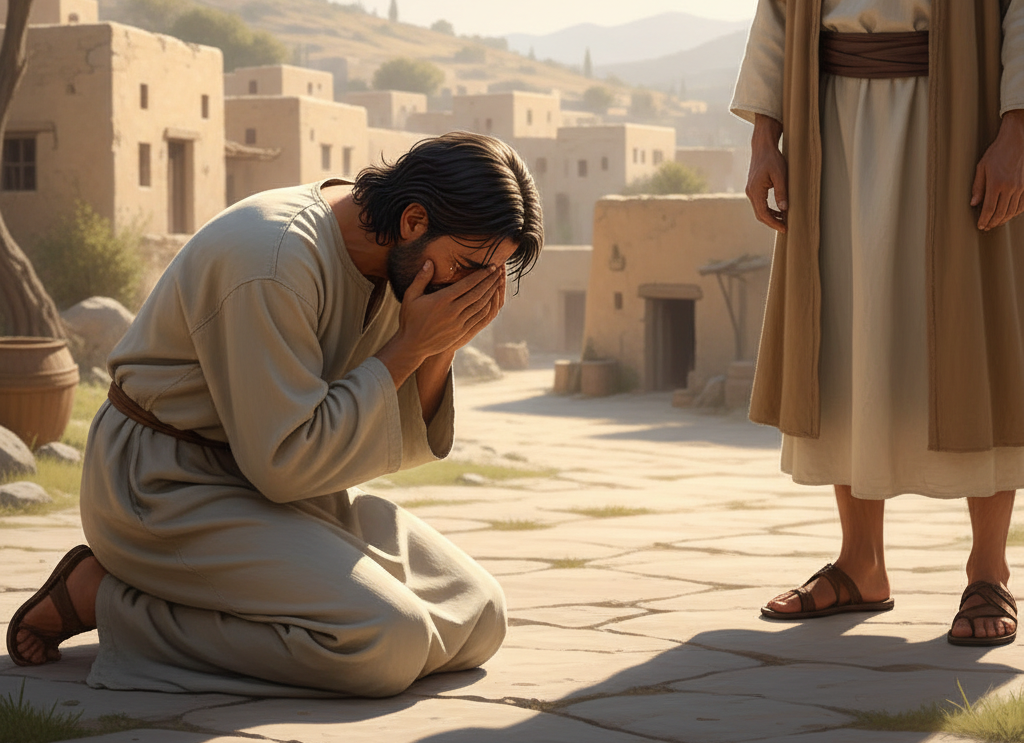
But with repentance, the approach is different, since reflection comes after unease, dissatisfaction and an awareness of sin. It is through self-disgust that we are moved to come to the Lord and regret a past of sin and misery that has only fuelled this dissatisfaction.

IV. The treasures of the Greek language

The verb “metanoô” and the noun “metanoia” clearly have a richer meaning than first appears.

In recent Bible versions, “metanoia” is translated as “a change in mentality”, “a change in mindset”, or “a radical change”. This is certainly not wrong, but translating it this way obscures everything that may have happened beforehand.

We must not focus solely on the consequence of repentance. It is also good to consider what brings it about. We cannot ignore the notion of regret in repentance, any more than we can ignore the specific act of conversion that gives rise to it.

Conclusion

In summary, the Greek words “metanoô” and “metanoia” contain several calls:

-A call to an awareness of sin, with all the dissatisfaction and regret that follow: this concerns everything that happened before.

-A call to make amends (asking for forgiveness, deeds worthy of repentance, exercising faith in Jesus Christ and in his work of redemption on the cross): this concerns everything that happens during the process.

-A call to change: this concerns everything that will happen afterwards.

All things considered, our word “repentance” takes these different dimensions into account and has the great advantage of being evocative and comprehensive.

Among its other qualities, there is one that can never be disputed: it has undeniable historical value, since for centuries, in all Christian circles, the word “repentance” has been part of the vocabulary of conversion. So let us not be ashamed of this word!

This study was prepared by Pastor Daniel GUILLET. We thank him for his kind contribution.