
We notice the use of two words: sin and blasphemy.
The term ‘hamartia’ (Strong's number 266) means ‘sin’ or the person who sins. It refers to an offense, a violation of divine law in thought or deed, as well as collective sins committed by individuals.
The term ‘blasphemia’ (Strong's number 988) is translated as ‘blasphemy,’ ‘slander,’ ‘to blaspheme’ and ‘abusive.’ It denotes slander, abusive speech, insult and outrage, as well as impious and abusive speech against the divine majesty.
Matthew, Mark and Luke all use the term "blasphemy" when referring to sin against the Holy Spirit.
Matthew also uses this term in the context of forgivable sins, with the exception of blasphemy against the Holy Spirit, for which there will be no remission. It follows that the concept of blasphemy is not associated exclusively with the Holy Spirit.
This act is considered particularly serious because it is described as unforgivable. According to the biblical writings, it is the only situation in which repentance can no longer be effective.
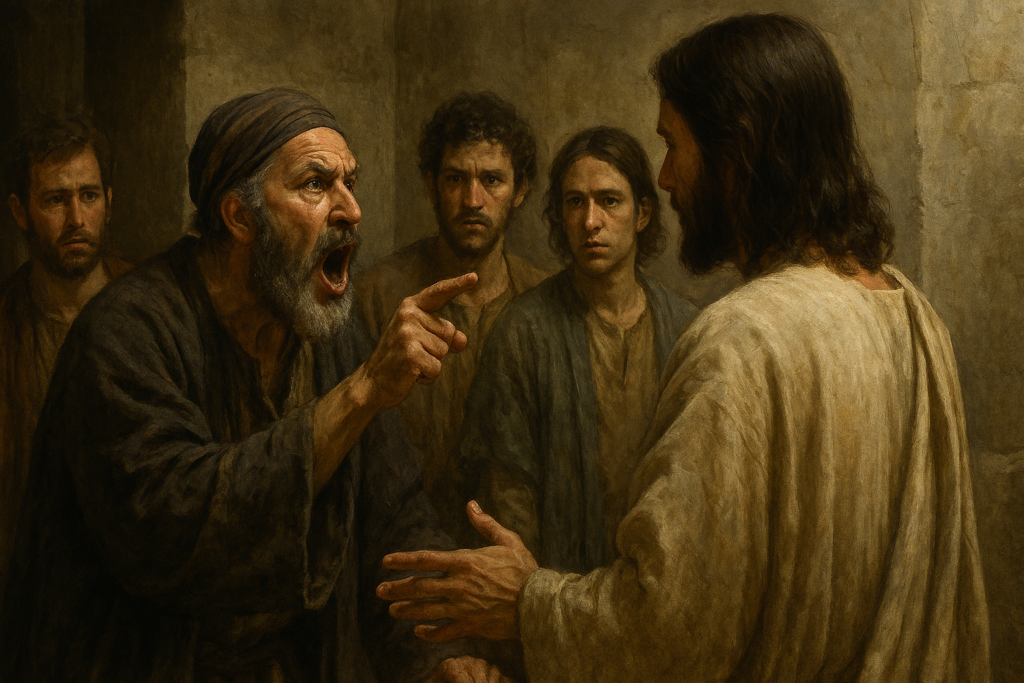
Mark 3.30 explains why Jesus the Messiah spoke in this way. These religious men were saying, ‘He has an unclean spirit.’ In other words, they were claiming that, in their view, the Holy Spirit was an unclean spirit. By acting in this way, these individuals crossed an irreversible boundary.
Matthew, for his part, enriches his account by using the of the tree and its fruit. He then mentions that people's words reflect what is in their hearts. Finally, he concludes by stating that everyone will have to give an account to God for every idle word they have spoken. We will return to this information in the next pericope.
The question arises as to whether blasphemy against the Holy Spirit is possible without Jesus the Messiah being directly involved. Commentators differ on this subject.
It is clear that the Holy Spirit guides us into all truth, as stated in John 16.13. His role is therefore essential in the process of conversion. Consequently, we can affirm that neither forgiveness nor salvation is possible without the intervention of the Holy Spirit (John 16.8).
Consequently, according to the Gospels, blasphemy against the Holy Spirit, which involves rejecting him, cannot be forgiven, because it is the Holy Spirit who leads us to forgiveness.
Fortunately, not all the were as extreme as those mentioned previously. Some were questioning how they should act toward Jesus the Messiah and his disciples.