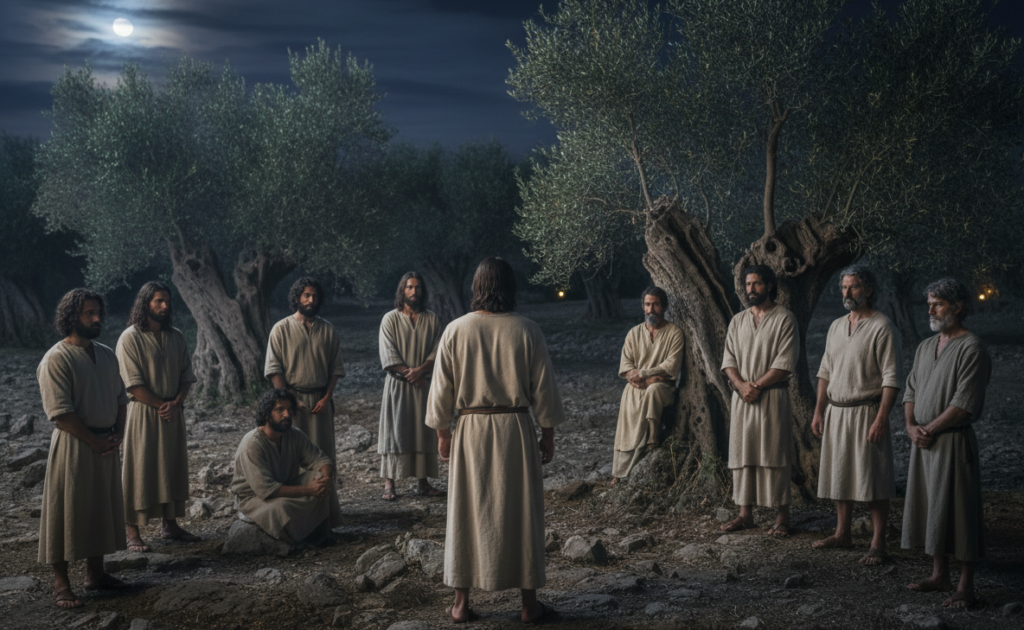

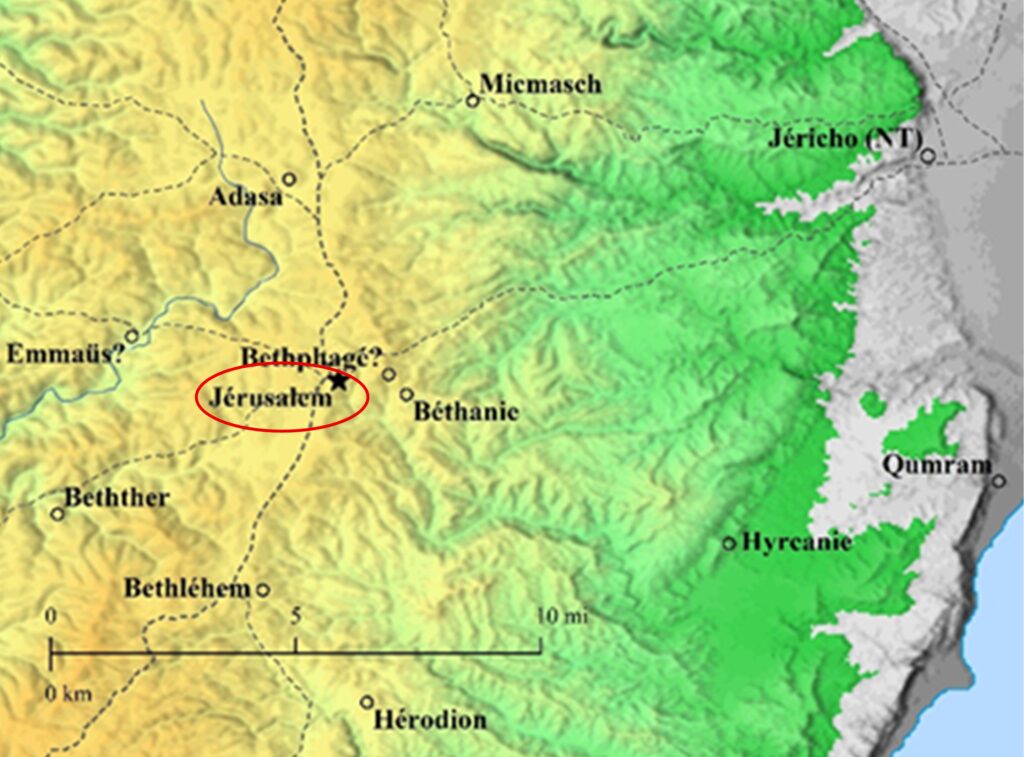

_7 The Messiah Jesus and the disciples set out for the Mount of Olives between midnight and 2:30 a.m., before dawn on Friday. The young man Mark follows them (Mark 14.26, Mark 14.32-42, Matthew 26.30,Matthew 26.36-46, Luke 22.39-46, John 18.1).
_8 They stop at the foot of the , in the garden of Gethsemane (Matthew 26.36, Mark 14.32).
You can consult the complete chronology in the study ANN026 : The hour of the crucifixion.
Commentary:
Gethsemane, whose name means “oil press” and which designates a specific place on the slopes of the (Matthew 26.36, Mark 14.32, John 18.1), was a secluded spot where Jesus and his disciples were accustomed to go to escape the bustle of Jerusalem, especially during the great feasts such as Passover, when the , a wider area, was covered with temporary encampments (Luke 21.37).
Their regular practice of withdrawing to this secluded place allowed Judas to locate the Messiah Jesus and to bring an armed band there to arrest him (John 18.2-3).
The accounts of both Matthew and Mark stress the spiritual agony of the Messiah Jesus in this place, his sorrow, his intense prayer, his acceptance of the Father’s will (Matthew 26.38-39, Mark 14.34-36), whereas John puts more emphasis on the composure and dignity of Christ in the face of the arrest (John 18.4-6).
Symbolically, the very name of Gethsemane, associated with the press, evokes the suffering and crushing that the Messiah Jesus accepts to undergo, thus fulfilling the messianic prophecies announcing the suffering of the Servant (Isaiah 53.5, Zechariah 13.7).
Christian tradition also sees in it a place of teaching about prayer in trial and the renunciation of one’s own will (Hebrews 5.7-8).