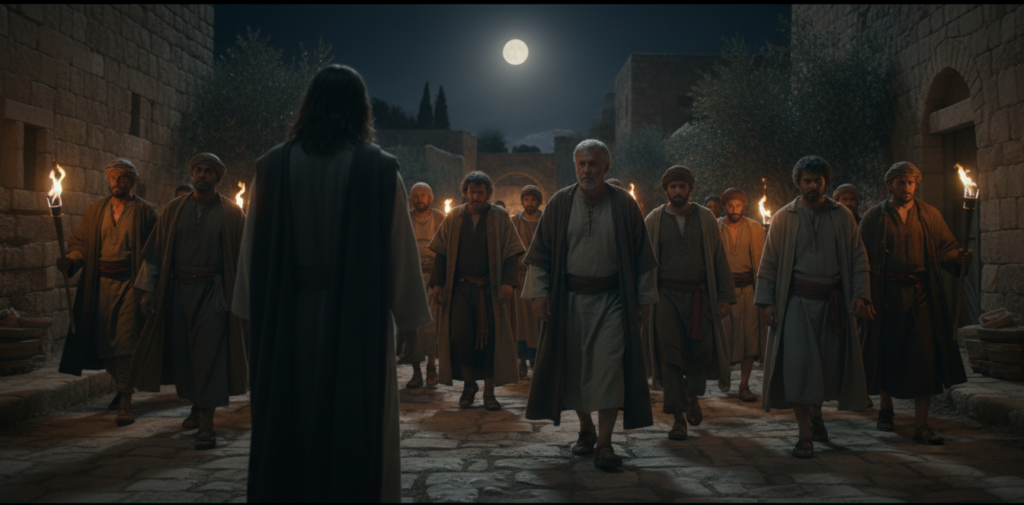

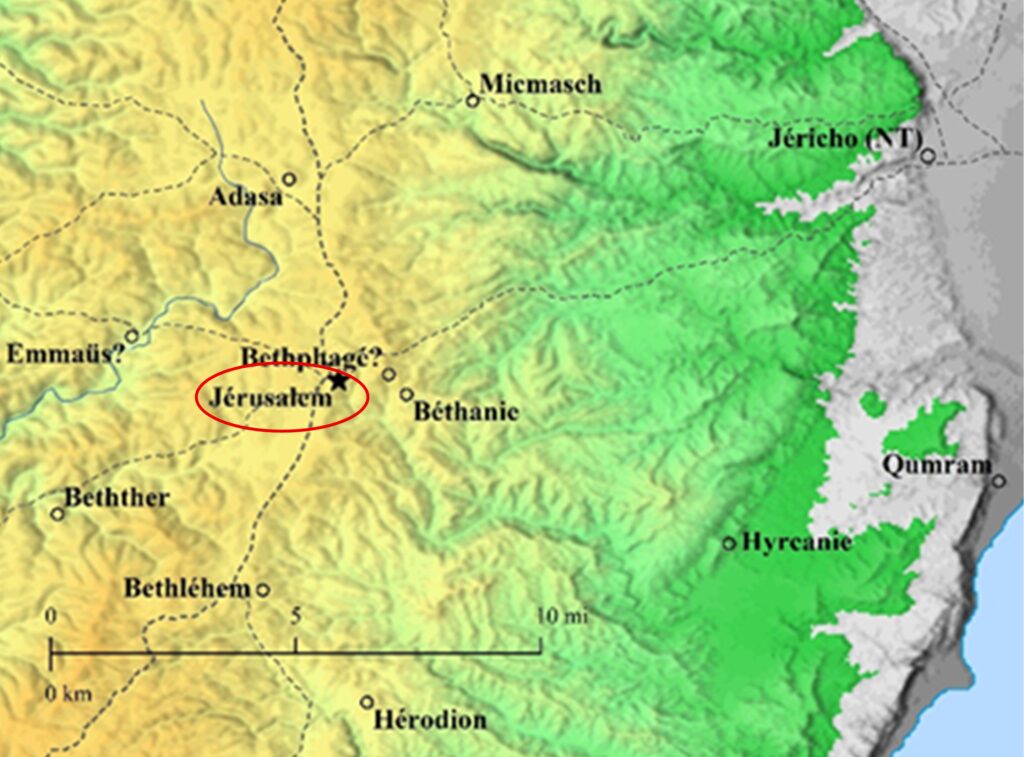

_7 The Messiah Jesus and the disciples set out for the Mount of Olives between midnight and 2:30 a.m., before dawn on Friday. The young man Mark follows them (Mark 14.26, Mark 14.32-42, Matthew 26.30,Matthew 26.36-46, Luke 22.39-46, John 18.1).
_8 They stop at the foot of the , in the garden of Gethsemane (Matthew 26.36, Mark 14.32).
You can consult the complete chronology in the study ANN026 : The hour of the crucifixion.
Commentary:
The Passover meal is now over. After sharing the bread and the cup, signs of a new covenant that the Master has just announced Luke 22.19-20, the Messiah Jesus and his disciples sing the ritual psalms of the feast, probably the Hallel Psalms (Psalms 113 to 118), which every faithful Jew sang at the end of the Passover meal. Their voices rise into the Jerusalem night, as if to mark the end of a cycle, without the disciples yet perceiving that they are taking part in a decisive turning point in the history of salvation.
After singing the psalms, the group sets off toward the (Matthew 26.30). It is a familiar place, about a kilometer east of the city (John 18.2). The Messiah Jesus often brought his own there, sometimes to rest, often to pray away from the crowd (Luke 22.39). This mount, overlooking Jerusalem and the Kidron Valley, carries a strong symbolism: it is the place from which the Messiah will soon rise (Zechariah 14.4), but also where the last stage of his walk to the cross begins.
Yet that evening, nothing goes as usual. The atmosphere of the meal had been heavy, almost oppressive. The Master had spoken mysterious and shattering words: he had spoken of betrayal (John 13.21-27), of his imminent departure (John 13.33), of the scattering of the disciples (Matthew 26.31) and, in a way still incomprehensible to them, of his own death and resurrection (Mark 9.31). The apostles sensed that an event of extreme gravity was approaching, without being able to discern its meaning. Already, even before leaving Capernaum, the Messiah Jesus had told them that he must suffer greatly and be put to death in Jerusalem (Luke 9.22,51). Some expected a dramatic confrontation, ready to die for him (John 11.16).
In the silence of the night, their walk continues toward the garden of Gethsemane. There the Messiah Jesus, as was his custom, withdraws to pray (Luke 22.39-41). The disciples accompany him without fully understanding the spiritual weight of this moment. Only later, after the resurrection, will they remember his words and understand their truth (John 12.16).
Very close to this garden lies another place, already charged with a prophetic destiny: Golgotha. The geographical proximity of the to this future place of crucifixion underlines the continuity of the divine plan. Like an invisible thread, the Son’s prayer in the garden will join the Son’s sacrifice on the cross.