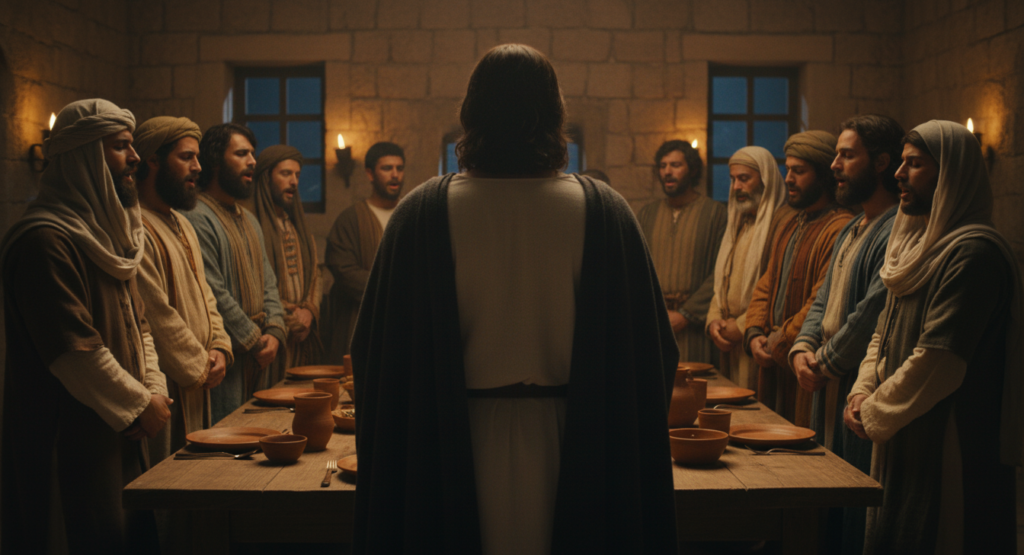

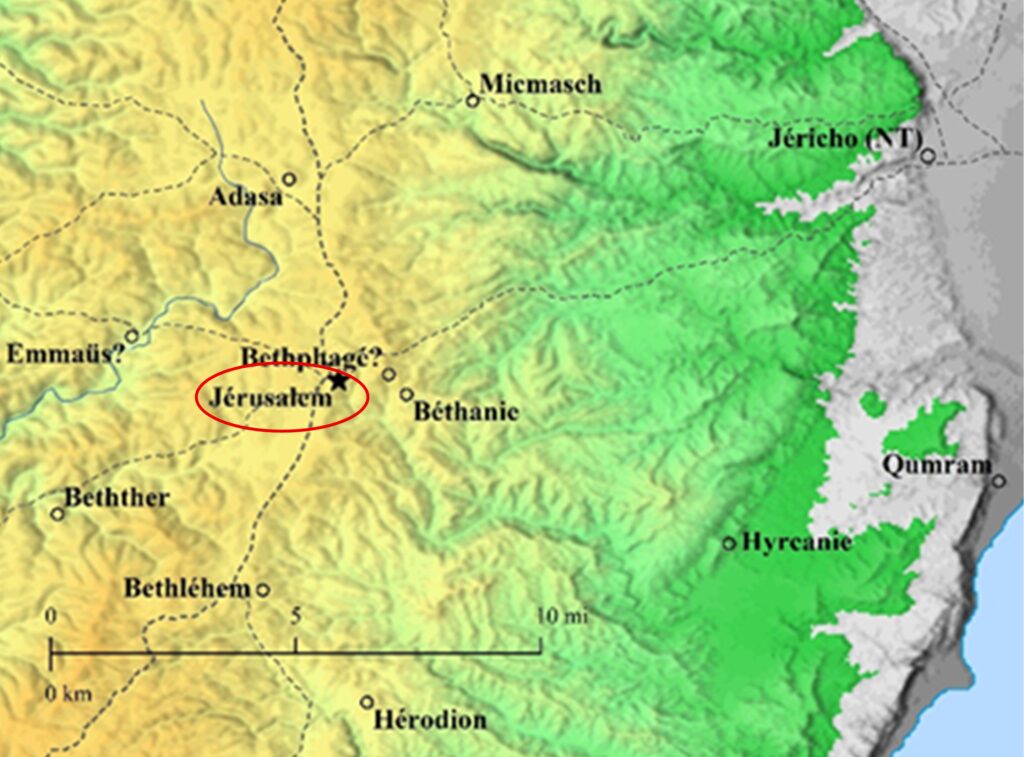

_3 The house is, in our view, that of Mary, the mother of John, surnamed Mark. Acts 12.12.
_4 The Passover meal begins on Thursday evening, after 6 p.m. It is already Friday for the Jews (Mark 14.17, Matthew 26.20, Luke 22.14-18). It is therefore not the official Seder, which will take place on Friday evening John 18.28.
_5 The meal ends on Friday morning before dawn, between midnight and 2:30 a.m.
_6 Judas Iscariot left before the end of this meal. John 13.30.
You can consult the complete chronology in the study ANN026 : The hour of the crucifixion.
Commentary:
Singing psalms after the Passover meal was part of the traditional Jewish rite of the Passover Seder in the time of Jesus the Messiah. During this meal, the Jews sang the Hallel, a group of psalms running from Psalm 113 to Psalm 118, to celebrate Israel’s deliverance from slavery in Egypt and God’s faithfulness to his people.
This singing marked the conclusion of the meal in a spirit of praise and gratitude. For Jesus the Messiah and his disciples, these psalms took on an even deeper meaning, for they foretold the new spiritual deliverance that the Son of God was about to accomplish through his death and resurrection (Matthew 26.30).
By singing these psalms, Jesus the Messiah expressed his trust and his peace in God’s plan, even as he walked toward the cross (John 3.16-17). Thus, the singing of psalms after the Passover meal was both an act of obedience to Jewish tradition and an expression of faith and hope in God’s redemptive work.
This moment undoubtedly left a deep impression on memories, for, just before his crucifixion, Jesus the Messiah, surrounded by his apostles, but without Judas Iscariot, who had already left to betray him, sings with them the traditional Passover psalms. These songs, full of praise and trust in God, resonate as an act of faith and inner peace on the threshold of his ordeal. They also recall other moments when prayer and song sustain believers in adversity, as when Paul and Silas, imprisoned for their faith, prayed and sang praises to God during the night (Acts 16.25-26).