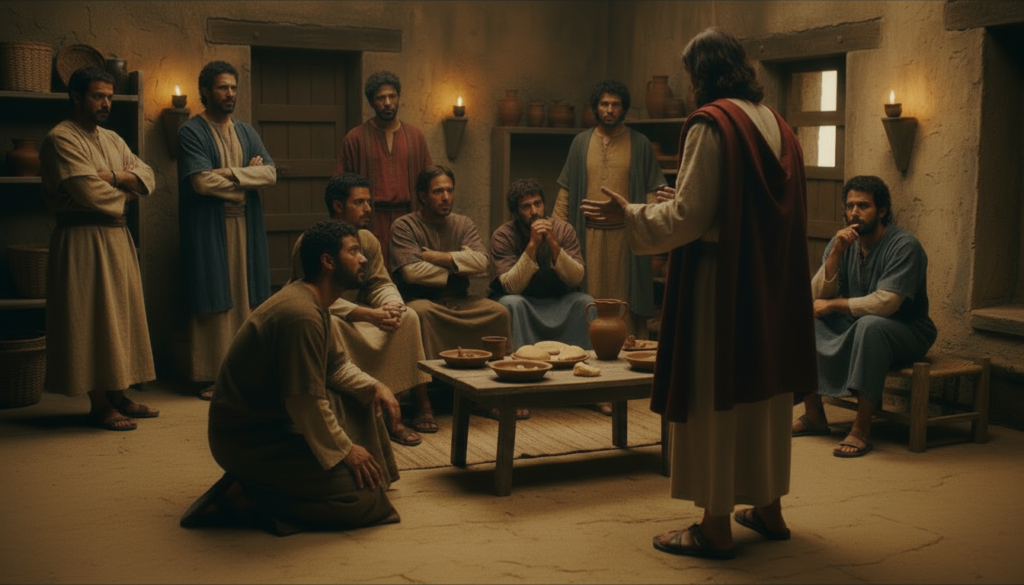

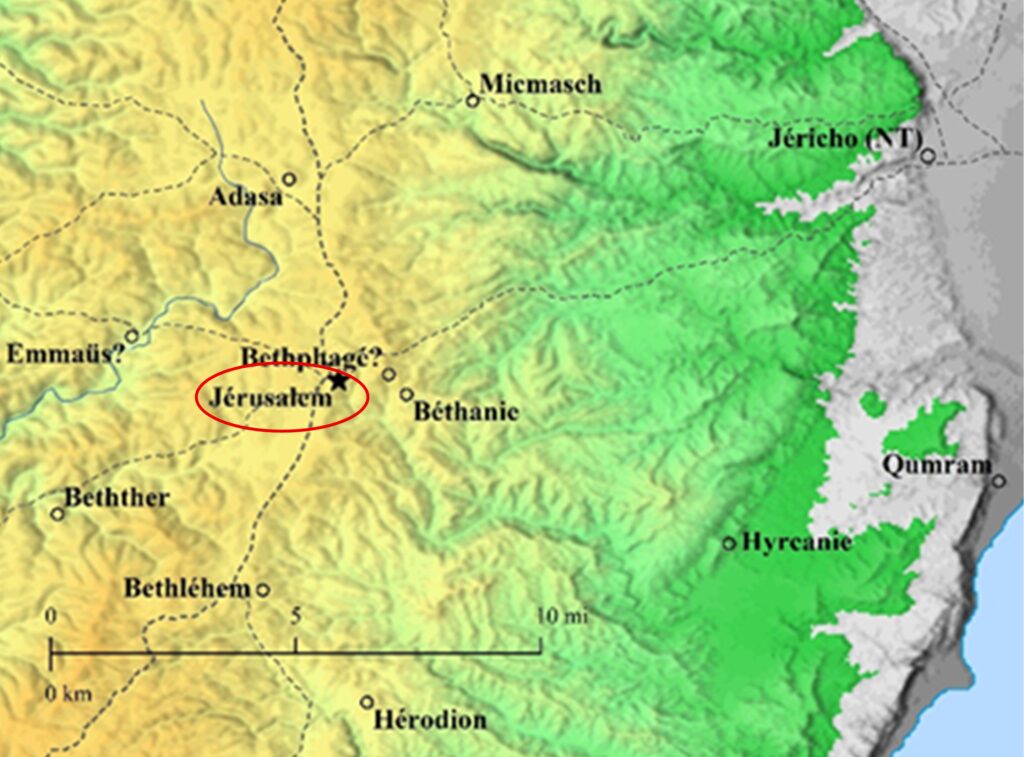

_3 The house is, in our view, that of Mary, the mother of John, surnamed Mark. Acts 12.12.
_4 The Passover meal begins on Thursday evening, after 6 p.m. It is already Friday for the Jews (Mark 14.17, Matthew 26.20, Luke 22.14-18). It is therefore not the official Seder, which will take place on Friday evening John 18.28.
_5 The meal ends on Friday morning before dawn, between midnight and 2:30 a.m.
_6 Judas Iscariot left before the end of this meal. John 13.30.
You can consult the complete chronology in the study ANN026 : The hour of the crucifixion.
Commentary:
This fourth teaching is a solemn warning that the Master gives his disciples before his departure. He tells them that the world will hate them, not because of their faults, but because they now belong to him and bear his name, for:
Persecution is about to fall upon them, and they will no longer be able, as was the case during these past years, to hide behind the visible presence of the Messiah Jesus. From now on, they will have to face the hostility of the world with the inner strength that the Spirit will give them.
But another Comforter is coming, the Spirit of truth, and in him they will find the rest, the strength and the perseverance needed to go through these trials (John 14.16-17). Undoubtedly, these words were spoken at the end of their Master’s earthly ministry, at the moment when the shadow of the cross was already falling upon them. Jesus reveals to them that the world’s hatred is not an accident, but the direct consequence of the rejection of the Father himself, for “he who hates me hates my Father also” (John 15.23).
If the teaching were to stop here, the prospects would be too dark and too heavy to bear for disciples who were still fragile and unable to fully grasp the divine plan. Jesus reminds them that this hatred is also the fulfillment of the Scriptures, for “they hated me without a cause” (Psalms 69.4).
These trials must therefore be counterbalanced by concrete encouragement, and that is precisely the subject of the following passage: the announcement of the work of the Holy Spirit, the faithful witness who will convict the world and sustain the disciples in their mission. Jesus wants them to know these things in advance so that they will not be offended when persecution breaks out, for some will even think they are offering service to God by putting them to death (John 16.2).
The Master does not minimize suffering, but he places it within a larger perspective: that of the redemption accomplished by his death and his resurrection, for it is through his sacrifice that the world can be saved rather than condemned (John 3.16-17). Thus, the Messiah Jesus prepares his disciples for a painful reality, but he anchors them in an indestructible hope: that of the active presence of the Comforter and of the final victory of the Son of God.