Looking at the context of these words, it appears that Jesus the Messiah is addressing a Christian audience. Extending this statement to the whole of humanity, however, seems to be contradicted by observation of the facts, since some argue that belief in God is not an indispensable condition for achieving great things. Significant advances that benefit humanity have indeed been made by people with no reference to a religious dimension. Nevertheless, a thorough analysis of these various situations raises some pertinent questions.
Who gave the intellectual abilities? Who gave the health? Who gave a helping hand, so to speak, to reach the result? Some will answer that he was lucky. Indeed, but what if luck had another name: God.
Let us return to the main idea and consider that these words are addressed to disciples of Jesus the Messiah, that is, to Christians. When the Master sent seventy disciples to evangelize the region of Jerusalem, they came back filled with great joy.
When God acts through people, it is essential that they not take credit for the glory of the fruit produced. The real trap lies in this illusion: thinking that the results are the fruit of our own efforts and our own work.
Some have interpreted these words as referring to archaeological discoveries; however, the message of Jesus the Messiah indicated that nothing could silence the crowd that was acclaiming him. God can use man in his purposes, but man remains first and foremost a servant at his service.
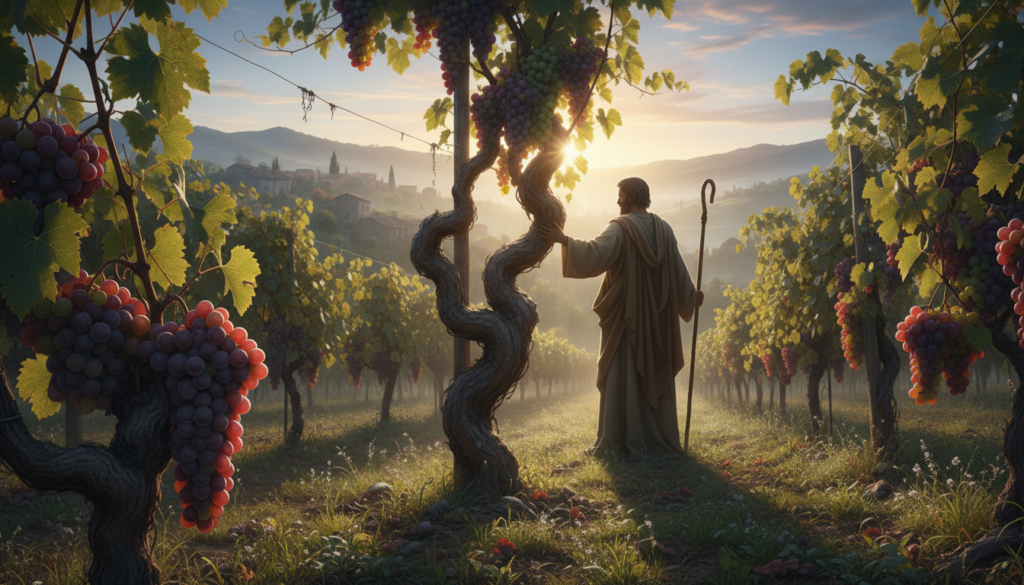
Like the branch that draws its sustenance from the vine, the disciple depends directly on Jesus the Messiah, the true vine (John 15.1). The disciple's life therefore comes from the life granted by the Master. Yet some branches, although they remain attached to the vine, bear no fruit.
How is this possible?
Like Judas Iscariot, some wear the appearance of life; they look like the other branches, but in truth they are dead, for true life never produces barrenness. From the moment Judas turned away from Jesus the Messiah, the truth came to light.
When the disciple remains united to the vine, that is, lives according to the teachings given (John 15.7), Jesus the Messiah promises to answer his prayers. Thus, while action without God remains ineffective, working together with God enables the disciple to accomplish exceptional things.
Jesus the Messiah speaks these words for a very specific purpose:
Dominique Lormier