

Dating this event is easy, since John 12.1 explicitly states that it took place the day after the meal. Thus, if the meal took place on Saturday, March 26, the event falls on Sunday, March 27.
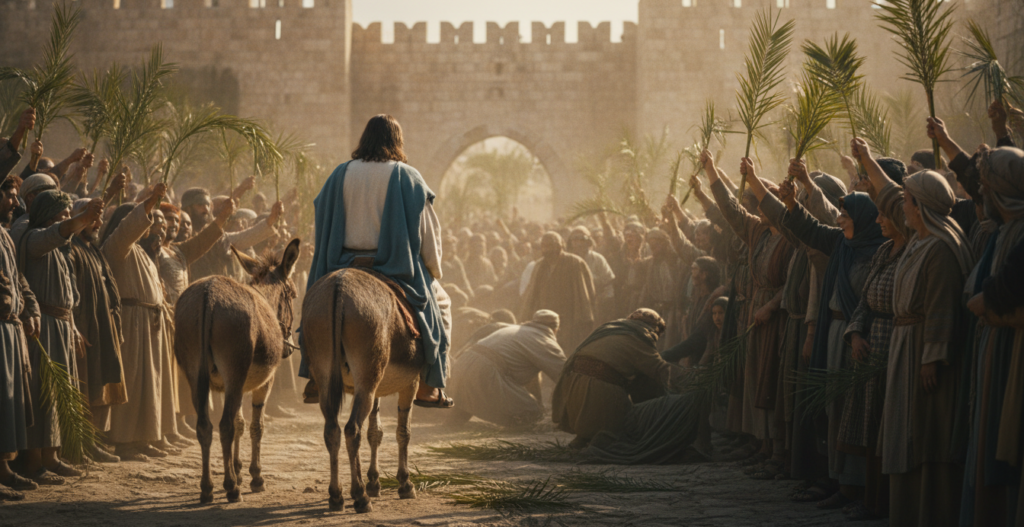
We witness here a surprising staging. The Messiah Jesus could have entered Jerusalem on foot, as he had always done, but he chooses to go there seated on a colt. This gesture is far from insignificant: it refers to an ancient tradition and above all to the prophecy of Zechariah 9.9, which Matthew emphasizes. The Messiah Jesus therefore does not enter as a conqueror, but as the Prince of Peace. The , familiar with the Scriptures, cannot ignore the link between this event and the acclamations taken from Psalms 118.1-29, which the crowd spontaneously takes up.
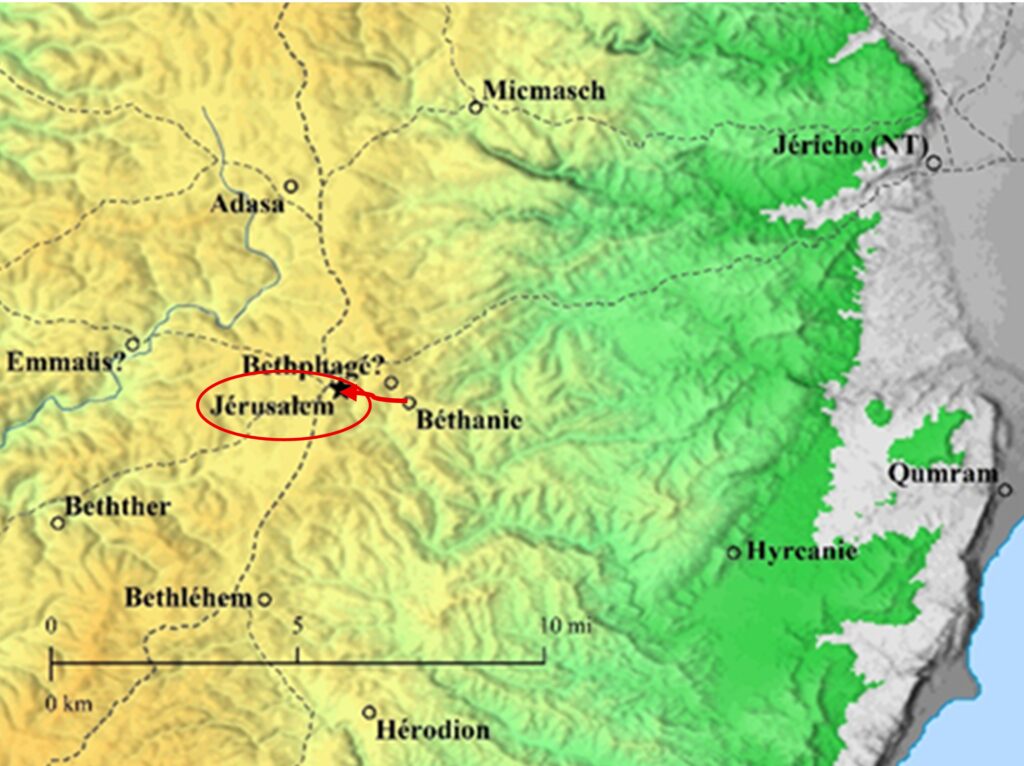
All the disciples are present, joined by pilgrims coming for the Passover and by inhabitants of Jerusalem. As the Messiah Jesus advances, the crowd grows to form a true procession. The two disciples sent by the Master have found the colt and, as Matthew specifies, its mother the donkey, exactly as the Master had announced. After explaining to the owners that “the Lord has need of them,” they bring the animals back. The disciples lay their cloaks on the colt, and the Messiah Jesus sits on it to continue the journey.
As he progresses toward the city, the Messiah Jesus is surrounded by an enthusiastic crowd. Many spread their cloaks before him, a gesture reserved for kings, while others wave branches cut from the fields. All acclaim the Son of David and bless him who comes in the name of the Lord. Luke explains that this collective joy stems from the many miracles the crowd had witnessed. Some ask the Messiah Jesus to silence these cries, but he answers that if people were silent, the very stones would cry out. They are therefore witnesses of this event!
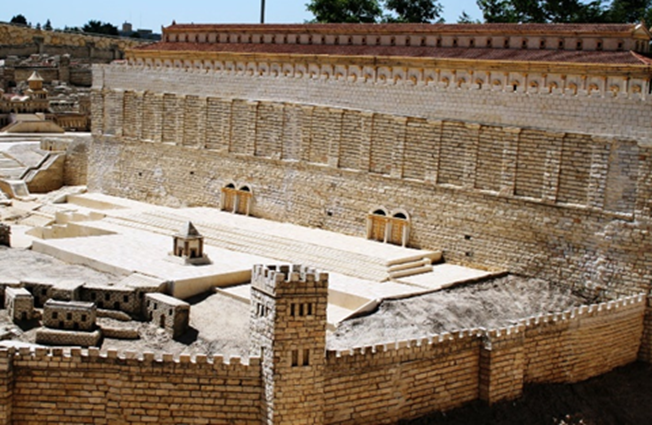
At the descent of the , the enthusiasm reaches its peak. As he enters Jerusalem, the commotion raises questions: “Who is this man?” The crowd answers that he is Jesus, the prophet from Nazareth in Galilee. Matthew adds that the blind and the lame come to him and that he heals them in the Temple. The situation is so intense that it could almost lead to a popular uprising; the Messiah Jesus could have rallied the crowd against the religious authorities, but God’s plan is quite different.
Thus, the entry of the Messiah Jesus into Jerusalem appears as a public fulfillment of the prophecies, a clear messianic proclamation, but also an act of profound humility. The promised King enters his city not to seize power by force, but to carry out God’s plan in peace and obedience.
This scene will remain indelibly etched in memory. What a difference from what will happen in four days!