The Pharisees
The Pharisees were an important religious and social group in ancient Judaism, particularly during the Second Temple period. Here are some key points about them:
Origins and history
Origins: The Pharisees emerged as a distinct group after the Maccabean revolt, around 165-160 BC. They were often regarded as the spiritual descendants of the Hasideans.
Period: They flourished until the destruction of the Second Temple in AD 70. After that date, their teachings formed the basis of what became rabbinic Judaism.
Beliefs and practices
Sacred Texts: Unlike the Sadducees, who focused solely on the written law (the Pentateuch), the Pharisees believed in both a written law and an oral law (the oral Torah).
Resurrection: The Pharisees believed in the resurrection of the dead and in the immortality of the soul.
Rites and Laws: They stressed the importance of oral traditions and of interpretations adapted to contemporary circumstances.
Influence and Legacy
Influence: The Pharisees had a great influence on Jewish liturgy and religious practice. Their teachings were incorporated into the Mishnah, a compilation of the Jewish oral tradition, around AD 200.
Legacy: After the destruction of the Second Temple, the teachings of the Pharisees formed the basis of rabbinic Judaism, which continues to influence modern Judaism.
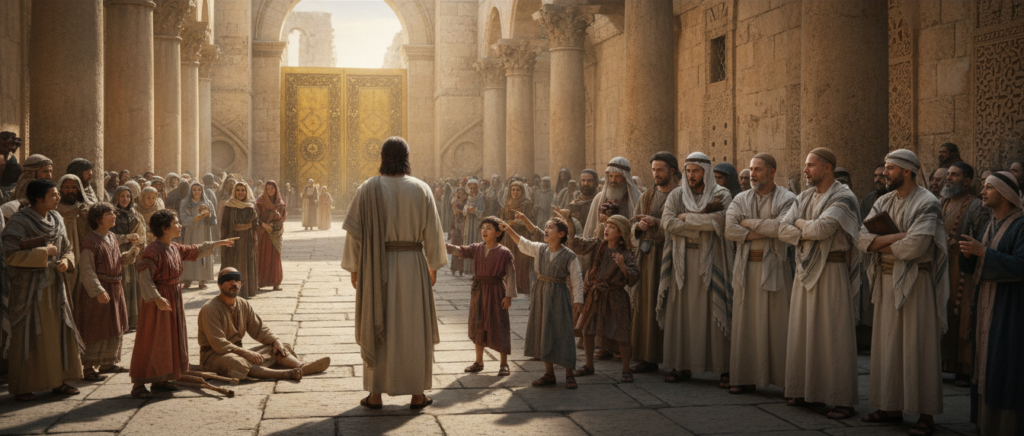
The Pharisees are often mentioned in the New Testament, notably in the Gospels and the Acts of the Apostles, where they are frequently in conflict with Jesus and the other religious figures of the time.
The Pharisees in the Bible
They are the most representative group of Judaism. Its members, drawn from the people, oppose compromise with the Roman invader, but also with Hellenism. We see them as closer to the population than the Sadducees.
They are mentioned one hundred and three times in the New Testament, ninety-three times in the Gospels, nine times in the Acts of the Apostles and once in the Epistle to the Philippians.
Their relations with the Messiah Jesus frequently appear tense and conflictual. He rebukes them at times in violent terms, such as “woe to you” and “hypocrites”, which clearly shows this opposition. They do not have access to positions of high responsibility, controlled by the Romans and therefore reserved for Sadducees sympathetic to Rome, but they form the largest group in the Sanhedrin.
They regard themselves as the great defenders of the law of Moses, on which they comment. Their interpretation becomes the rule for the people to follow. The Messiah Jesus condemns these excesses on various occasions (Matthew 23.13-29).
They often disagree with their colleagues, the Sadducees, on points of doctrine such as eternal life or angels. To the written Law of Moses they added oral principles, which allow them to get around its prescriptions. Jesus does not fail to point this out (Matthew 23.23).
Nicodemus and Joseph of Arimathea belonged to this political and religious group, which did not prevent them from converting to Christianity.