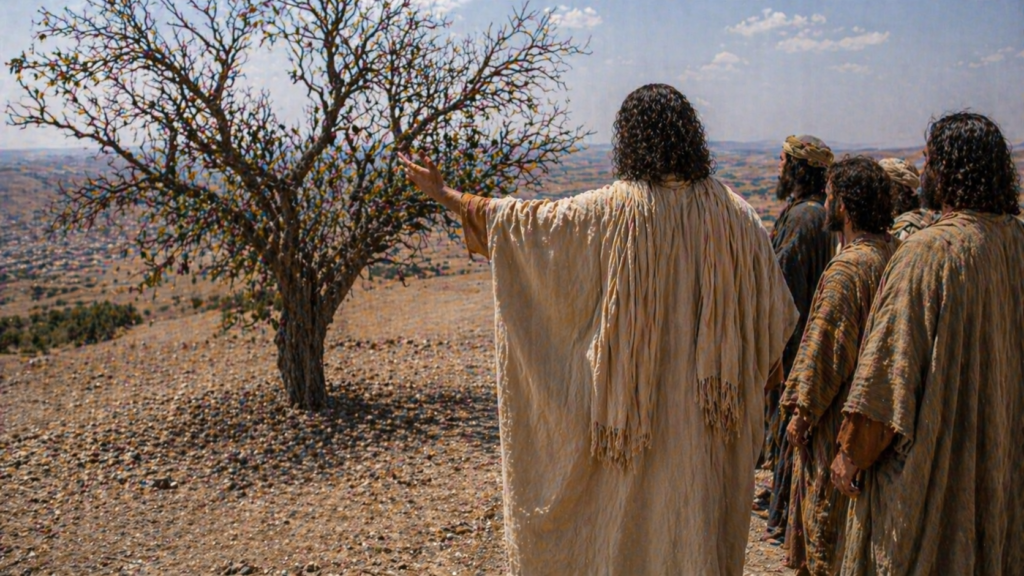
The fig tree, an insignificant choice?
No, the choice of the fig tree in this parable is not insignificant. The Messiah Jesus never selects his images at random, especially when he teaches about the Kingdom of God.
Why the fig tree?
A familiar tree in Palestine. The fig tree was very common in the region. Jesus’ listeners knew its natural cycle well: it loses its leaves in winter and begins to bud in spring, announcing the arrival of summer. It is therefore an accessible and expressive image.
A reliable seasonal indicator: Unlike other trees, the fig tree is a good marker of the change of seasons. The Messiah Jesus uses it to illustrate the clarity of the signs: just as we know that summer is near when we see its leaves, we can discern the nearness of the Kingdom by observing prophetic events.
A strong biblical symbolism: In the Old Testament, the fig tree is often associated with Israel, with blessing or with judgment:
Micah 4.4 speaks of each one sitting under his fig tree, a symbol of peace.
Jeremiah 8.13 speaks of a fruitless fig tree, a sign of rejection.
Jesus himself curses a barren fig tree in Mark 11.12-14, as an image of lack of faith.
A call to vigilance. The budding fig tree is a visible sign, but one must know how to interpret it. Jesus invites his disciples not to be blind to spiritual signs, just as they would not be to natural signs.
In summary
The fig tree is chosen for its teaching value, its biblical symbolism, and its function as a seasonal marker. It embodies at once the clarity of the signs, the need for discernment, and the urgency of preparation. Nothing is left to chance in this parable; every detail serves to awaken spiritual awareness.