
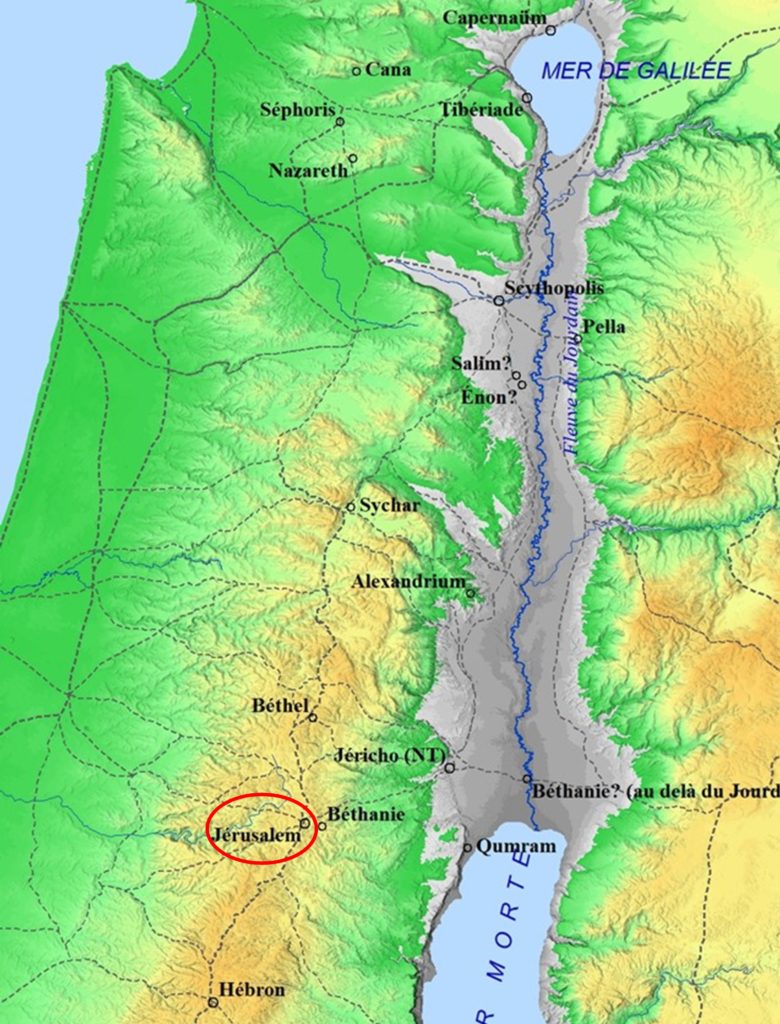
Here Luke presents accounts that do not follow a formal chronology. He offers an argument structured according to a precise logic. This theme is developed in the section titled: . It is worth considering Luke's purpose when studying these chapters.
L’
Read the study on the parables: PAR026 : The barren and PAR000 : The parables
The Messiah Jesus has just said, following the text of Luke 13.1-5, that we must not link a misfortune to the spiritual condition of the person (John 9.1-3). The Messiah Jesus’ conclusion is this: an urgent call to conversion, because no one is master of his own life.
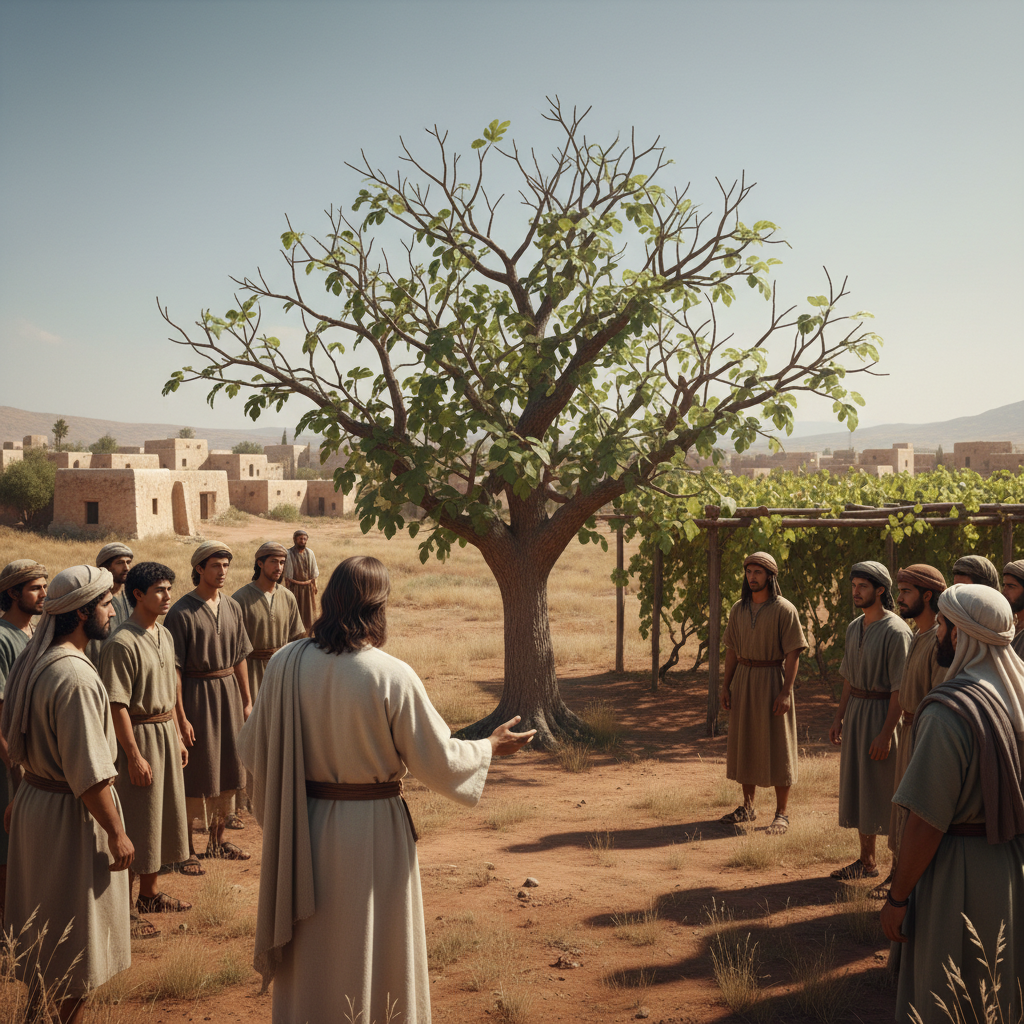
True conversion necessarily produces fruit. It is therefore unthinkable to become a passive disciple; that is a contradiction in terms. This is the subject of this , which also shows God’s patience.
Luke’s wording: “He also told this ” does not imply that this is part of the same discourse. He probably grouped together several teachings delivered at different times.
This is a solemn warning for the disciple who would not bear fruit. That means one who does not live his faith in the full light, who shows no difference in behavior and words from those who are not disciples, who does not bear witness. We have the example of Joseph of Arimathea, who was a disciple in secret (John 19.38). He would pull himself together, for together with Nicodemus, at the risk of their lives, they would ask the authorities for permission to take the body of the Messiah Jesus and place it in a tomb.
There is a link with the preceding passage (Luke 13.1-5).
Common theme: Judgment and mercy. Both texts speak of the necessity of bearing fruit, that is, of living a life transformed by faith.
Logical progression:
The verses of Luke 13.1-5: Warning, death can come at any moment, so repent now.
The verses of Luke 13.6-9: Hope, God still gives time, but this time is limited.
Together, these passages show that:
God is in no hurry to judge, but expects fruit. Conversion is urgent, but grace offers one last chance.