
Here Luke presents accounts that do not follow a formal chronology. He offers an argument structured according to a precise logic. This theme is developed in the section titled: . It is worth considering Luke's purpose when studying these chapters.
L’
Read the study on the : PAR005 : The mustard seed, PAR006 : The leaven, and PAR000 : The parables
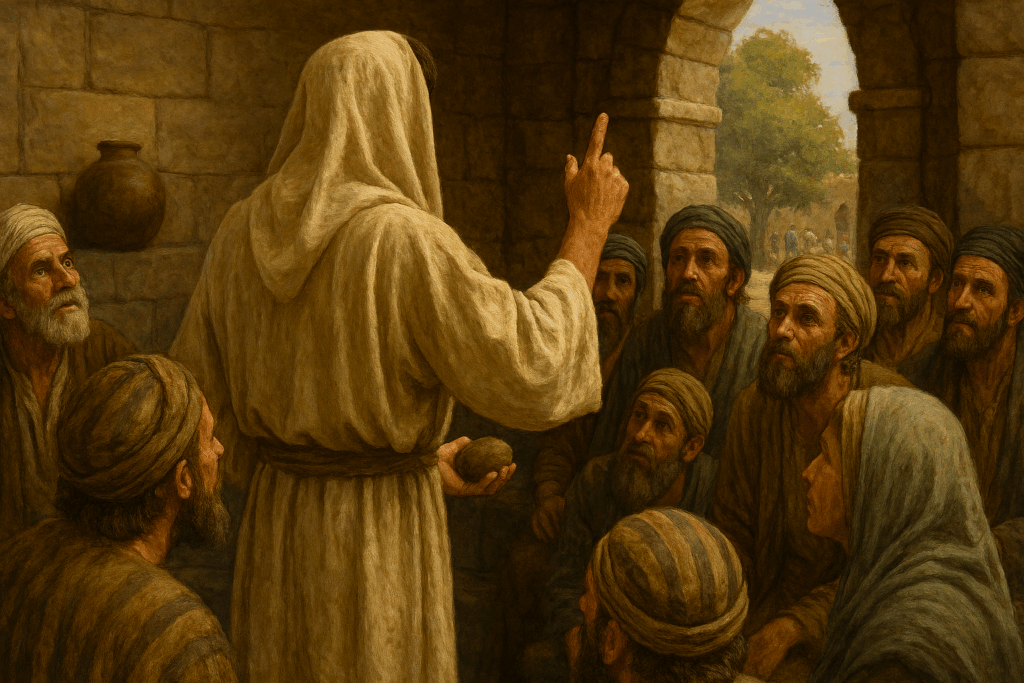
These two teachings may have been given by the Master in the or in its forecourt, mentioned in Luke 13.10.
Luke 13.18-19: The mustard seed (Matthew 13.31-32, Mark 4.30-32 and Luke 13.18-19).
The mustard seed is one of the smallest seeds known. Yet once sown, it becomes a tree large enough to shelter the birds.
This symbolizes the quiet but powerful growth of the kingdom of God: it starts small, almost invisible, but becomes vast and welcoming.
Luke 13.20-21: The leaven in the dough (Matthew 13.33, Luke 13.20-21).
Leaven is an invisible agent that transforms the dough from within. A small amount is enough to make the whole dough rise, which evokes the inner, transforming influence of the kingdom.
The figure of three measures represents a large quantity of flour, hence a powerful effect from a modest gesture.
In summary
These two show that the kingdom of God begins humbly yet grows powerfully, and that it works in a hidden way yet transforms deeply. It welcomes and nourishes, like a tree or a loaf of bread.
It is important to stress that the Messiah Jesus dealt with these subjects at different times and in various places. It is therefore logical that the Gospels present similar accounts from distinct angles, which can produce some factual differences as well as variations in the way the events are told.
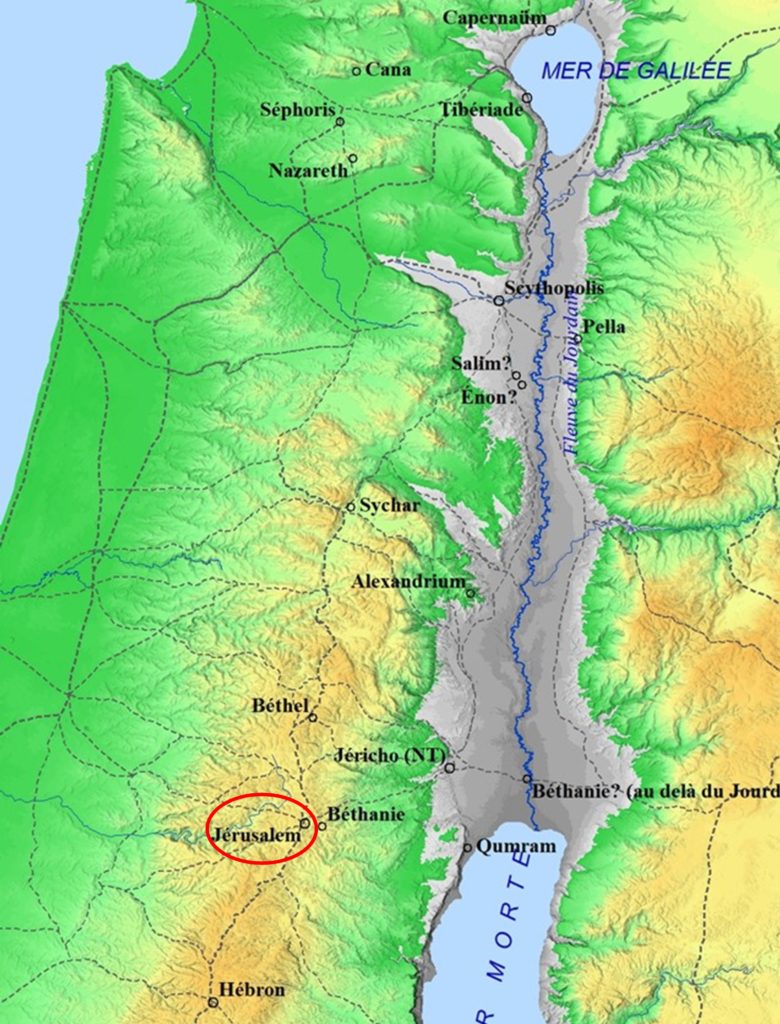
These Judeans also needed to hear these teachings about the kingdom of God.