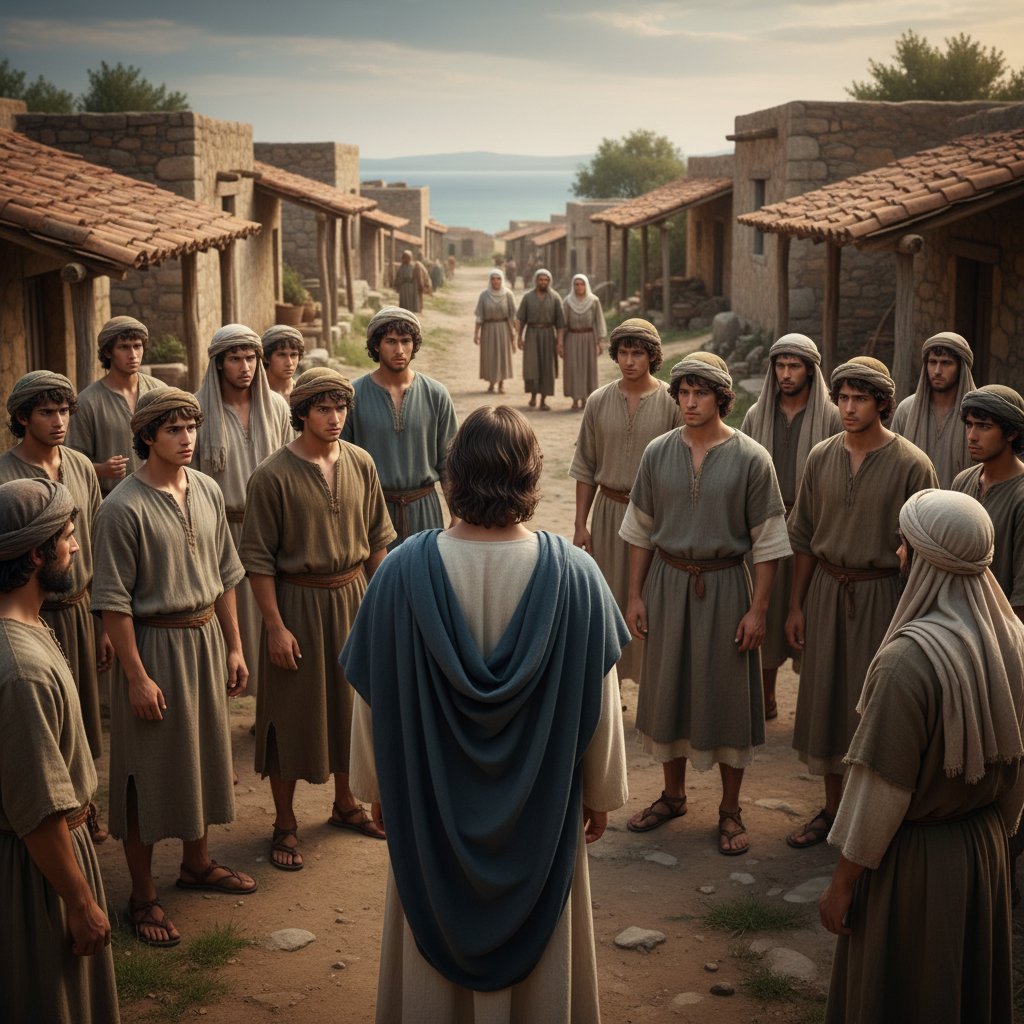


John tells us about the reaction of the crowd but also of his own disciples. They struggle to understand these words of the Messiah Jesus. A certain number, many according to John, decide to abandon this walk and return to their former life.
As mentioned earlier, the responses of individuals reflect their initial positions toward the Messiah Jesus. The reaction of the religious authorities, who systematically oppose the Messiah Jesus, is understandable. However, the attitude of the disciples who find the Master's teachings hard to follow is also noteworthy and deserves careful analysis.
Many Christians of the 21st century express the wish to have lived in the time of Jesus Christ. They think that their faith, commitment and devotion would have been strengthened by the Master's physical presence. However, it is important to note that even some disciples who were direct witnesses of the extraordinary events reported in the Gospels chose to turn away (John 6.66). The Messiah Jesus was aware that several of his disciples were complaining and finding it hard to follow his teachings.
The Messiah Jesus, aware of their murmuring, asks them: "Does this offend you?" Here, the Messiah Jesus highlights the difficulty some of his hearers had in understanding and accepting his teachings, especially when he speaks of himself as the "bread of life" and of the necessity of "eating his flesh and drinking his blood". These words, symbolic, point to the Eucharist and to faith in him as the source of eternal life.
Another aspect to consider is that the political expectations of many people concerning the Messiah Jesus were those of a great liberator. However, they see that he will not drive out the but that he offers another way of living. Their disappointment leads to their departure. They no longer wished to follow him and obey him, judging his teaching too out of step with their personal expectations.
They had not understood that the kingdom of God would not be established on this earth but in heaven, and that eternal life with God was infinitely more important than the few years of mediocre life they had just chosen.
But we will now see reactions that surely delighted and encouraged the Messiah Jesus.