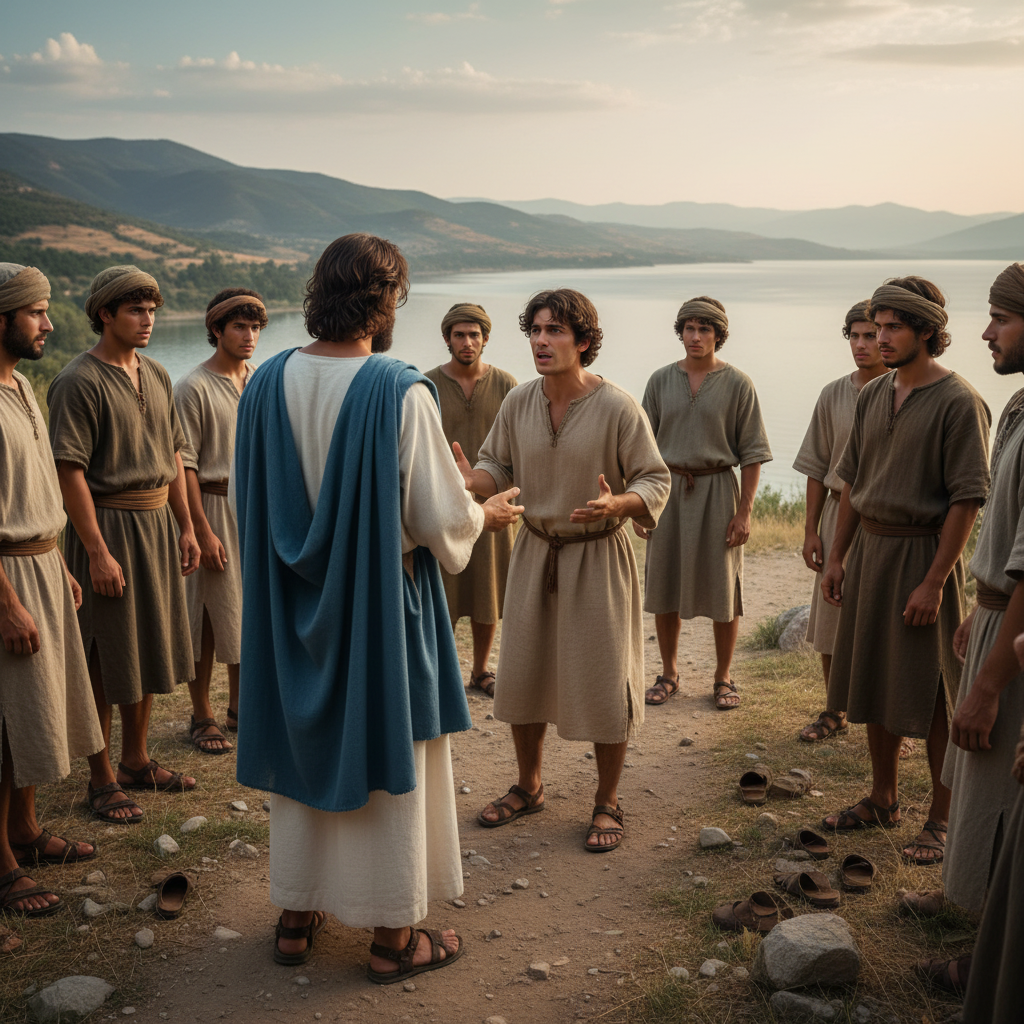

The Messiah Jesus prefers disciples of faith to many unconvinced followers. He encourages the unbelieving to leave, desiring truth above all.
The result does not take long to come: a great number of disciples leave, John 6.66 tells us.
How are we to understand the words of the Messiah Jesus quoted in
Did these people receive the same grace as those who stayed?
Here are a few points to explain this verse:
God's sovereignty: The Messiah Jesus reminds us that faith is not simply a human decision but depends on God's action. This highlights God's sovereignty in the process of salvation.
A call to humility: This verse invites us to recognize that faith is an undeserved gift, which leads to humility and gratitude toward God.
A link with John 6.44: This passage echoes
This shows that the initiative of salvation comes from God.
An encouragement to faith: For those who believe, this verse is an assurance that their faith is the fruit of God's work in them.
God wanted all these men to be saved (1 Timothy 2.4); however, this divine desire must be understood in the context of human freedom. God offers salvation to all, but he forces no one to accept it. Faith and the response to this call are personal choices. Some may reject this offer, which explains why not all are saved despite God's desire.
This paradox highlights the tension between God's sovereignty and human responsibility.
Then comes the great question to the apostles:
The Messiah Jesus puts the Twelve before a clear choice. This question is not an accusation but an invitation to reflect on their commitment to him. This moment highlights the faith of the remaining disciples. The Messiah Jesus forces no one to follow him. He respects everyone's freedom, even if that means some choose to leave.
is breathtaking:
What an extraordinary proclamation, but above all what a difference between the life of Peter and the apostles and that of the disciples who left. Here, in summary, is the essence of the Christian life.
However, the Messiah Jesus goes on to add a complex sentence that the apostles apparently did not grasp.
Jesus answered them:
Judas Iscariot was present, and John concludes by saying that Jesus was referring to him because of his betrayal.
Thus ends John's account, which has just described a trying day for us. He shows us that nothing escapes God's eye and that every attempt at concealment is futile.