
This passage from John sets out the reaction of the crowd as well as the risks run by Jesus the Messiah in trying to meet their expectations.
Analysis
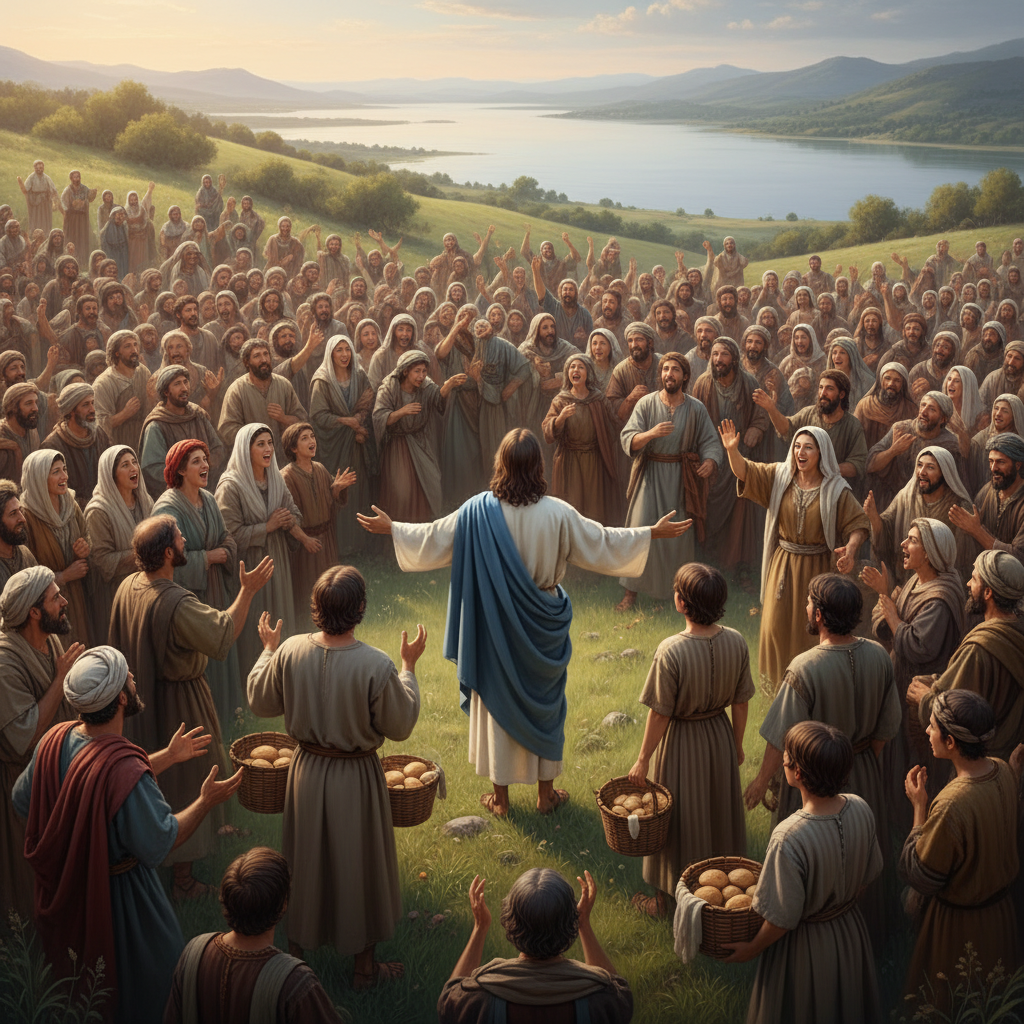
- Reaction of the crowd: After seeing the miracle of the , the crowd recognizes Jesus the Messiah as the awaited prophet, referring to the prophecy of Deuteronomy 18.15 in which Moses announces the coming of a prophet like himself.
- Messianic recognition: The crowd's declaration shows that they see in the person of Jesus not only a teacher or a healer, but the announced Messiah.
- Intention of the crowd: The crowd wants to take Jesus the Messiah by force in order to crown him king, which shows that they had political and messianic expectations connected with Israel's liberation from the yoke.
- Jesus' withdrawal: Jesus the Messiah, aware of the crowd's intentions, withdraws alone to the mountain. This gesture underlines that his kingdom is not of this world and that he refuses an earthly crown. He wants to fulfil the will of God according to a spiritual plan and not a political one.
Comparison with the Synoptics
The Synoptic Gospels (Matthew, Mark and Luke) do not explicitly mention this reaction of the crowd and the desire to crown him king after this specific miracle. This detail, unique to John, highlights the perception of Jesus' messiahship and his own intention not to conform to the political expectations of his time.
This passage is crucial for understanding the tension between the popular perception of Jesus as a political king and his own aim of revealing a spiritual kingdom.