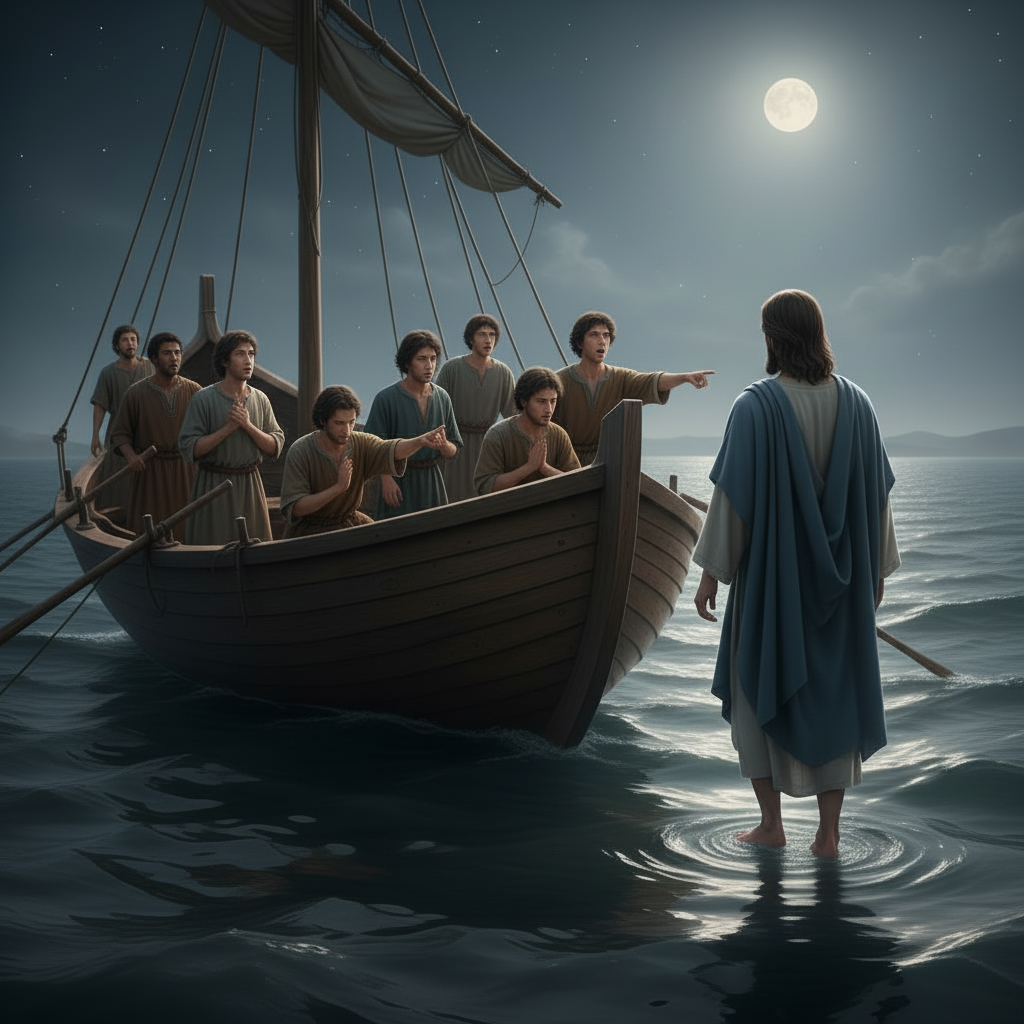

The event described byMatthew 14.33 takes place right after the account of the Messiah Jesus walking on the water and calming the storm (PER171).
Analysis
Narrative context:
General context: This verse concludes the account of Jesus walking on the water (Matthew 14.22-32), a miracle that demonstrates Jesus' sovereignty over the forces of nature.
Reactions of the disciples: After seeing Peter walk on the water, sink and be saved by Jesus, and after Jesus calmed the storm, the disciples are astounded and recognize the divinity of the Messiah Jesus.
Prostration and recognition:
Prostration: The act of bowing down is a gesture of reverence and deep submission, often reserved for God in the biblical context.
Declaration of divinity: The declaration "You are truly the Son of God" is an explicit recognition of the divine nature of Jesus, marking a moment of revelation and increased faith among the disciples.
Theology and Christology:
Son of God: This title underscores the divine sonship of Jesus, which is a central element of Christian Christology. It confirms that Jesus is not merely a prophet or a teacher, but truly of divine nature.
Progressive revelation: Throughout the Gospels, the disciples come to understand the identity of Jesus progressively. This verse marks an important stage in that growing awareness.
Synoptic comparison:
Mark and John: In the Gospels of Mark (Mark 6.51-52) and John (John 6.21), although the disciples are astonished and the wind subsides, there is no explicit declaration of the divinity of Jesus and no prostration. This distinctive feature of Matthew highlights this Gospel's emphasis on the disciples' recognition of the divinity of Jesus.
Hermeneutical significance:
Faith of the disciples: The verse shows a moment of strengthened faith among the disciples, important for Matthew's readers in order to understand the progression of Christian faith.
Contemporary application: For believers today, this passage is often interpreted as a call to recognize the lordship of Jesus and to trust him even in the storms of life.
This verse is therefore crucial on several levels: it confirms the divine nature of Jesus, shows the progression of the disciples' faith, and offers a theological and spiritual lesson for believers.
This collective recognition seems new. Peter will later declare: "You are the Christ, the Son of the living God" (Matthew 16.16 and Mark 8.29). Let us remember that he was present in this boat. Nathanael had also affirmed: "Rabbi, you are the Son of God, you are the King of Israel." It is important to mention that, for a Jew, God has no son. These declarations are therefore particularly surprising and indicate a significant change in the faith of these men.