
PER085

The Sermon on the Mount (1): the Beatitudes

The article analyses the Sermon on the Mount, highlighting differences between Matthew's and Luke's versions. It explains how these teachings of Jesus, addressed mainly to the disciples, were often repeated and compiled. Particular emphasis is placed on the Beatitudes and their spiritual significance.

3 min Sermon Mount Beatitudes Matthew Luke 2 verses 2 books

Resources

Biblical texts

Matthew
Matthew 5.2-12 (King James Version)

And he opened his mouth, and taught them, saying,

Blessed are the poor in spirit: for theirs is the kingdom of heaven.

Blessed are they that mourn: for they shall be comforted.

Blessed are the meek: for they shall inherit the earth.

Blessed are they which do hunger and thirst after righteousness: for they shall be filled.

Blessed are the merciful: for they shall obtain mercy.

Blessed are the pure in heart: for they shall see God.

Blessed are the peacemakers: for they shall be called the children of God.

Blessed are they which are persecuted for righteousness’ sake: for theirs is the kingdom of heaven.

Blessed are ye, when men shall revile you, and persecute you, and shall say all manner of evil against you falsely, for my sake.

Rejoice, and be exceeding glad: for great is your reward in heaven: for so persecuted they the prophets which were before you.

Mark
Mark (King James Version) not cited in the book
Luke
Luke 6.20-26 (King James Version)

And he lifted up his eyes on his disciples, and said, Blessed be ye poor: for yours is the kingdom of God.

Blessed are ye that hunger now: for ye shall be filled. Blessed are ye that weep now: for ye shall laugh.

Blessed are ye, when men shall hate you, and when they shall separate you from their company, and shall reproach you, and cast out your name as evil, for the Son of man’s sake.

Rejoice ye in that day, and leap for joy: for, behold, your reward is great in heaven: for in the like manner did their fathers unto the prophets.

But woe unto you that are rich! for ye have received your consolation.

Woe unto you that are full! for ye shall hunger. Woe unto you that laugh now! for ye shall mourn and weep.

Woe unto you, when all men shall speak well of you! for so did their fathers to the false prophets.

John
John (King James Version) not cited in the book

Technical details

Bar chart for the year 31

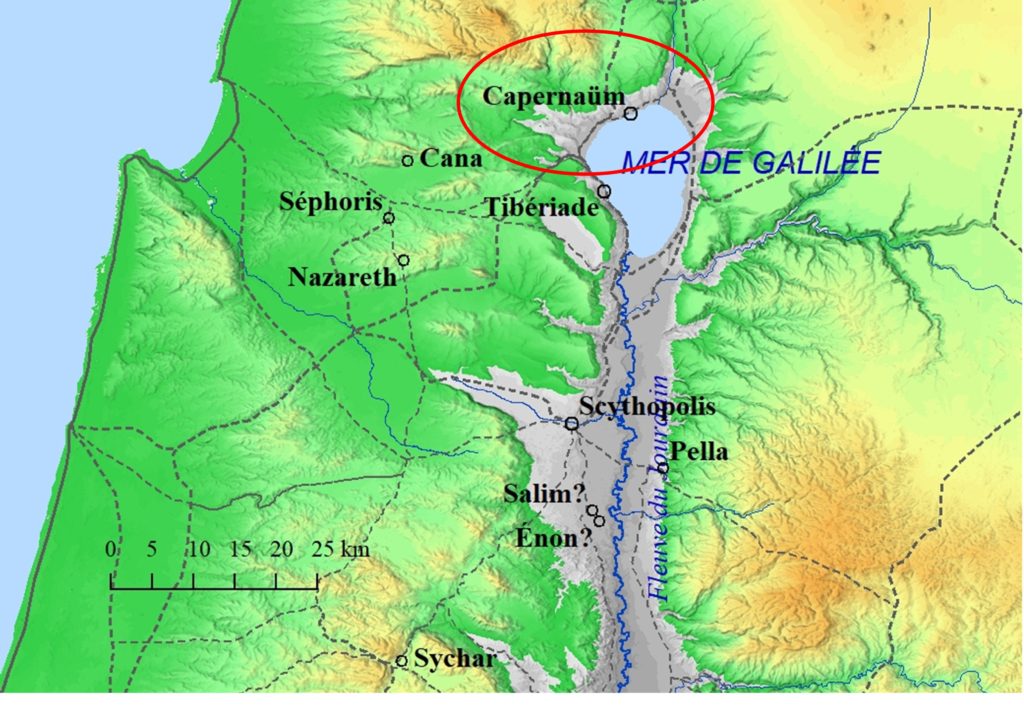
Location: On the plateau below a mountain near Capernaum in Galilee

Date: After the Passover pilgrimage to Jerusalem on April 5, AD 31

Method: We return to Matthew

Note on the approach: Matthew gives us the most information; Luke recounts this discourse more briefly

Capernaum

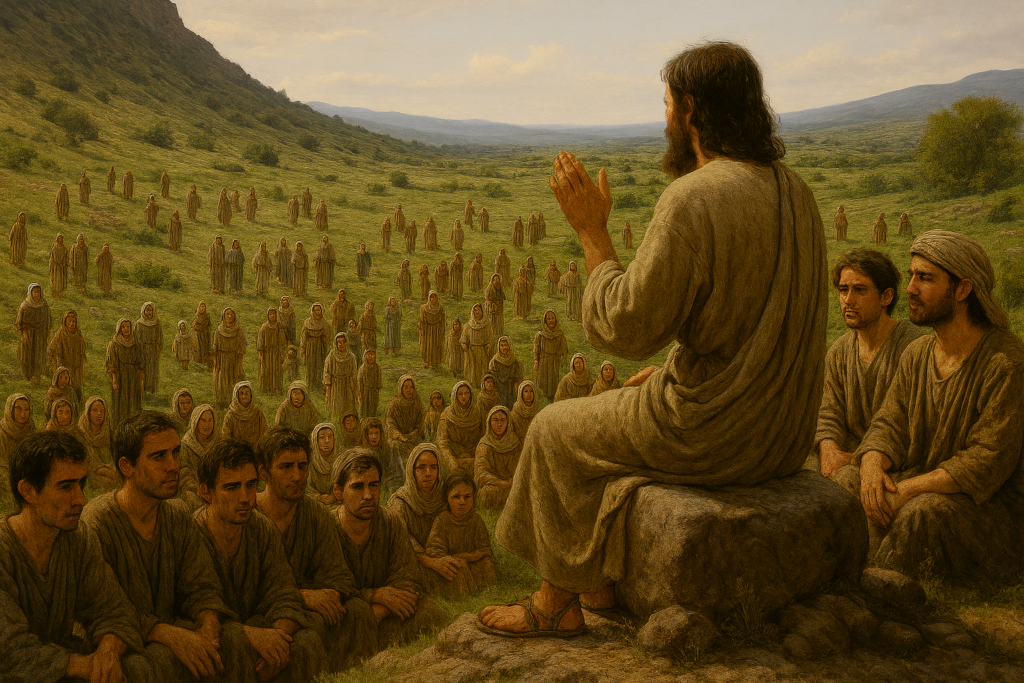
Once calm has returned, Jesus the Messiah can begin his discourse.

The Sermon on the Mount: the Beatitudes

The Sermon on the Mount (1): the Beatitudes

Comments

Matthew repeats ‘Blessed’ nine times and ‘Rejoice and be glad’ once. Luke, for his part, uses ‘Blessed’ only four times and ‘Rejoice’ only once, but adds ‘Woe’ four times. This distinguishes him from Matthew, who repeats that formula nine times in chapters 23 and 24 of his book.

This analysis suggests that the authors grouped together thoughts expressed by Jesus the Messiah at various points in his ministry to make their accounts flow and aid understanding. We may also envisage these words being repeated several times in the villages they passed through.

It is worth observing that this teaching seems mainly intended for disciples. Luke makes this clear by mentioning ‘a crowd of his disciples’. Although he also adds ‘a multitude of people’, this indicates that he is not referring to the apostles here.

The principle is the same each time: Jesus the Messiah pronounces people blessed even when circumstances seem to contradict that declaration. He then announces a reward. We therefore understand that happiness flows from the reward.

Finally, we find it difficult to memorise such a quantity of information, even if people then had better memories than today. This strengthens our conclusion that Matthew brought together in these two chapters various discourses delivered by Jesus the Messiah. We also believe that this information was repeated several times before different audiences.

We have already undertaken an in-depth analysis of all these texts in appendix ANN097, entitled ‘The Beatitudes’.