

While following Luke's chronology, we have included various texts on the same subject from other discourses of Jesus Christ to facilitate a deeper understanding of the message.
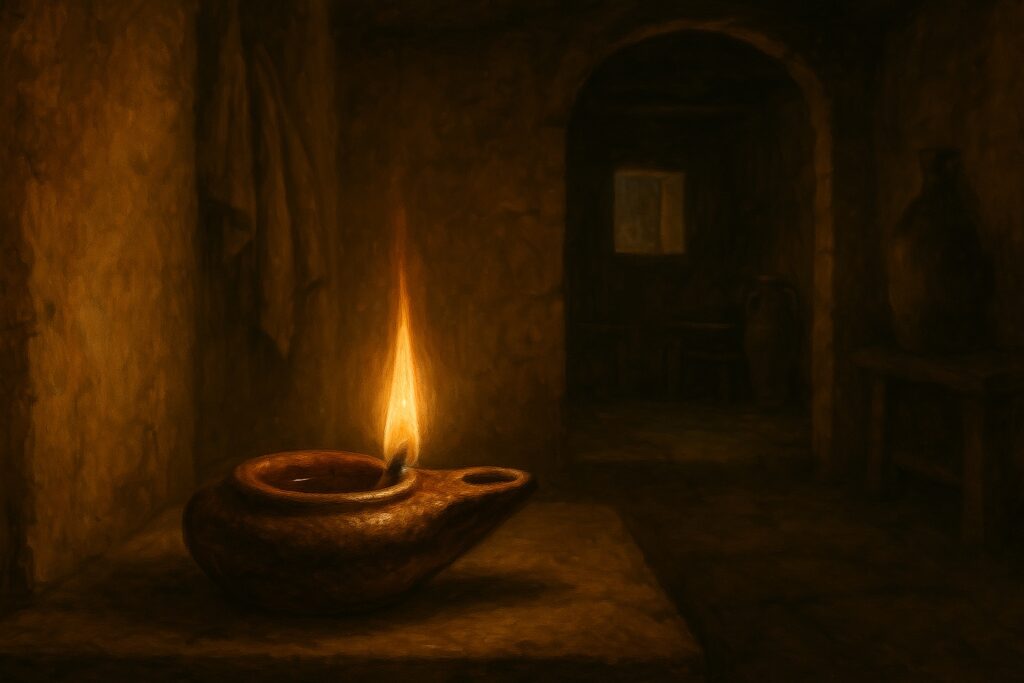
This evokes a lit lamp, which should logically be placed in the best position to illuminate the room and enable those present to see clearly. Luke then explains that our eye is the lamp of the body, thus representing the light mentioned earlier. He emphasizes that when the eye functions properly, it provides clear vision, which is no longer the case if its condition deteriorates.
There are therefore two distinct applications: the first consists in giving light to others, recalling that the disciple has become the light of the world (Matthew 5.14), and concerns testimony. The second shows that the disciple also needs to be illuminated by the light of the Messiah Jesus. Thus, the disciple reflects the light that Jesus Christ has brought into their soul.
What does it mean to ensure that our light does not become darkness, according to Luke 11.35?
An answer can be found in Matthew 5.16, which compares light to our exemplary way of life. Observing this should encourage those who witness it to honor God. If our way of life deteriorates, our light becomes darkness.
The teaching of Jesus Christ clearly reveals divine truth, illuminating our minds. These words act as a light revealing previously hidden spiritual realities, and this illumination must serve as a visible testimony to all.
The passage in Matthew 5.14-16, taken from the Sermon on the Mount (PER088), compares the individual who listens to and applies the teachings of Jesus Christ to a person who receives the light, lives in that light, and in turn illuminates those around them. In other words, they bear witness to divine grace.