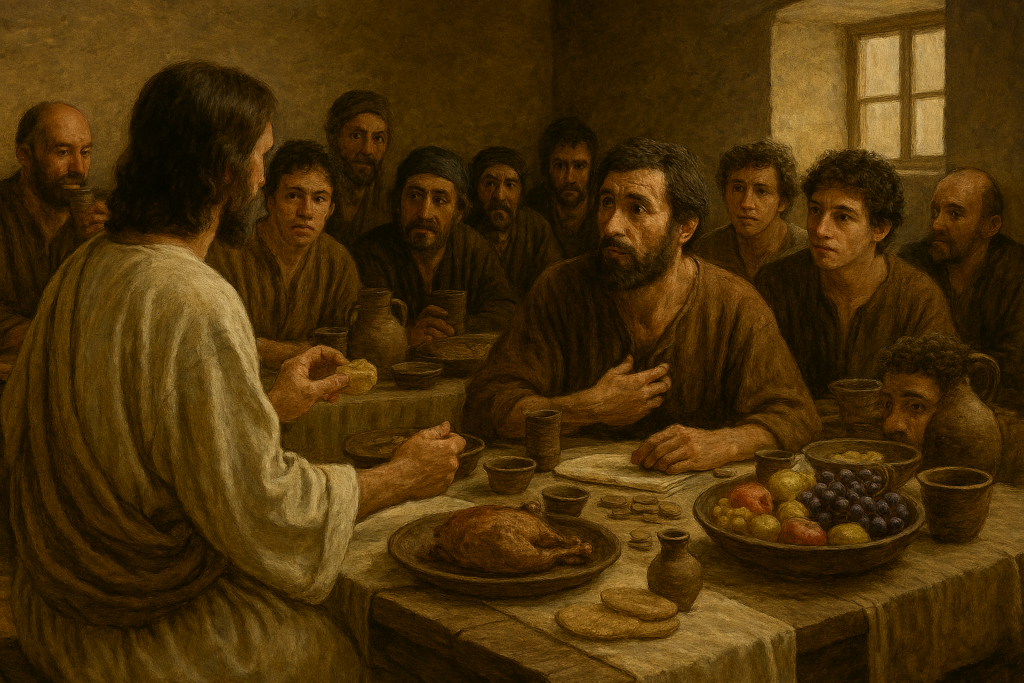

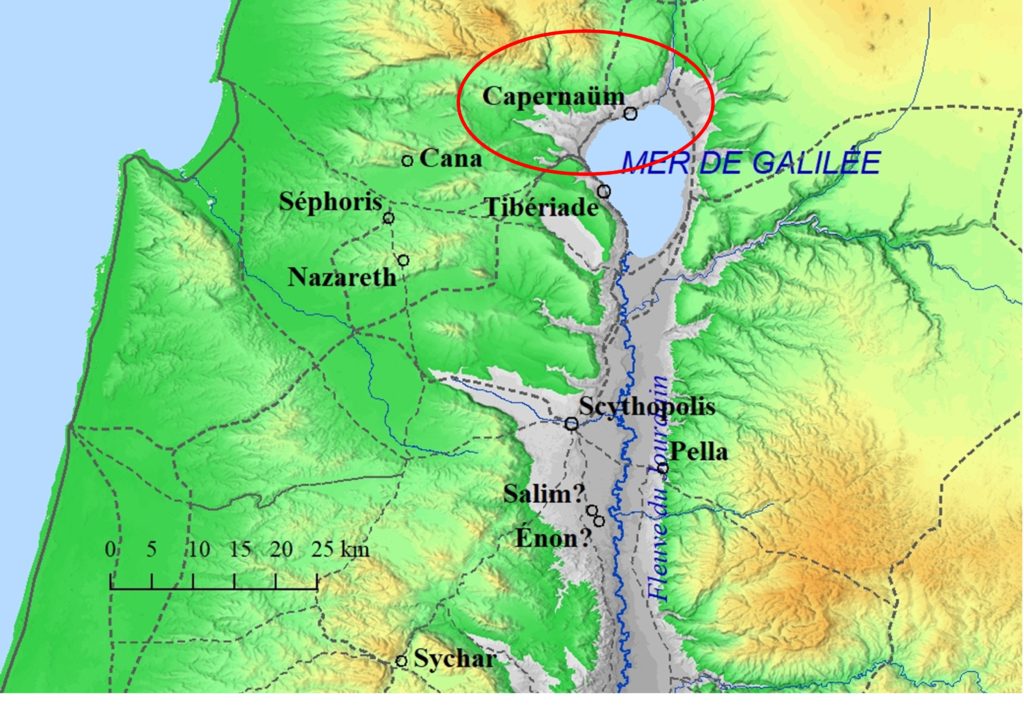
Matthew, also known as Levi, plans to hold a substantial banquet in his home, as Luke reports. He intends to invite all his friends and former colleagues. Jesus the Messiah and his six apostles—Simon Peter, Andrew, James, John, Philip and Nathanael—will certainly be present.
Matthew seems determined to share his testimony with those close to him and introduce them to Jesus the Messiah. His decision to give up his advantageous professional position doubtless aroused the curiosity of those around him. They were probably all eager to meet this new Teacher who had brought about so many changes in their colleague's life.
It is surprising to find Matthew among the apostles, since nothing in his social standing seemed to destine him to join this group. The details about him recounted in the Synoptic Gospels may also surprise us, since Matthew never played a major role in the Gospel narratives. He is mentioned only in the four lists of apostles (Matthew 10.1-4, Mark 3.13-19, Luke 6.12-16 and Acts 1.13).
Why, then, do Matthew, Mark and Luke refer to his calling by Jesus the Messiah? In the pericope PER066, we explain that the only plausible reason is that he is the author of the first Gospel, making it important to emphasise his position as an apostle.
The Gospels provide details of the calling of only five disciples. One important point, often raised by Jesus the Messiah's opponents, is his association with people rejected by Jewish society. Indeed, unlike John the Baptist, Jesus the Messiah does not hesitate to share a meal with tax collectors or sometimes even with people of ill repute.
We observe that five of the twelve disciples who form the group of apostles are still unnamed, particularly Judas Iscariot, who will play a crucial role later. We also know, thanks to Peter's words quoted by Luke in Acts 1.21-22, that these twelve men followed the Teacher from his baptism.
Matthew's occupation gives us an insight into his intellectual abilities. He naturally spoke Aramaic, but also Greek. He could have become the group's treasurer, but we believe Judas Iscariot already held that position. We may therefore envisage his presence at this banquet, although we have no concrete evidence.