CTD043

In which language did Jesus speak?

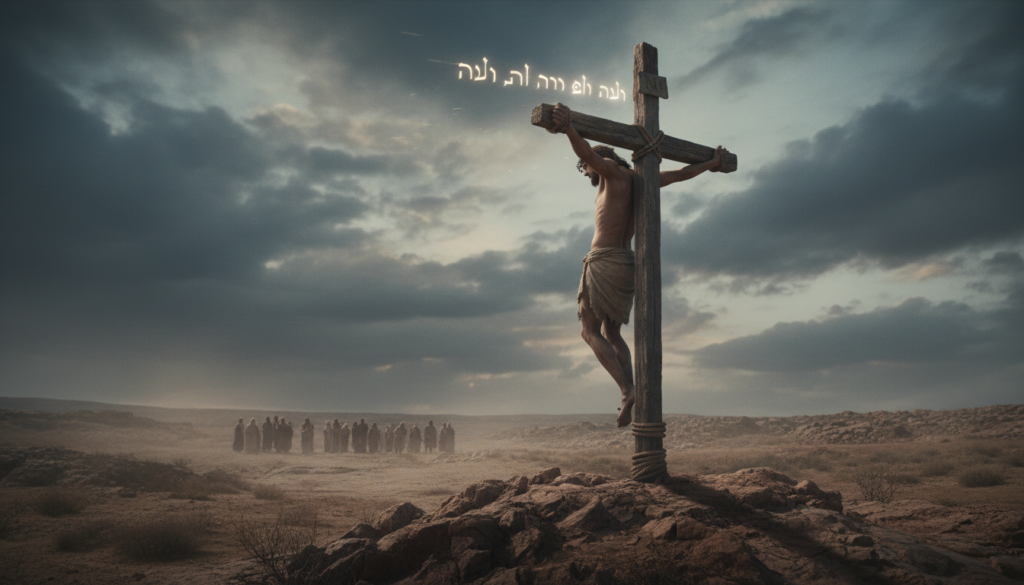
Article CTD043 addresses the alleged contradiction between Matthew (“Eli, Eli…”) and Mark (“Eloï, Eloï…”) regarding Jesus’ cry on the cross. Linguistic analysis shows that Jesus spoke Aramaic (as evidenced by “sabachthani” in both texts) and that the difference between “Eli” (the Hebrew form) and “Eloï” (the Aramaic form) simply reflects each evangelist’s adaptation to his readership. There is no contradiction.

15 min langue de Jésus Eli Eli Eloï Eloï Aramaic Hebrew 22 verses 6 books

Further information

I. Issue Raised

According to the website islamland.com (contradiction No. 74), the Gospels contradict each other regarding the language Jesus used when he cried out on the cross:

  • Matthew is said to have recorded a Hebrew form: “Eli, Eli…” (Matthew 27.46).
  • Mark is said to have recorded an Aramaic form: “Eloï, Eloï…” (Mark 15.34).

Does this difference constitute a contradiction?

III. Linguistic Context

À l'époque de Jésus, la Palestine était un carrefour linguistique. L'araméen constituait la langue vernaculaire du peuple juif, l'hébreu demeurait la langue liturgique utilisée dans les synagogues et le Temple, tandis que le grec servait aux échanges commerciaux et administratifs sous l'Empire .

Several passages in the Bible attest to the fact that Jesus was fluent in these different languages:

  • Araméen : Jésus utilise des expressions araméennes telles que « » (« Jeune fille, lève-toi ») (Mark 5.41), « Ephphatha » (« Ouvre-toi ») (Mark 7.34) et « Abba » (« Père ») (Mark 14.36).
  • Hébreu : Jésus lit et commente les Écritures hébraïques dans la de Nazareth (Luke 4.16-21).
  • Greek: Jesus speaks with Pilate during his trial (John 18.33-38) and with the Syro-Phoenician woman (Mark 7.26-29).

IV. Linguistic Analysis

The statement made by Jesus consists of two parts:

ElementMatthewMarkOrigin
"My God"Eli (אֵלִי)Eloï (אֱלָהִי)Hebrew / Aramaic
"Why have you forsaken me?"lama sabachthanilama sabachthaniAramaic

The verb “sabachthani” comes from the Aramaic root š-b-q (to abandon). In Biblical Hebrew, the text uses Psalms 22.1 the verb “azav” (עָזַב), which would result in “lama azavtani.” The presence of “sabachthani” in both Gospels confirms that Jesus was speaking Aramaic.

V. Explanation of the Difference

The only difference between the two accounts concerns the rendering of the phrase “my God”:

  • Eli (אֵלִי) corresponds to the Hebrew form, as it appears in the text of the Psalms 22.1.
  • Eloï (אֱלָהִי) is the equivalent Aramaic form, reflecting the Galilean pronunciation.

Matthieu, écrivant pour un public juif (Matthew 1.1 ; Matthew 5.17-18), emploie la forme hébraïsante « Eli », plus directement liée au texte scripturaire et plus familière à ses lecteurs. Marc, s'adressant à un public (Mark 15.39), transcrit fidèlement la prononciation araméenne entendue : « Eloï ».

This difference, therefore, stems from an effort to adapt to the readership, not from a contradiction in the facts.

VI. Theological Implications

In saying these words, Jesus quotes the first verse of Psalms 22.1, a messianic psalm that describes the sufferings of the persecuted righteous one. This psalm contains many elements that were fulfilled at the crucifixion:

  • "Everyone who sees me makes fun of me" (Psalms 22.7) — accomplished in (Matthew 27.39-44).
  • “They have pierced my hands and my feet” (Psalms 22.16) — fulfilled in (John 20.25).
  • “They divide up my clothes among themselves; they cast lots for my tunic” (Psalms 22.18) — fulfilled in (John 19.23-24).

Psalm 22 does not end in despair, but in a proclamation of victory and universal praise (Psalms 22.22-31). By quoting this psalm, Jesus identifies himself with the suffering righteous one of Scripture and proclaims, even in the midst of agony, God’s ultimate triumph. This quotation also fulfills the prophecy that the Messiah would be “counted among the transgressors” while bearing the sins of many (Isaiah 53.12).

Conclusion

The accounts of Matthew and Mark do not contradict each other. They both record the same words spoken by Jesus in Aramaic, with a slight variation in the rendering of the phrase “my God”: Matthew uses the Hebraized form “Eli,” while Mark uses the Aramaic form “Eloï.”

This difference attests to the richness of the Gospel accounts and to each evangelist’s adaptation to his audience, without altering the meaning or contradicting the facts. Together, the two Gospels attest that Jesus, at the moment of his death, fulfilled the Scriptures by identifying himself with the suffering righteous one of Psalm 22.