

_24 All these members of the can now take part in the family Passover feast, rested in spirit after what they regard as a magnificent victory. But events are not going to unfold as they imagined!
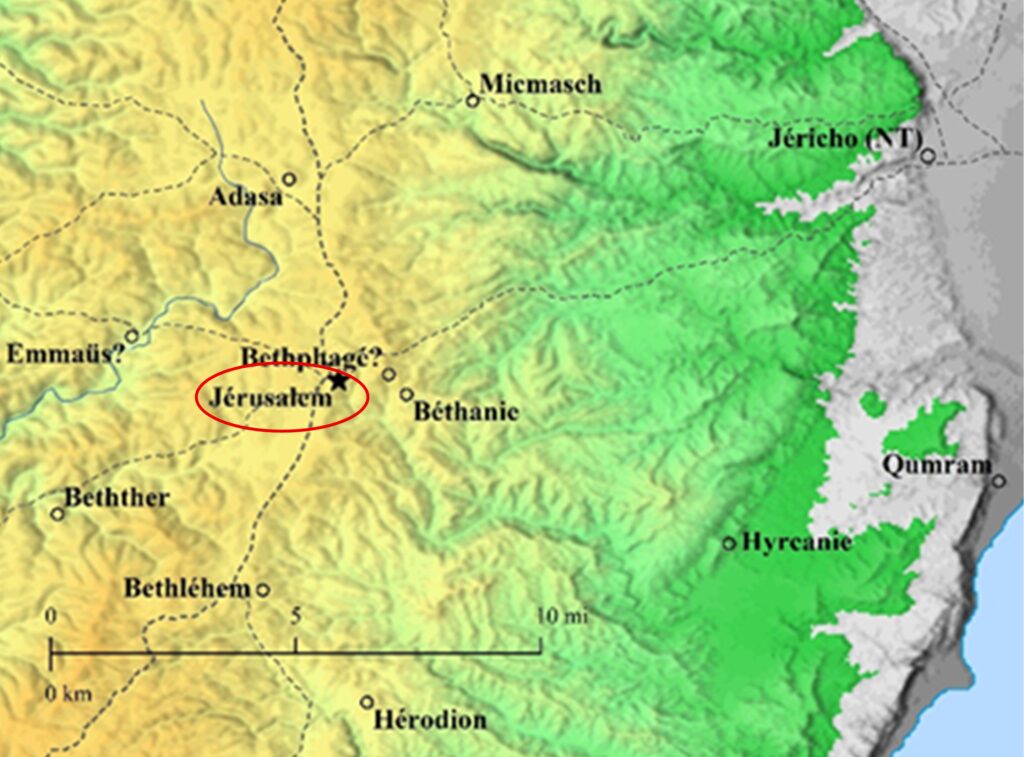
_25 From about noon until 3 p.m., there is darkness over the region of Jerusalem. Matthew 27.45 ; Mark 15.33 ; Luke 23.44.
_26 Death on the cross takes place on Friday, April 1, AD 33, around 3 p.m., according to the Gospels. It occurs before the end of this extraordinary night. The three days and three nights begin with this night, as the Jewish calendar requires.
You can consult the complete chronology in the study ANN026 : The hour of the crucifixion.
Commentary:
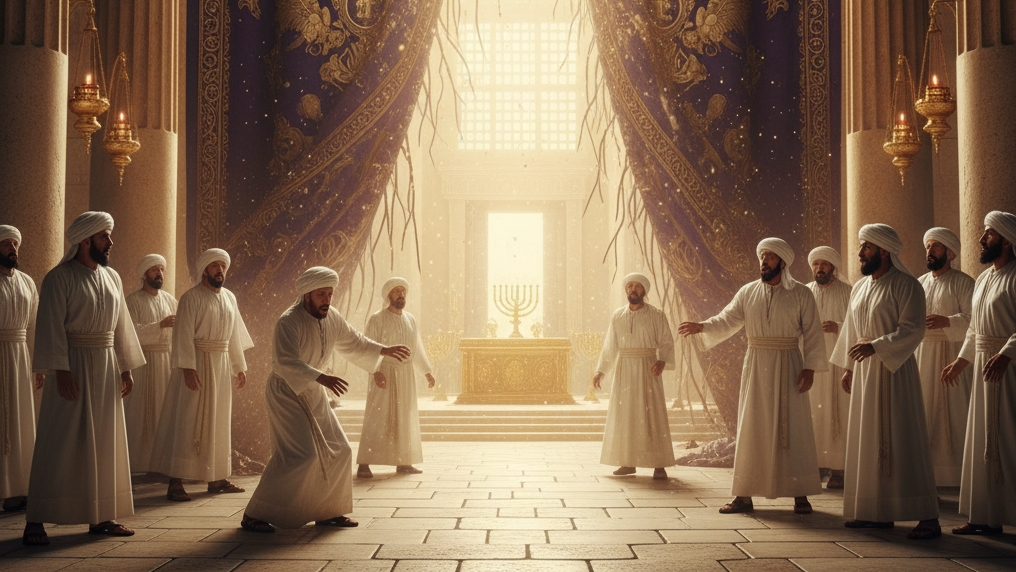
At the death of the Messiah Jesus, several extraordinary phenomena occur simultaneously, underlining the unique importance of this event in the history of salvation. Matthew reports that "the veil of the Temple was torn in two, from top to bottom, the earth shook, the rocks were split" (Matthew 27.51). Mark and Luke also confirm the tearing of the veil (Mark 15.38 ; Luke 23.45).
The veil mentioned here separated the Holy Place from the Most Holy Place in the Temple of Jerusalem (Exodus 26.31-33). Behind this veil was the space symbolizing God's special presence in the midst of his people. Only the high priest could enter it, once a year, on the Day of Atonement (Leviticus 16.2-15 and Leviticus 16.34). The tearing of the veil from top to bottom suggests a divine intervention rather than a human action. This event symbolizes the opening of free access to God made possible by the sacrifice of Christ (Hebrews 9.6-12 ; Hebrews 10.19-22).
The author of the epistle to the Hebrews moreover establishes a direct link between the veil and the sacrificed body of Christ. Thanks to his death, believers now have a "new and living way" to God (Hebrews 10.20). Thus, the tearing of the veil symbolically marks the end of the old sacrificial system and the coming into force of the new covenant announced by the prophets (Jeremiah 31.31-34 ; Luke 22.20).
The Gospels also mention an earthquake at the moment of Jesus' death (Matthew 27.51). In the Scriptures, earthquakes often accompany manifestations of divine power or major interventions of God in human history (Exodus 19.18 ; Psalms 18.7 ; Nahum 1.5). This upheaval of creation seems to underline the cosmic significance of the death of the Son of God.
Matthew adds that the rocks were split and that many tombs were opened (Matthew 27.51-52). This detail, absent from the other Gospels, underlines Christ's coming victory over death. The power that is about to raise Jesus is already at work symbolically within the very realm of the dead. Matthew specifies, however, that these raised saints did not come out of their tombs until after the resurrection of Jesus (Matthew 27.53), thus respecting the preeminence of Christ as the "firstfruits of those who have died" (1 Corinthians 15.20-23 ; Colossians 1.18).
All these phenomena together constitute a remarkable testimony to the importance of the crucifixion. The darkness had already shown the gravity of the judgment passed on sin. Now the tearing of the veil announces the reconciliation between God and mankind, while the earthquake and the opening of the tombs proclaim the imminent victory of the Messiah over the powers of death.
These extraordinary signs partly explain the reaction of the and of the soldiers. Confronted with a succession of unusual events, they realize that they have just witnessed far more than the execution of a mere condemned man. Matthew then reports this remarkable confession: "Truly this man was the Son of God" (Matthew 27.54). This declaration forms a striking contrast with the mockery directed at Jesus a few moments earlier (Matthew 27.39-43) and constitutes one of the first public recognitions of his identity after his death.