The article 'CTD019 - Jesus' testimony?' examines an alleged contradiction in the Gospel of John concerning Jesus' testimony. Jesus acknowledges human legal standards but emphasises the divine truth of his identity. In John 5,31, he aligns himself with human criteria for truthfulness, while in John 8,14, he affirms the validity of his divine testimony.
10 min
JesustestimonycontradictionGospel of John
12 verses
2 books
Voici la dix-huitième question ou contradiction présentée sur le site www.islamland.com, référencée sous le numéro 44 (Citation adaptée pour des raisons de clarté).
Selon l’Évangile de Jean, qu’a dit Jésus sur le fait de rendre son propre témoignage ?
1) : Si je témoigne de moi-même, mon témoignage n’est pas vrai (John 5.31).
2) : Même si je rends témoignage à moi-même, mon témoignage est vrai (John 8.14).
Notre réponse :
Regardons les textes en question.
La question d’une éventuelle contradiction dans les propos de Jésus rapportés dans l’Évangile selon Jean, notamment entre (John 5.31) et (John 8.14), nécessite une analyse attentive du contexte et des intentions discursives. À première vue, Jésus semble affirmer d’un côté que son témoignage sur lui-même n’est pas valable, et de l’autre, qu’il est vrai. Toutefois, cette apparente tension disparaît dès lors que l’on distingue les cadres d’énonciation.
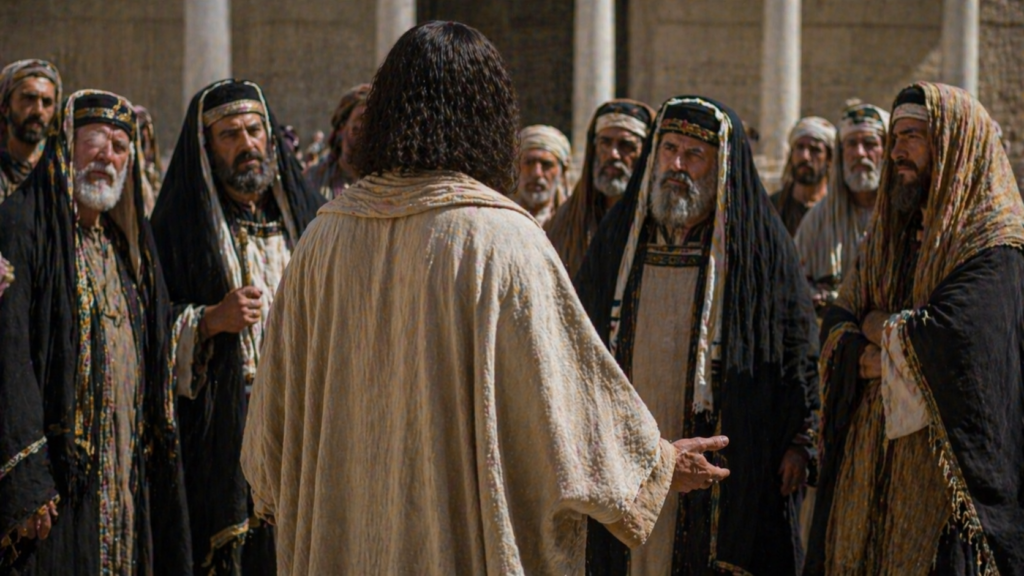
Dans le passage de (John 5.31-32), Jésus s’adresse aux autorités religieuses dans un contexte de controverse. Il adopte leur propre cadre juridique, fondé sur la loi mosaïque, selon laquelle un témoignage isolé ne suffit pas à établir la vérité (Deuteronomy 19.15). En déclarant : « Si c’est moi qui rends témoignage de moi-même, mon témoignage n’est pas vrai » (John 5.31), Jésus ne nie pas la véracité intrinsèque de ses paroles, mais il raisonne selon les critères juridiques reconnus par ses interlocuteurs. Il introduit alors d’autres témoins : Jean le Baptiste, ses œuvres, et surtout le Père, qui atteste en sa faveur (John 5.32-36).
Dans (John 8.14), le contexte est différent. Jésus répond à une objection des qui contestent son autorité après sa déclaration : « Je suis la lumière du monde » (John 8.12). Lorsqu’il affirme : « Même si je me rends témoignage à moi-même, mon témoignage est vrai », il ne contredit pas sa déclaration précédente, mais il en précise la portée. Il souligne ici que son témoignage est intrinsèquement valide, car il procède d’une connaissance parfaite de son origine et de sa destinée, en tant qu’envoyé du Père. L’argument ne repose plus sur un cadre juridique humain, mais sur la vérité divine de son identité.
Par ailleurs, Jésus ne s’en tient pas à un témoignage isolé : il invoque à nouveau le Père comme second témoin, conformément à la loi (John 8.17-18). Ainsi, même dans ce second passage, le principe posé en (John 5.31-32) demeure respecté.
En conclusion, il n’existe aucune contradiction entre ces deux déclarations. Dans le premier cas, Jésus adopte le raisonnement juridique de ses interlocuteurs pour démontrer la validité de son témoignage à travers des attestations externes. Dans le second, il affirme la vérité intrinsèque de son identité tout en confirmant la présence d’un second témoin divin. Les deux passages expriment donc une même réalité sous des angles complémentaires, révélant la cohérence du discours johannique.
A title, a person, a place, a reference (“Luke 15”)…
opens in a new window
Bible reference
INF002
Information note
INF002 - The Pharisees
The Pharisees
The Pharisees were an important religious and social group in ancient Judaism, particularly during the Second Temple period. Here are some key points about them:
Origins and history
Origins: The Pharisees emerged as a distinct group after the Maccabean revolt, around 165-160 BC. They were often regarded as the spiritual descendants of the Hasideans.
Period: They flourished until the destruction of the Second Temple in AD 70. After that date, their teachings formed the basis of what became rabbinic Judaism.
Beliefs and practices
Sacred Texts: Unlike the Sadducees, who focused solely on the written law (the Pentateuch), the Pharisees believed in both a written law and an oral law (the oral Torah). Resurrection: The Pharisees believed in the resurrection of the dead and in the immortality of the soul. Rites and Laws: They stressed the importance of oral traditions and of interpretations adapted to contemporary circumstances.
Influence and Legacy Influence: The Pharisees had a great influence on Jewish liturgy and religious practice. Their teachings were incorporated into the Mishnah, a compilation of the Jewish oral tradition, around AD 200. Legacy: After the destruction of the Second Temple, the teachings of the Pharisees formed the basis of rabbinic Judaism, which continues to influence modern Judaism.
The Pharisees are often mentioned in the New Testament, notably in the Gospels and the Acts of the Apostles, where they are frequently in conflict with Jesus and the other religious figures of the time.
The Pharisees in the Bible
They are the most representative group of Judaism. Its members, drawn from the people, oppose compromise with the Roman invader, but also with Hellenism. We see them as closer to the population than the Sadducees.
They are mentioned one hundred and three times in the New Testament, ninety-three times in the Gospels, nine times in the Acts of the Apostles and once in the Epistle to the Philippians.
Their relations with the Messiah Jesus frequently appear tense and conflictual. He rebukes them at times in violent terms, such as “woe to you” and “hypocrites”, which clearly shows this opposition. They do not have access to positions of high responsibility, controlled by the Romans and therefore reserved for Sadducees sympathetic to Rome, but they form the largest group in the Sanhedrin.
They regard themselves as the great defenders of the law of Moses, on which they comment. Their interpretation becomes the rule for the people to follow. The Messiah Jesus condemns these excesses on various occasions (Matthew 23.13-29).
They often disagree with their colleagues, the Sadducees, on points of doctrine such as eternal life or angels. To the written Law of Moses they added oral principles, which allow them to get around its prescriptions. Jesus does not fail to point this out (Matthew 23.23).
Nicodemus and Joseph of Arimathea belonged to this political and religious group, which did not prevent them from converting to Christianity.