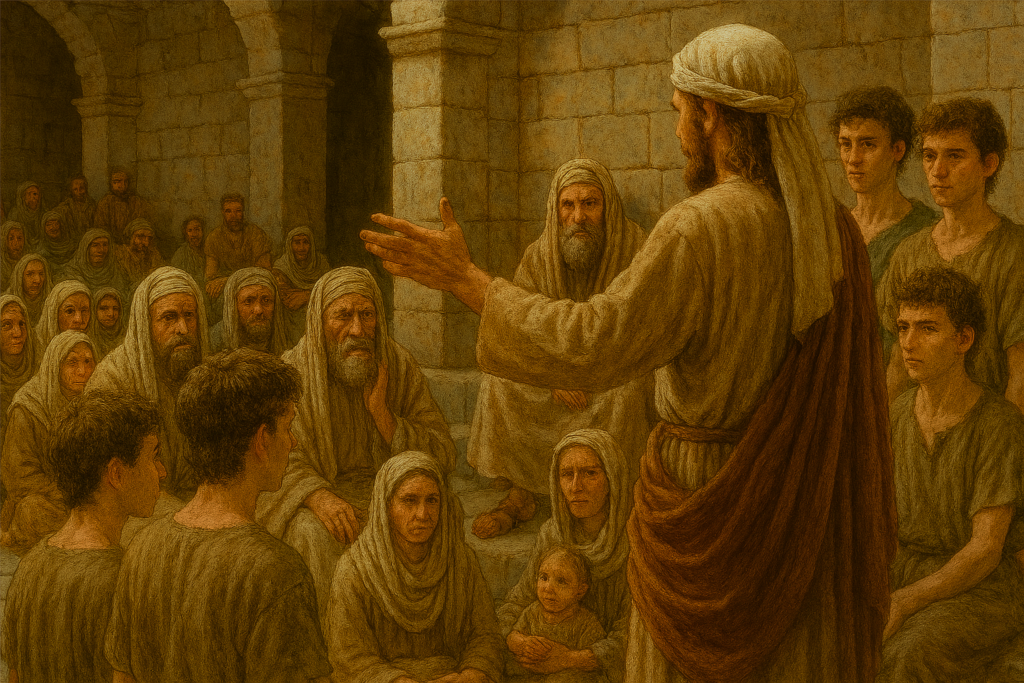

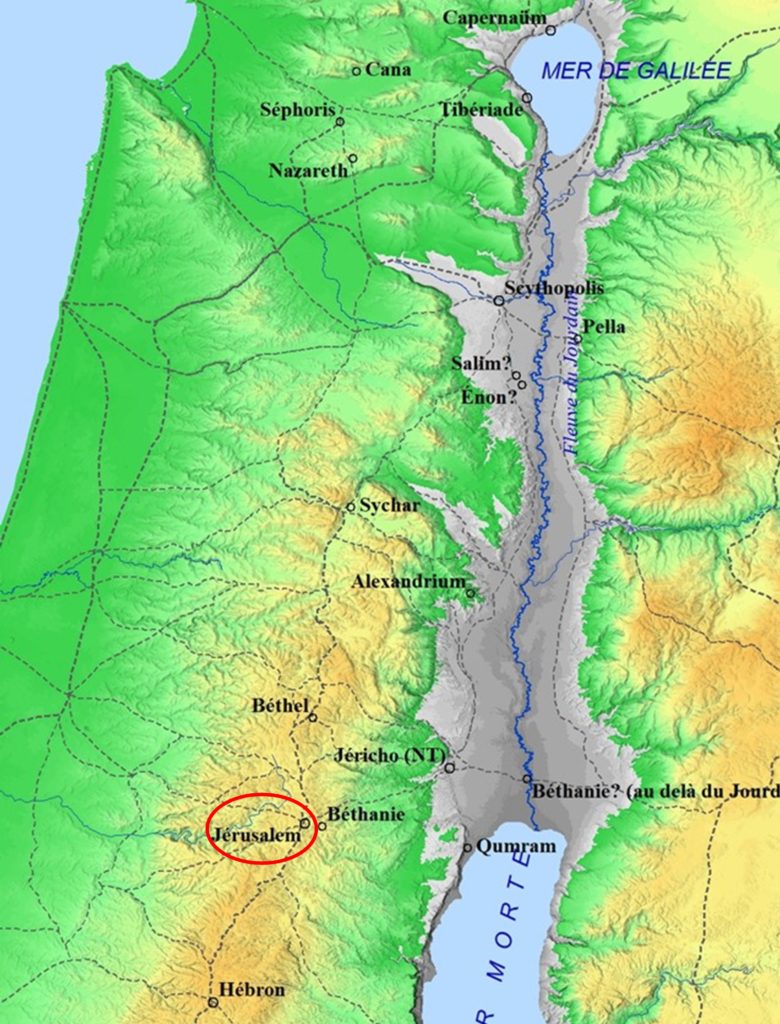
John concludes his account with a more technical aspect directly related to the law of Moses. A few hours after the man's healing at the , we are probably in the Temple court in Jerusalem.
Jesus the Messiah continues his address to Jews learned in the law. The notion of testimony, a recurring theme in the account of John 1.7, is again brought to the fore. Having stressed the unity of the Father and the Son, John emphasises the testimonies.
As the Messiah, Jesus relies not on his own testimony, which could be interpreted as arrogance, but on that of John the Baptist. This great prophet, whose words (John 1.26-27) were known to all these Jews, placed Jesus above himself and proclaimed him the Messiah. Yet despite their respect for John the Baptist, these Jews did not believe him!
A second testimony, that of the Father or God, confirms Jesus' messiahship. How is it manifested? The miracles performed constitute this divine testimony. No one can accomplish such work without God's help.
John describes an unexpected consequence: by rejecting the Son, you reject God! Through their behaviour towards Jesus the Messiah, all these religious men, these spiritual guides, thus testify that they do not know God. The accusation is serious and should challenge all these religious men. We know that some will convert, including Nicodemus and Joseph of Arimathea, and surely others as well.
Finally, Jesus invokes Moses, traditionally considered the author of Jewish law. Moses' writing of the announces the coming of a Messiah (Genesis 28.18; Genesis 49.10; Numbers 24.17; Deuteronomy 18.15). As the Messiah, Jesus came not to judge people but to save them (John 3.17). Yet it is Moses who will call them to account!
Jesus does not mention Moses at random, but simply because these men claim their position as descendants of Moses. They present themselves as fundamentalist defenders of the Torah. This law now occupies their entire minds, and all compassion has vanished. We see the demonstration again in the account of John 8.1-11 concerning the adulterous woman. The two sides are clearly defined: on one side, rigid, implacable law; on the other, the spirit of the law with compassion and forgiveness.