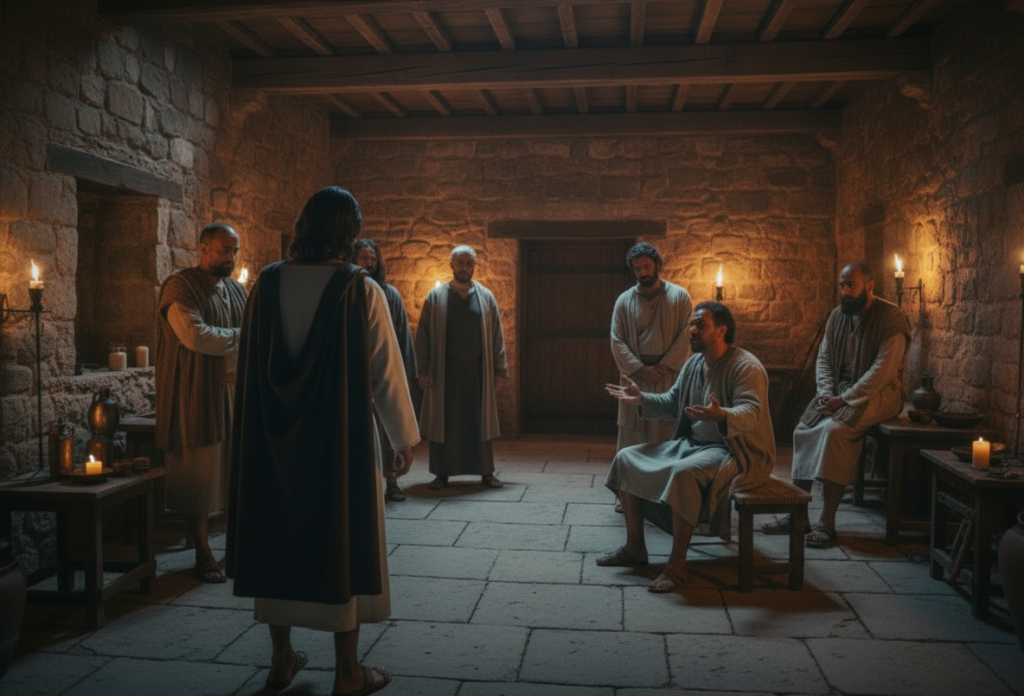

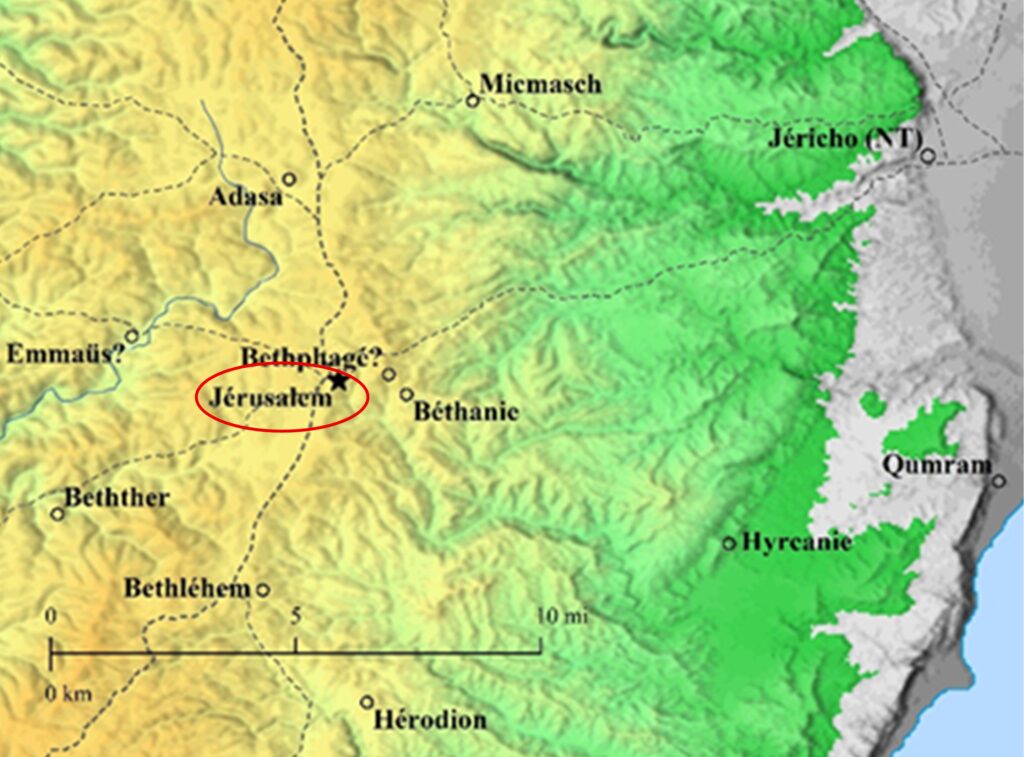

_3 The house is, in our view, that of Mary, the mother of John, surnamed Mark. Acts 12.12.
_4 The Passover meal begins on Thursday evening, after 6 p.m. It is already Friday for the Jews (Mark 14.17, Matthew 26.20, Luke 22.14-18). It is therefore not the official Seder, which will take place on Friday evening John 18.28.
_5 The meal ends on Friday morning before dawn, between midnight and 2:30 a.m.
_6 Judas Iscariot left before the end of this meal. John 13.30.
You can consult the complete chronology in the study ANN026 : The hour of the crucifixion.
Commentary:
In these verses (John 14.1-15), thanks to the testimony of the Apostle John, we are introduced into the intimacy of the circle of the Twelve. The evangelist brings us into a moment of profound communion, a few moments before the drama of the cross. This passage reveals not only the Master’s tenderness toward his disciples, but also the depth of his spiritual teachings as he prepares them for his departure. The atmosphere is charged with emotion; the Passover has just ended, the night is advancing, and the Lord, aware of the trouble in the hearts of his companions, begins with a word of comfort:
This invitation to total faith in him is at the heart of the discourse. The Messiah Jesus reveals to them that he is going away to prepare a place for them in the Father’s house (John 14.2): a language of hope and consolation. This departure, which they fear, is not a loss, but a promise of future union. Thomas, one of the most realistic of the group, voices their lack of understanding:
This question gives the Messiah the opportunity to express one of the most essential teachings of the whole Gospel:
By this saying, the Messiah Jesus presents himself as the one mediator between God and men (1 Timothy 2.5).
Philip, in turn, asks to see the Father, so as to be satisfied. Jesus’ answer shows the perfect unity between the Son and the Father:
This passage sheds light on the divinity of Christ: in his works and his words, the very person of God is revealed (Colossians 1.15). The disciples thus discover that faith in Jesus the Messiah is not an intellectual assent, but a living encounter with the Father through the Son.
The Messiah Jesus also promises them that those who believe in him will do great works, because he is going to the Father and will send them the Paraclete, that is, the Holy Spirit (John 14.12-13; John 14.26). This promise prepares the ground for the future mission of the apostles: what they have seen in their Master, they will reproduce, not by their own strength, but by the divine power that will work in them.
John passes on to us here a succession of dense and coherent teachings. It is possible that he gathered together several sayings of the Messiah Jesus spoken at moments close to one another, as the flow of the narrative and the themes addressed suggest. Nevertheless, this changes nothing about the general chronology: these are no longer historical events, but essential spiritual lessons for understanding the rest of Christ’s work and the birth of the apostolic testimony.
This intimate dialogue between the Master and his own places us, as readers, among the hearers of these words. Like them, we are invited to trust, to faith, and to inner peace. The central message of this passage is a promise of permanent union: the Messiah Jesus is going away, but the better to dwell in them through the Spirit. In the distress of the hours to come, this assurance will become the very source of their hope. Thus this first great teaching of the farewell discourse is rooted not in the fear of departure, but in the certainty of presence.
John now adds 6 points of teaching that will follow one another. These are also the Master’s farewells to his disciples.
1 The Messiah Jesus is the way that leads to heaven.
2 He announces the coming of the Holy Spirit.
3 He compares himself to the vine.
4 He gives warnings concerning future persecutions.
5 He comforts his disciples.
6 He ends with a prayer, like a farewell.
John takes care to report faithfully the last instructions of the Messiah Jesus and places them just before his arrest. According to our analyses, the group has already arrived at the . We will therefore incorporate these six elements into our synopsis in order to offer a detailed commentary.
This passage once again highlights the importance and richness of John’s writings. His thorough knowledge of the other gospels enables him to complete their content harmoniously, offering a more precise view of the events.
The last words of a man always carry a particular intensity. In this text, we are in the presence of the Master’s final teachings, marked by a unique depth and solemnity.