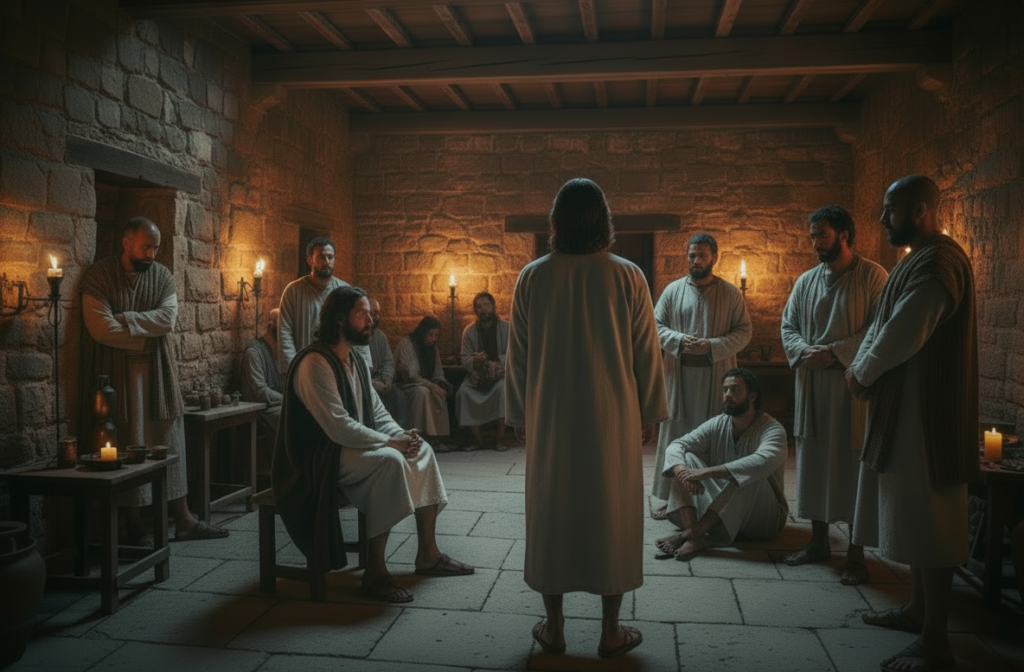

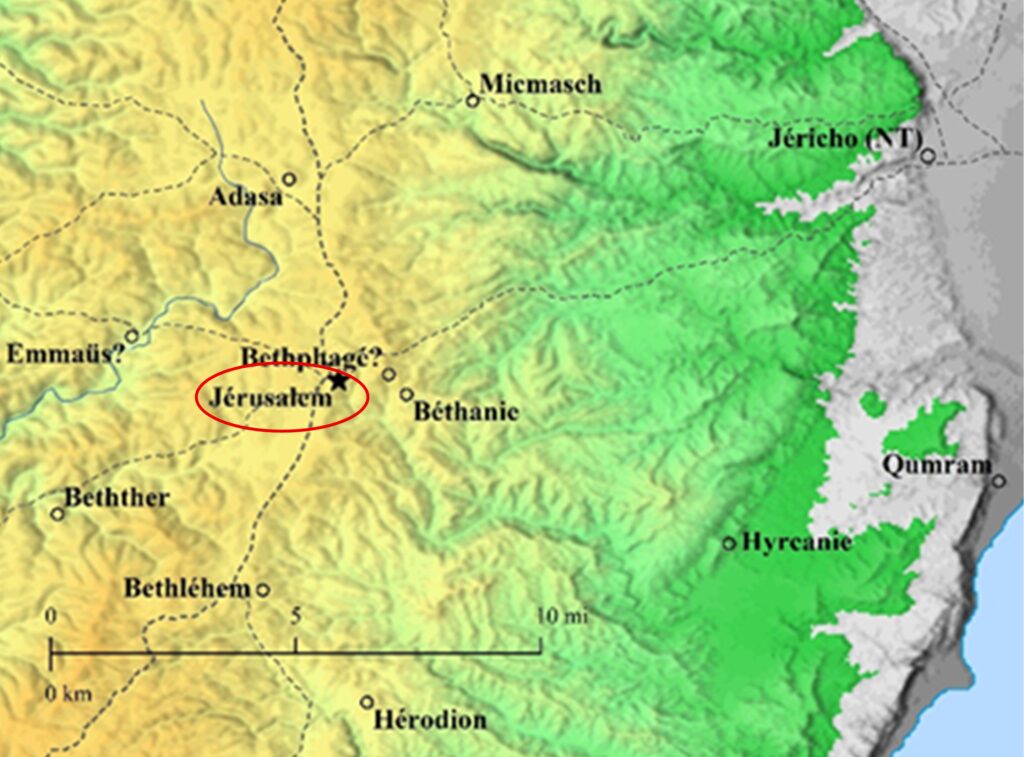

_3 The house is, in our view, that of Mary, the mother of John, surnamed Mark. Acts 12.12.
_4 The Passover meal begins on Thursday evening, after 6 p.m. It is already Friday for the Jews (Mark 14.17, Matthew 26.20, Luke 22.14-18). It is therefore not the official Seder, which will take place on Friday evening John 18.28.
_5 The meal ends on Friday morning before dawn, between midnight and 2:30 a.m.
_6 Judas Iscariot left before the end of this meal. John 13.30.
You can consult the complete chronology in the study ANN026 : The hour of the crucifixion.
Commentary:
This passage of John 14.16-31 stands at the heart of the farewell discourse of the Messiah Jesus, as he prepares his disciples for his imminent departure. Jesus promises the coming of the Holy Spirit, called here the Paraclete (or Comforter, Advocate), to carry on his work after he is gone (John 14.16-17).
This text is clearly tied to the departure of the Messiah Jesus, who announces that he is going to leave his disciples, but assures them that they will not be left “orphans” (John 14.18). The Holy Spirit will take over, dwelling with them and in them, and this promise extends to all who will believe after them: the Holy Spirit becomes the living bond between the glorified Christ and his Church (John 7.39, Romans 8.9-11).
John most likely did not transcribe Jesus’ words word for word. Rather, he summarized the Lord’s thought, received at different times, under the inspiration of the Holy Spirit (John 14.26), the very One who was to “bring to remembrance all that Jesus had said.” The reliability of John’s testimony therefore rests on the work of this promised Spirit.
This passage also reveals the particular sensitivity of the apostle John, who was able to contemplate the spiritual and emotional depth of the Messiah. Jesus appears there not only as teacher and prophet, but as the one who obeys the Father’s will, showing that nothing happens by chance; everything is fulfilled according to the divine plan (John 3.16-17, John 17.4-5).
The text follows a clear progression: first the Messiah Jesus announces his departure (John 14.16-20), then he promises the Spirit of truth to guide believers (John 14.21-24), next he offers his peace as a remedy for fear and inner turmoil (John 14.25-27), and finally he speaks of the perfect obedience that shows the love between the Father and the Son (John 14.28-31).
When the Messiah Jesus concludes with “Arise, let us go from here” (John 14.31), this does not necessarily mean that they leave Mary’s house at once; it is rather a literary transition, a change of tone before the four discourses that follow, reported by John (John chapters 15 to 17). This verse thus marks the passage from a phase of teaching to a phase of action or prayer.
The heart of the message of this passage lies in the continuity between the Messiah Jesus and the Holy Spirit: one goes, the other comes, but both accomplish the Father’s will. The departure of the Son and the coming of the Holy Spirit are two aspects of one and the same purpose: that of God dwelling with his children.
By going to the cross, the Messiah Jesus shows that he loves the Father and that his perfect obedience is a revelation of that love (John 14.31). The Holy Spirit will extend this work, keeping the presence and the word of Christ alive in the lives of believers. John 14.16-31 is therefore not only a farewell discourse, but also a promise of presence: that of the Triune God, working in history and in the heart of every disciple.