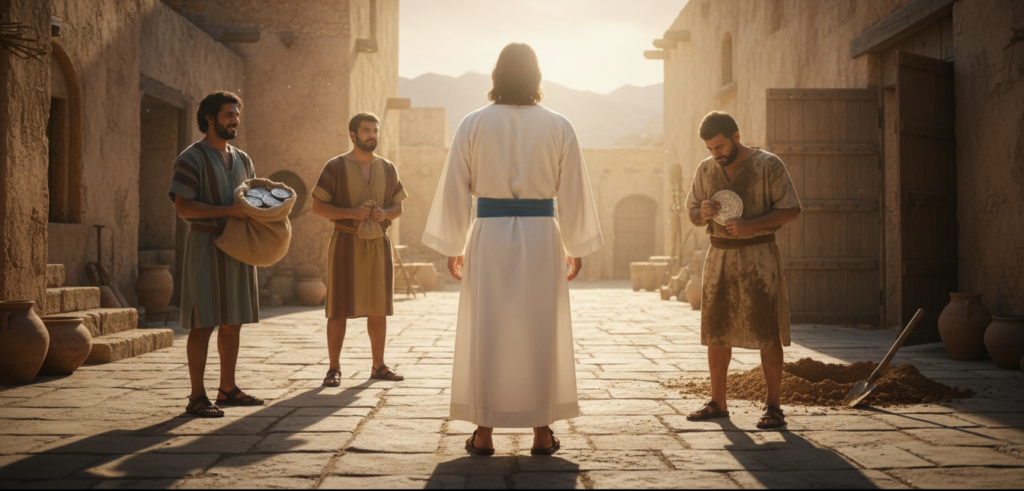


Cette autre est plutôt étonnante, le Maître, absent confie des responsabilités à ses serviteurs. Chacun d’eux va agir selon sa propre conception du service. Elle est connue comme celle des talents qui sont transcrit dans notre traduction () par « sacs d’argent ».
The of the talents in Matthew 25.14-30 teaches the responsibility that God entrusts to each person according to his abilities, and the need to make what he has given us bear fruit. The master, representing the Messiah Jesus, entrusts his goods to his servants before leaving, an image of the present time in which he is bodily absent but in which his disciples must act faithfully.
The talents symbolize everything God entrusts to us: spiritual gifts, abilities, time, resources, and opportunities. The first two servants put them to good use, showing their zeal and sense of duty. It is their faithfulness, more than the result itself, that the master rewards. The third servant, on the other hand, out of fear or laziness, buries his talent and produces nothing.
His attitude reflects distrust toward the master and a refusal to take risks in faith. The judgment that follows reveals the seriousness of spiritual inaction. Not using what God entrusts to us amounts to despising it and leads to loss. The master then takes the talent away from the useless servant to give it to the one who knew how to use it, underlining that gifts grow when we put them to work.
This therefore insists on actively awaiting the Lord's return: it is not a matter of passively keeping, but of serving faithfully and courageously. Finally, it reminds us that the true reward is not only material or visible, but lies in the joy of sharing in the master's fellowship, the joy of God himself.