
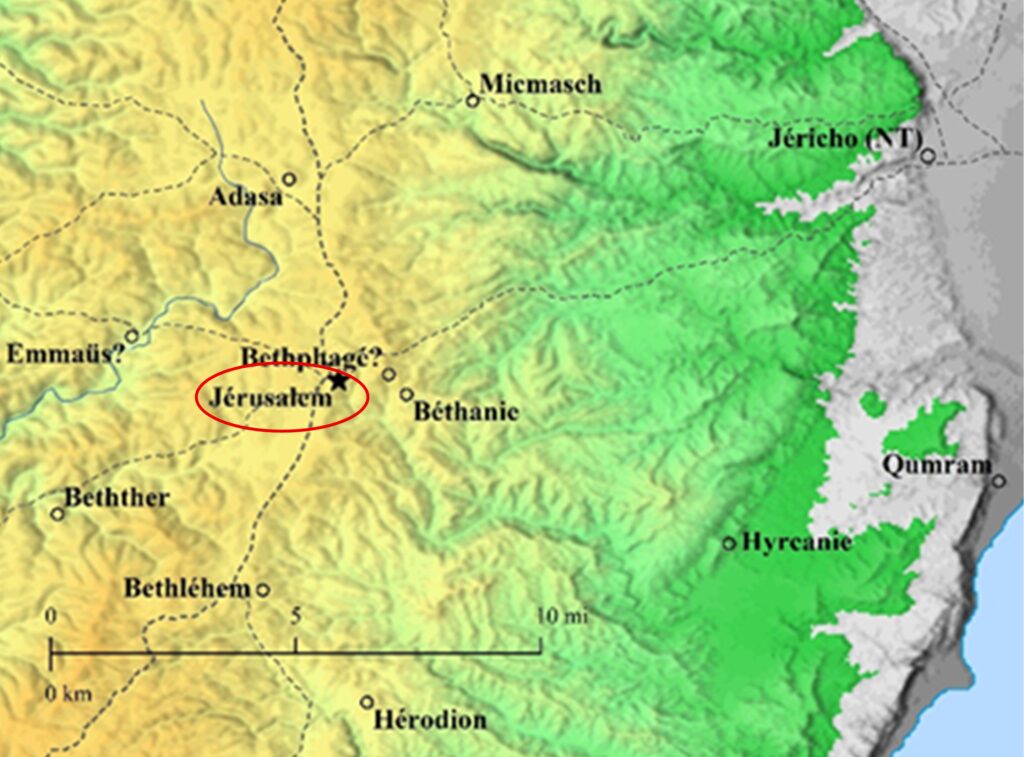

This belongs to the great eschatological discourse delivered by Jesus on the . This teaching is addressed only to the apostles: the crowd had long since dispersed.
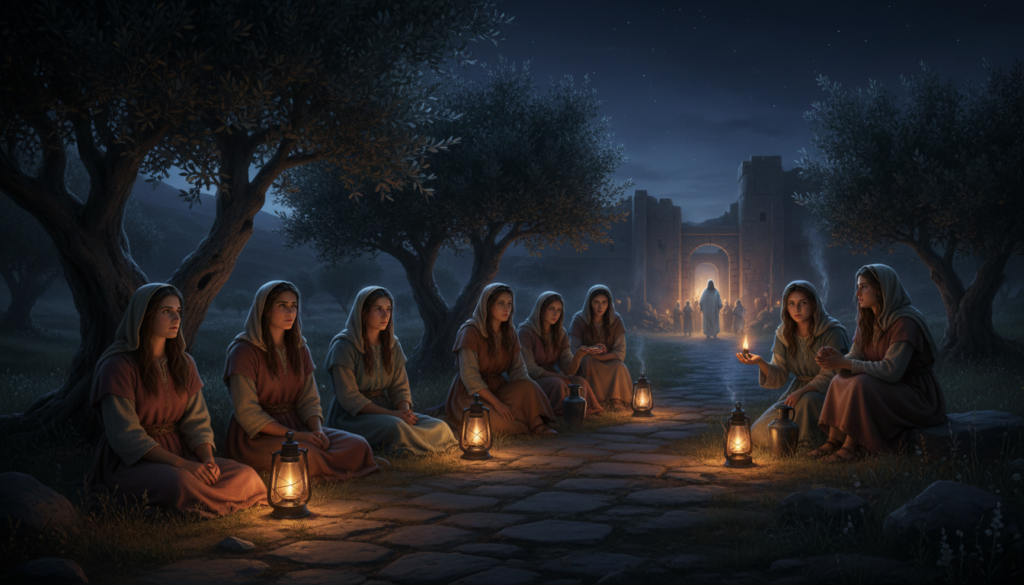
The of the ten virgins highlights the need to be ready for the Lord's return. Five of them are called wise, because they had set aside a reserve of oil — a symbol of a living, well-tended spiritual life. The other five, called foolish, made no provision for the duration of the wait (Matthew 25.1-4).
The Bridegroom deliberately delays, in order to test everyone's vigilance and faith (Matthew 25.5). But when the midnight cry rings out, the difference between those who are ready and those who are not becomes clear (Matthew 25.6-7). The oil cannot be shared, for no one can transfer his personal relationship with God (Matthew 25.8-9). The prudent virgins enter with the Bridegroom, while the others find the door shut, a reminder of the gravity of judgment (Matthew 25.10-12).
Jesus concludes with a solemn call to vigilance, for no one knows either the day or the hour of his return (Matthew 25.13). This warning echoes the one addressed to the faithful servant (Matthew 24.45-51) as well as the caution against those who say “Lord, Lord” without obeying his will (Matthew 7.21-23). The whole New Testament takes up this call to watchfulness and sobriety while awaiting Christ (1 Thessalonians 5.1-6; 1 Peter 1.13; Revelation 3.1-3).
Every human being's future flows from his or her choices. There are only two outcomes: to enter with the Bridegroom or to arrive too late. Responsibility rests with each person, for spiritual neglect shuts the door. The message is unequivocal: everyone knows what God expects of them — so we must choose whom to serve and prepare starting now. The tone is serious, and the warning deserves the greatest attention.