

PER294

The questions of the Pharisees and the Herodians

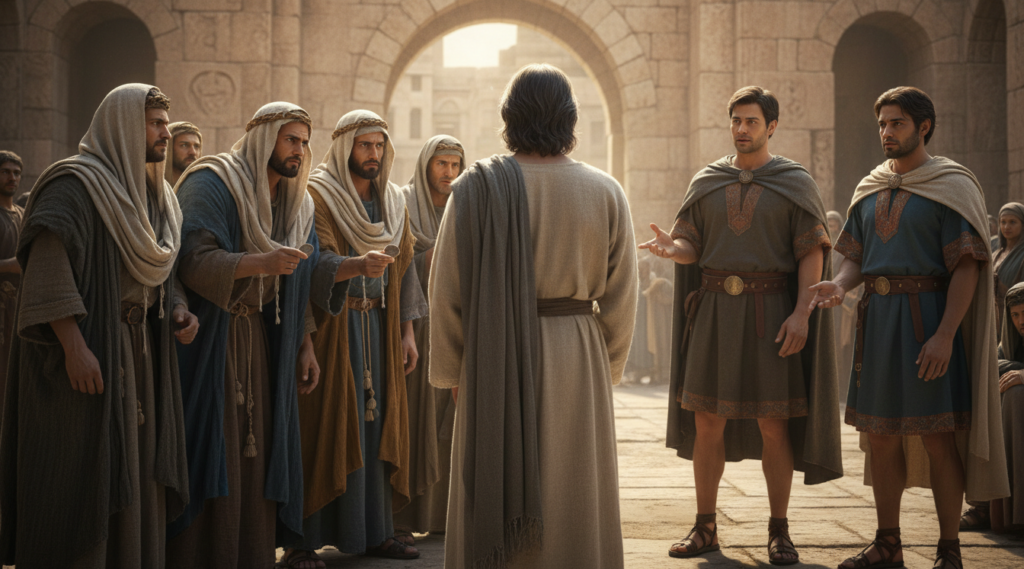
The Pharisees and Herodians try to trap Jesus by asking him whether one should pay the tax to Caesar. His answer — “Render to Caesar the things that are Caesar’s, and to God the things that are God’s” — foils the trap and establishes the fundamental distinction between civil authority and divine sovereignty, reminding us that man, who bears the image of God, belongs wholly to him.

7 min tax to Caesar Pharisees Herodians denarius Temple of Jerusalem 7 verses 4 books

Resources

Biblical texts

Matthew
Matthew 22.15-22 (King James Version)

Then went the Pharisees, and took counsel how they might entangle him in his talk.

And they sent out unto him their disciples with the Herodians, saying, Master, we know that thou art true, and teachest the way of God in truth, neither carest thou for any man: for thou regardest not the person of men.

Tell us therefore, What thinkest thou? Is it lawful to give tribute unto Caesar, or not?

But Jesus perceived their wickedness, and said, Why tempt ye me, ye hypocrites?

Shew me the tribute money. And they brought unto him a penny.

And he saith unto them, Whose is this image and superscription?

They say unto him, Cæsar’s. Then saith he unto them, Render therefore unto Cæsar the things which are Cæsar’s; and unto God the things that are God’s.

When they had heard these words, they marvelled, and left him, and went their way.

Mark
Mark 12.13-17 (King James Version)

And they send unto him certain of the Pharisees and of the Herodians, to catch him in his words.

And when they were come, they say unto him, Master, we know that thou art true, and carest for no man: for thou regardest not the person of men, but teachest the way of God in truth: Is it lawful to give tribute to Cæsar, or not?

Shall we give, or shall we not give? But he, knowing their hypocrisy, said unto them, Why tempt ye me? bring me a penny, that I may see it.

And they brought it. And he saith unto them, Whose is this image and superscription? And they said unto him, Cæsar’s.

And Jesus answering said unto them, Render to Cæsar the things that are Cæsar’s, and to God the things that are God’s. And they marvelled at him.

Luke
Luke 20.20-26 (King James Version)

And they watched him, and sent forth spies, which should feign themselves just men, that they might take hold of his words, that so they might deliver him unto the power and authority of the governor.

And they asked him, saying, Master, we know that thou sayest and teachest rightly, neither acceptest thou the person of any, but teachest the way of God truly:

Is it lawful for us to give tribute unto Cæsar, or no?

But he perceived their craftiness, and said unto them, Why tempt ye me?

Shew me a penny. Whose image and superscription hath it? They answered and said, Cæsar’s.

And he said unto them, Render therefore unto Cæsar the things which be Cæsar’s, and unto God the things which be God’s.

And they could not take hold of his words before the people: and they marvelled at his answer, and held their peace.

John
John (King James Version) not cited in the book

Technical details

AD 33

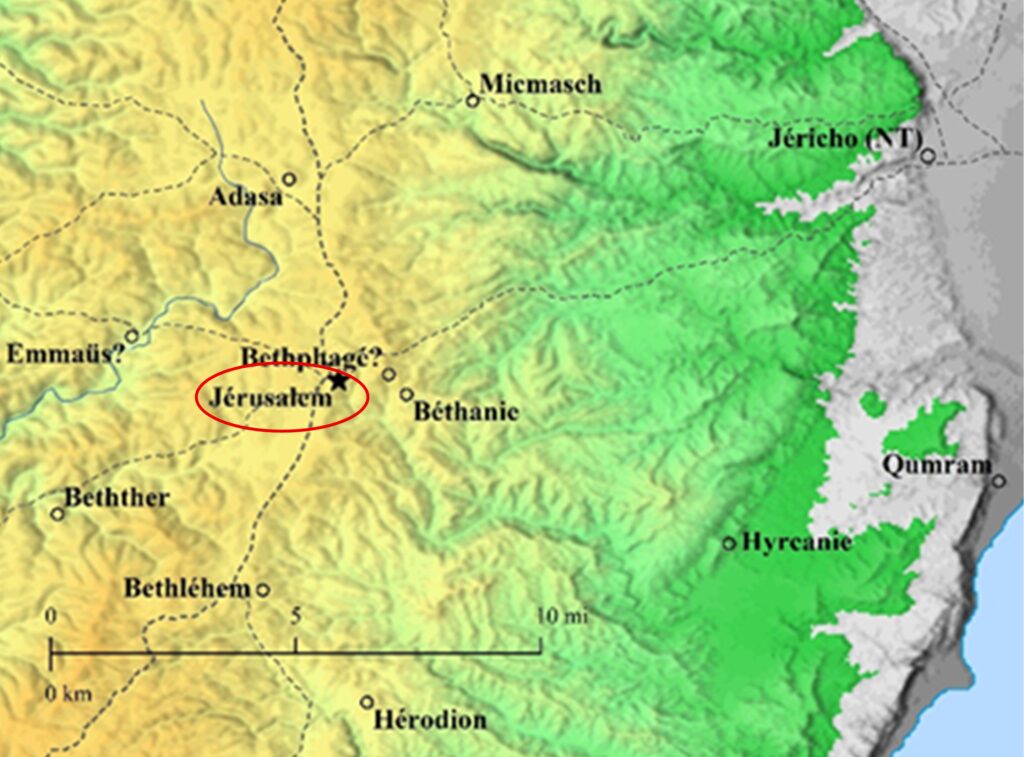
Location: The courtyard of the Temple of Jerusalem

Date: Tuesday, March 29, AD 33

Method: We follow Mark

Note on the method: Matthew and Luke also report this discourse

Map of Jerusalem and Its Surroundings
Bar graph Tuesday, March 29

The Messiah Jesus converses with and Herodians.

Comments

The and the Herodians have nothing in common. The former are conservative religious men, the latter worldly and materialistic. Yet, united in a common hatred, they agree to confront the Master.

As a general rule, devout Jews did not keep coins bearing the emperor’s image, especially within the Temple precincts. Hence the need for money changers.

All the Jews knew the famous Roman silver coin with which everyone had to pay the tax. But, to their great astonishment, the Messiah Jesus asks them for a coin, and it is precisely that one, forbidden in the Temple, that they produce.

What irony in this situation: these orthodox religious men prove more attached to money than to their religious principles.

The passages of Matthew 22.15-22, Mark 12.13-17 and Luke 20.20-26 tell the same episode, in which the and the Herodians seek to trap the Messiah Jesus by asking him whether it is lawful to pay the tax to Caesar. Their intention is to compromise him: if he answers yes, he sets himself against the Jewish people, who are hostile to Roman rule; if he answers no, he makes himself guilty before the imperial authority. The Messiah Jesus, aware of their hypocrisy, asks to be shown a denarius and points out to them the image and inscription of Caesar on it. He concludes with this now-famous saying: “Render to Caesar the things that are Caesar’s, and to God the things that are God’s.”

This answer, of remarkable wisdom, foils their trap and reveals a twofold truth: man has legitimate duties toward the civil authority, but above all he owes gratitude and obedience to God.

What the Messiah Jesus teaches here is the right distinction between the temporal and the spiritual realms, without setting them against each other: human realities have their place, but they must not supplant divine sovereignty. What bears Caesar’s image belongs to Caesar; what bears the image of God, man himself (Genesis 1.26-27), belongs wholly to God.

Thus the Messiah Jesus shifts the debate away from the political ground to that of faithfulness of heart, reminding us that all earthly authority is subordinate to the will of God and that the believer must live in the world without ever ceasing to belong to God alone.