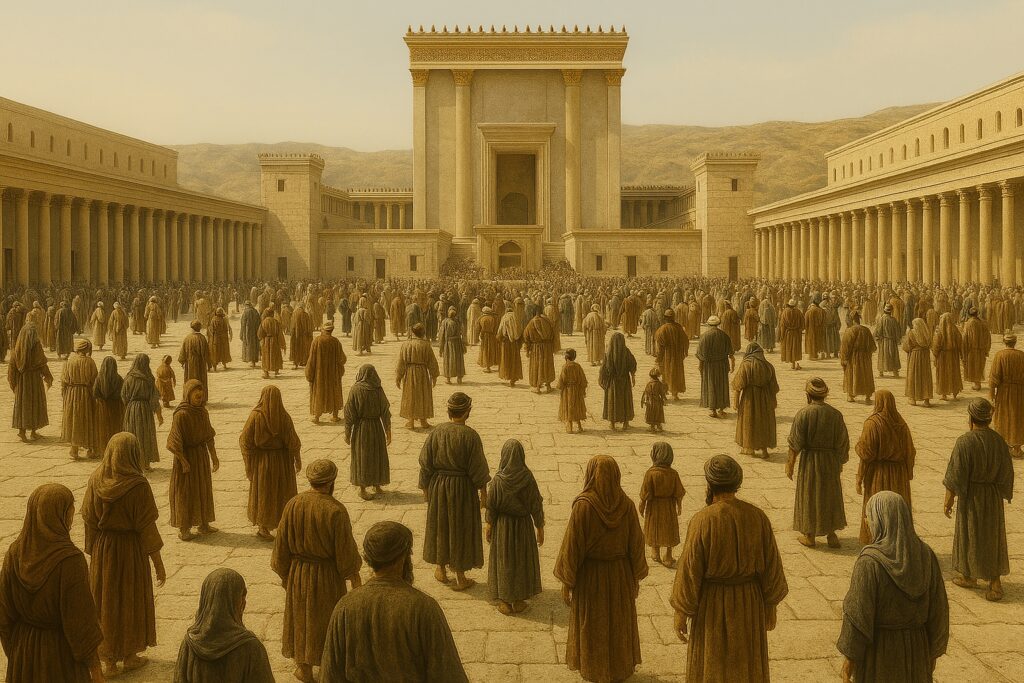

It is clear that Jesus, regarded as the Messiah, is now widely recognized not only in Galilee but also in Judea, as John's writings indicate. The Jewish inhabitants look for him among the pilgrims, knowing his respect for pilgrimages at the religious feasts whenever he has the opportunity. His absence draws the attention of the crowd.
The following observation demonstrates the considerable influence Jesus had on his contemporaries. Although not everyone shared his ideas, everyone had an opinion about him. No one remained neutral or indifferent.
His success with the people irritates the religious authorities. Two distinct camps now emerge: on one side, the religious authorities and part of the population seek to make him disappear; on the other, some recognize him as the Messiah announced by the prophets.
It is crucial to understand this situation in the political context of the time, when the Roman authorities tolerated no form of demonstration. The sought to eliminate Jesus as Messiah while avoiding any reaction from his supporters. Moreover, this matter was not to be perceived by the as a mere religious dispute, but rather as a potential threat to social stability.
The verse of John 7.13 clearly shows the negative influence that the religious authority exerted on ordinary people. These leaders held considerable power, which caused the population a certain apprehension about crossing them. It therefore took great courage to oppose them, and this is what inevitably happened when people converted to the Messiah Jesus.