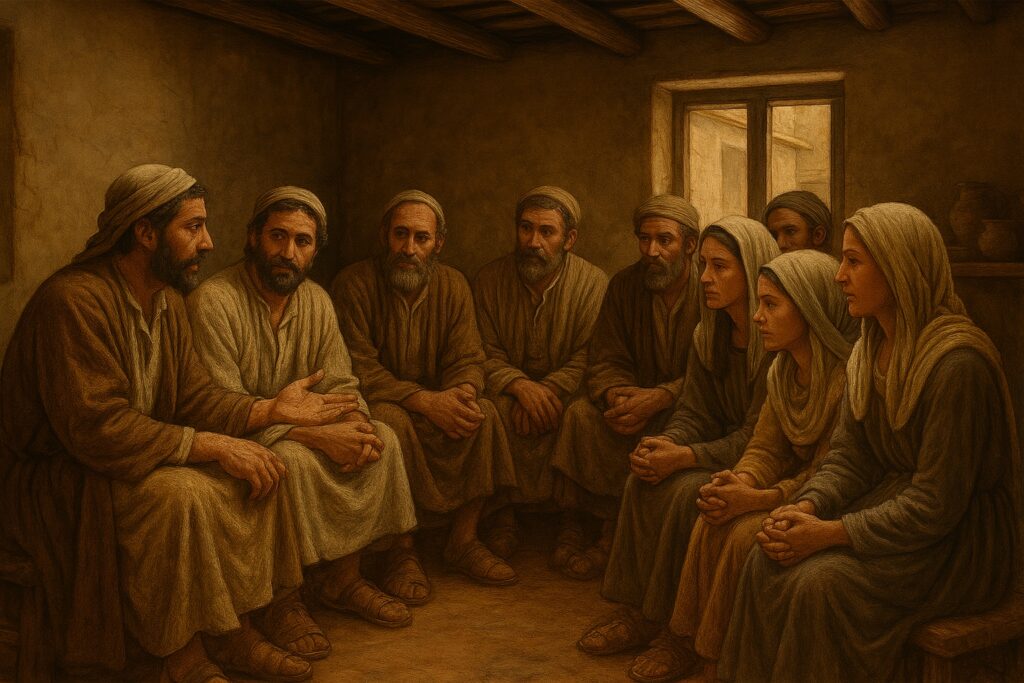


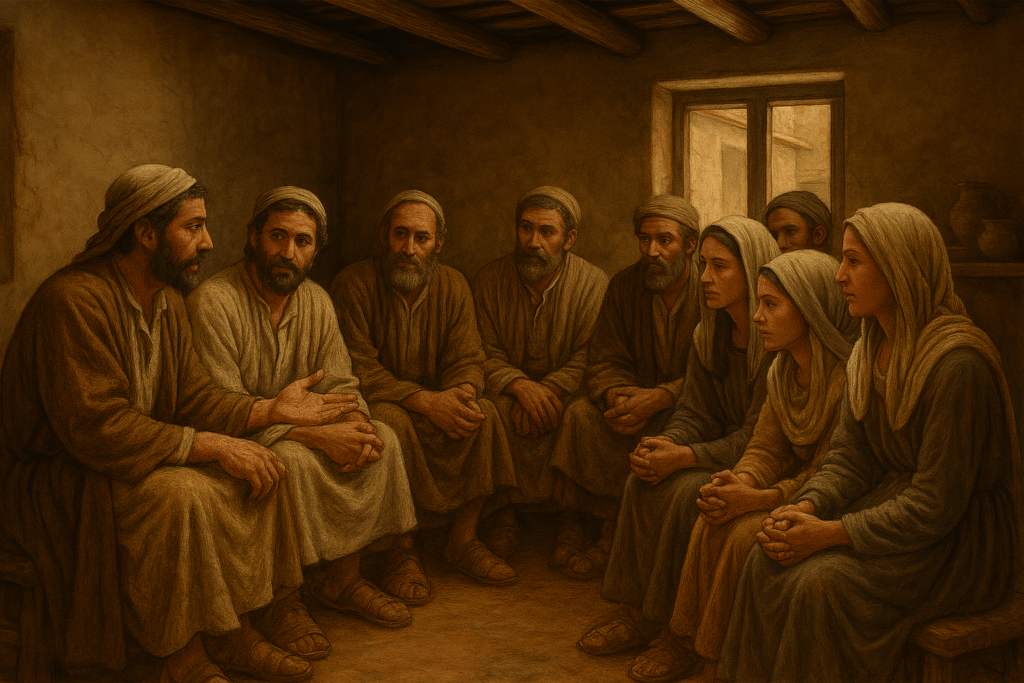
We wish to examine the question raised by John concerning the differences and the complex situation between the Messiah Jesus and his brothers and sisters. Mary, their mother, stays out of this tension (John 7.3 and John 7.5). It is noted that the Messiah Jesus maintained relations with his family, although this is not explicitly mentioned in the Synoptic Gospels.
According to John 7.3-4, the family of the Messiah Jesus does not call into question the miracles performed by their half-brother. They conclude that the aim of the Messiah Jesus was to make himself known. However, they had not grasped the true meaning of his ministry as Messiah. The notion of the kingdom of God was foreign to them. In reality, they found it hard to conceive that the one they regarded as their brother, with whom they had grown up, was indeed the Messiah and, consequently, the Son of God.
We believe that his brothers and surely his sisters will be converted after the crucifixion of the Messiah Jesus and even more surely after his resurrection.
The relations between Jesus and his brothers and sisters were complicated, which may have affected Mary, the mother of Jesus. It seems that Mary did not talk about the supernatural experience of the conception of her firstborn son. The siblings remembered their life together, which deprived them of a spiritual perspective for recognizing Jesus as the Son of God.
We understand that it was difficult for those who had shared his intimacy for many years to see that, after 30 years, Jesus declared himself to be the Messiah announced by the prophets. Their reaction therefore seems natural, and a lack of reaction would have been surprising. However, they had surely noticed how much, by his behavior, Jesus stood out from other children of his age.
John 7.6 explains Jesus' delay in going to this feast. The Messiah Jesus is aware that a misstep could lead to his arrest, as happened to John the Baptist. Therefore, he chooses to blend into the crowd rather than confront the religious leaders.