
PER146

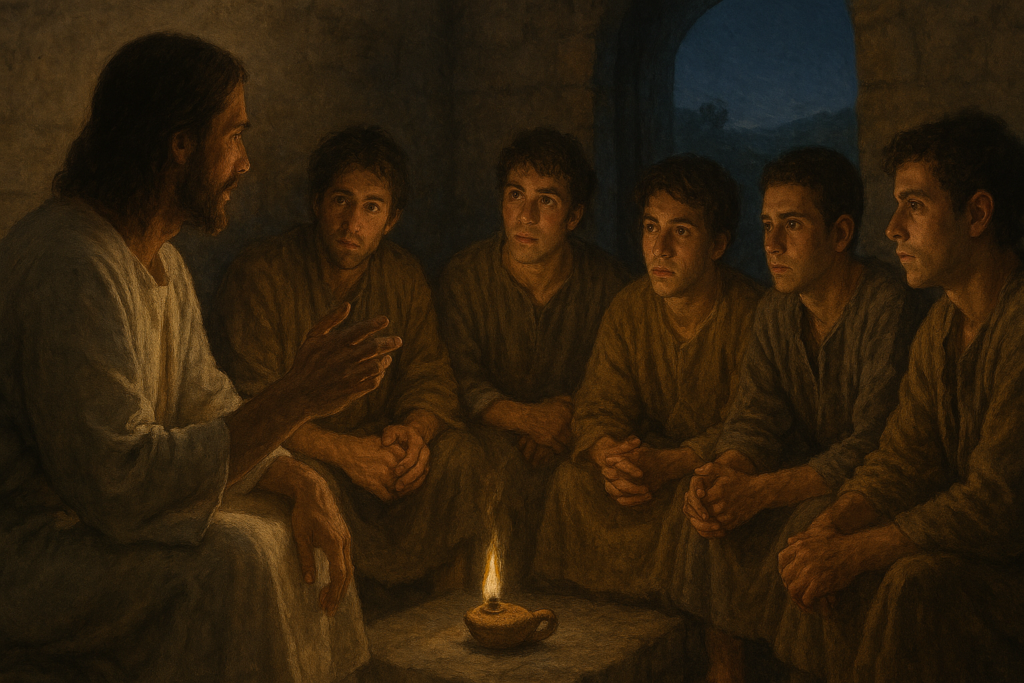
Evening explanation of various parables (the weeds)

PER146 reports the explanation Jesus gave to his disciples concerning the parable of the weeds (Mt 13.36-43), a testimony found only in Matthew. Jesus reveals a method of interpretation along three lines: symbolic identification of the elements, the eschatological dimension, and practical application. This passage belongs to the discourse of the seven parables of the Kingdom of God gathered by Matthew in chapter 13.

9 min parable of the weeds explanation of the parables Matthew 13 Kingdom of God eschatology 11 verses 1 book

Resources

Biblical texts

Matthew
Matthew 13.24-30 (King James Version)

Another parable put he forth unto them, saying, The kingdom of heaven is likened unto a man which sowed good seed in his field:

But while men slept, his enemy came and sowed tares among the wheat, and went his way.

But when the blade was sprung up, and brought forth fruit, then appeared the tares also.

So the servants of the householder came and said unto him, Sir, didst not thou sow good seed in thy field? from whence then hath it tares?

He said unto them, An enemy hath done this. The servants said unto him, Wilt thou then that we go and gather them up?

But he said, Nay; lest while ye gather up the tares, ye root up also the wheat with them.

Let both grow together until the harvest: and in the time of harvest I will say to the reapers, Gather ye together first the tares, and bind them in bundles to burn them: but gather the wheat into my barn.

Matthew
Matthew 13.36-43 (King James Version)

Then Jesus sent the multitude away, and went into the house: and his disciples came unto him, saying, Declare unto us the parable of the tares of the field.

He answered and said unto them, He that soweth the good seed is the Son of man;

The field is the world; the good seed are the children of the kingdom; but the tares are the children of the wicked one;

The enemy that sowed them is the devil; the harvest is the end of the world; and the reapers are the angels.

As therefore the tares are gathered and burned in the fire; so shall it be in the end of this world.

The Son of man shall send forth his angels, and they shall gather out of his kingdom all things that offend, and them which do iniquity;

And shall cast them into a furnace of fire: there shall be wailing and gnashing of teeth.

Then shall the righteous shine forth as the sun in the kingdom of their Father. Who hath ears to hear, let him hear.

Mark
Mark (King James Version) not cited in the book
Luke
Luke (King James Version) not cited in the book
John
John (King James Version) not cited in the book

Technical details

Bar chart for the year 31

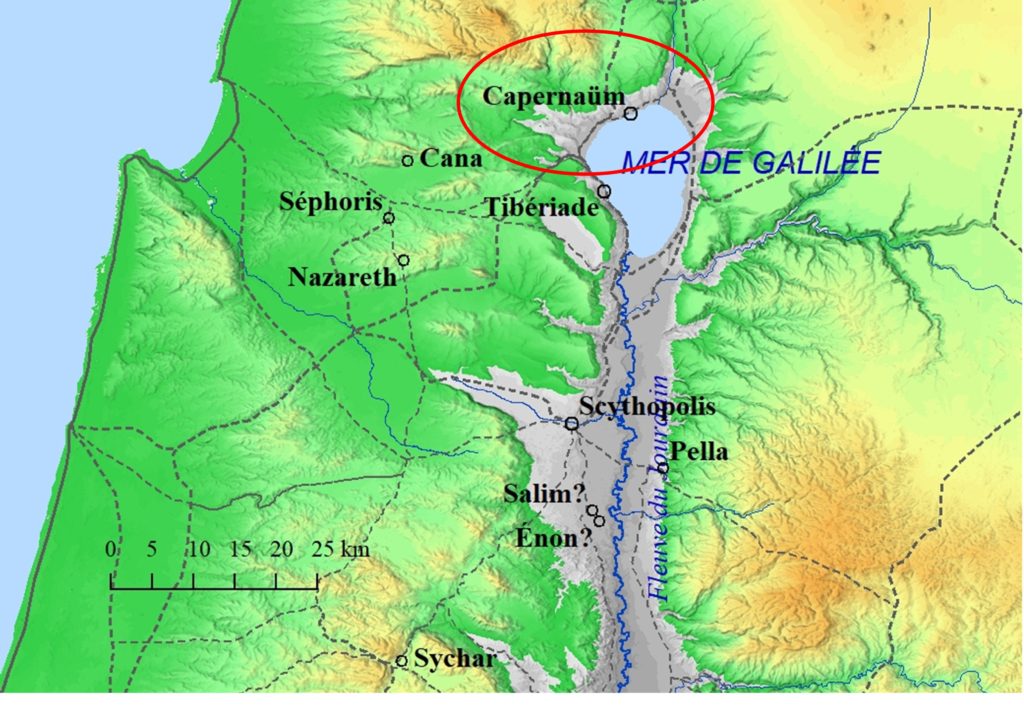
Location: A small bay along the shores of the , near Capernaum in Galilee.

Date: November or December AD 31

Method: We continue Matthew

Note on the method: Only Matthew provides this explanation.

Capernaum

Analysis of the second of this major discourse, concerning the weeds (PER141).

Evening explanation of various parables (the weeds)

Evening explanation of various parables (the weeds)

Comments

Matthew's presence at this conversation gives us access to an overview of the teaching intended for the disciples of Jesus the Messiah. It is clearly a brief summary.

We analyze the explanation of the of the weeds (PER141) and believe that this method can be applied to the other parables.

Principle for interpreting the parables according to Jesus' teaching on the of the weeds.

1. Identifying the key elements and symbolic interpretation: Jesus clearly identifies the main elements of the and explains their symbolic meaning. For example, in the of the weeds, he states that the field represents the world, the good seed symbolizes the sons of the kingdom, the weeds the sons of the evil one, the enemy who sows them is the devil, the harvest is the end of the age, and the reapers are the angels. This identification makes it possible to understand the spiritual message behind the story, showing the coexistence of good and evil until the final judgment.

2. Eschatological context: Jesus' parables often have an eschatological dimension, that is, they refer to the events of the end times. In this , he speaks of the final judgment and the separation of the righteous from the wicked.

3. Practical application: Jesus the Messiah does not merely tell a story; he draws practical lessons for his listeners. In this , he teaches about God's patience and the reality of the coming judgment, encouraging his disciples to persevere in faith.

By applying this principle, it is possible to interpret other parables by identifying the main symbolic elements, seeking their spiritual meaning, taking the eschatological context into account where relevant, and putting the practical lessons into practice in daily life.

This systematic approach makes it possible to interpret Jesus' parables in depth, thus offering a more detailed and faithful understanding of his teachings.

We observe that the explanation concentrates on the main facts without addressing the details. The statements of the servants are not clarified. It is therefore essential to focus solely on the main facts. The details of the are presented so that the listener can grasp the scene fully.

The analysis of the of the sower (Matthew 12.1-23, PER138) follows a similar principle.

Matthew will report 7 parables about the Kingdom of God.

- The sower, Matthew 13.1-23, PER138
- The weeds and the good seed, Matthew 13.24-30, Matthew 13.36-43, PER141
- The mustard seed, Matthew 13.31-32, PER143
- The leaven, Matthew 13.33-35, PER145
- The hidden treasure, Matthew 13.44, PER147
- The pearl, Matthew 13.45-46, PER148
- The net, Matthew 13.47-52, PER149

Although Jesus may have presented seven parables about the Kingdom of God, it is more likely that Matthew grouped them together because of their common themes.