
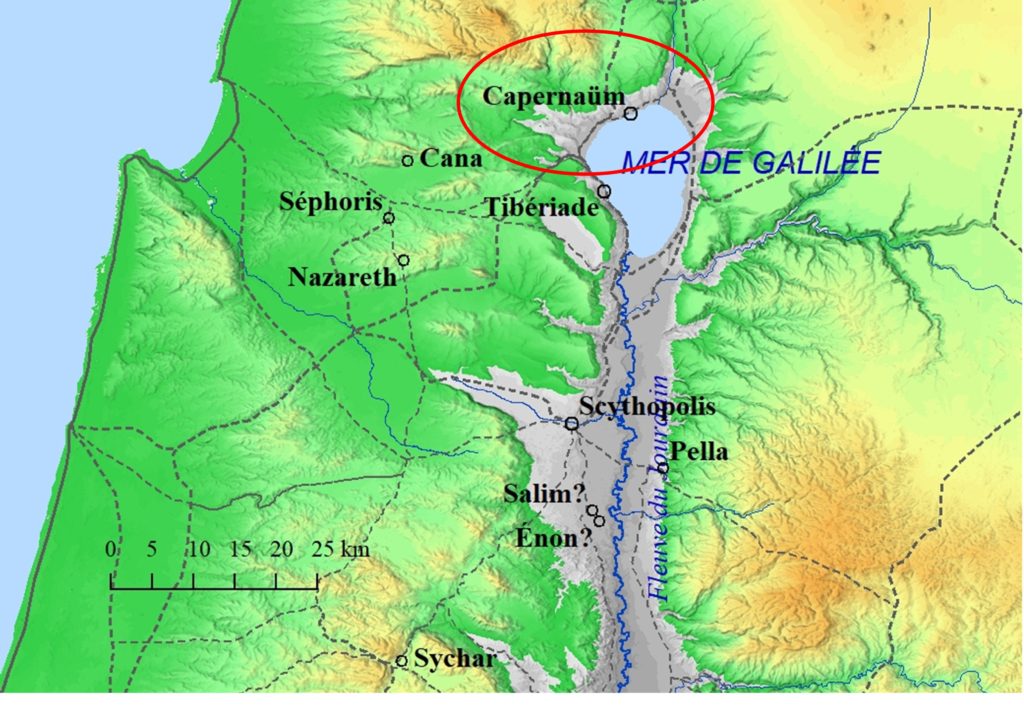
The Messiah Jesus leaves the residence he was occupying in Capernaum and heads toward the (Sea of Tiberias). Seeing that a large crowd is present, he decides to board a boat so that he can move freely.
Matthew and Mark specify that the crowd remained on the shore while the Messiah Jesus began teaching them various parables. This intrigued the disciples, probably the apostles (Mark 4.10), who asked him why he used this type of language (Matthew 13.10). They found it difficult to understand this and therefore asked the Master for explanations (Mark 4.10; Luke 8.9-10).
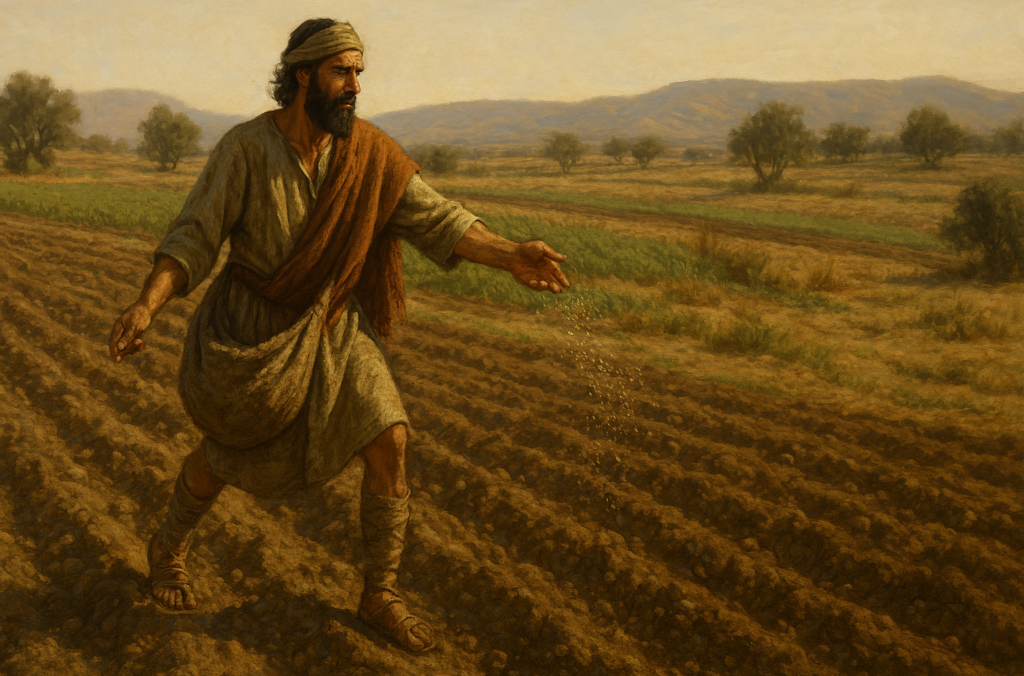
The three authors offer the same somewhat enigmatic answer. We address this subject in detail in the appendix ANN078: The parables and in the study of the PAR001: The sower.
It is noteworthy that Matthew, Mark, and Luke include this same passage. This marks a transition in the teaching of Jesus Christ. Particularly in Matthew, it appears after chapter 12, which clearly illustrates the deterioration of relations with the religious authorities.
We observe minor variations among the three versions of this account.
Matthew primarily addresses a Jewish audience, thus emphasizing understanding and the kingdom of heaven. He provides a more detailed explanation of the , highlighting the response of the different types of soil.
Mark, addressing a audience, adopts a more direct and concise style, often focused on action and immediacy. Some of the more detailed explanations found in Matthew are omitted, making Mark's account shorter and more succinct.
Luke, addressing Greek readers, highlights the reaction to the word of God and the response of the listeners. He particularly emphasizes the importance of listening attentively and correctly understanding the divine word.
Each evangelist adjusts his account to his intended audience and particular context. The linguistic and stylistic variations reflect the authors' differing intentions and concerns.
We advise you to consult the appendix ANN078: The parables to understand the reasons for the Messiah Jesus' change of strategy.
It is also relevant to ask how Jesus managed to communicate effectively with a large crowd. This question is addressed in detail in the appendix ANN050: How the Messiah Jesus made himself heard.
The acoustic potential of certain coves along the water offers an appropriate answer to this problem.
The Synoptic Gospels consistently present an account structured in two distinct segments.
First, there is the public proclamation of this . Second, a private explanation is given after the crowd has left. It is likely that the Messiah Jesus also delivered other teachings and healed the sick.
D'après Mark 4.10, le Messie Jésus a exposé la signification de la à ses disciples en privé, après le départ de la foule. L'absence d'accès de la foule à cette explication est précisée dans l'annexe ANN078 : Les paraboles.
It is not logical to gather such a multitude merely for a few words. It is likely that the other parables concerning the kingdom of God mentioned by Matthew were also presented during this large gathering.
It is plausible that certain passages from the Beatitudes were proclaimed in this place. The evangelists Matthew, Mark, Luke, and John grouped passages around common themes to make them easier to understand. It is important to note that these authors condensed the discourses presented.
It is essential to connect the concept of fruitful seed with that of the kingdom of God. This relationship involves the word conveyed by Jesus, whose reception differs from one individual to another.
Comprendre le sens demande une réflexion approfondie. Par conséquent, il est nécessaire de fournir un effort continu pour extraire l'essence du message. La incite à une analyse précise pour identifier les éléments importants.
Matthew detailed the Master's interpretation, but this remains rare, with many parables left unexplained. Mark and Luke also mention this interpretation, but more briefly (PER146 Evening explanations of various parables, particularly that of the weeds).