
PER100

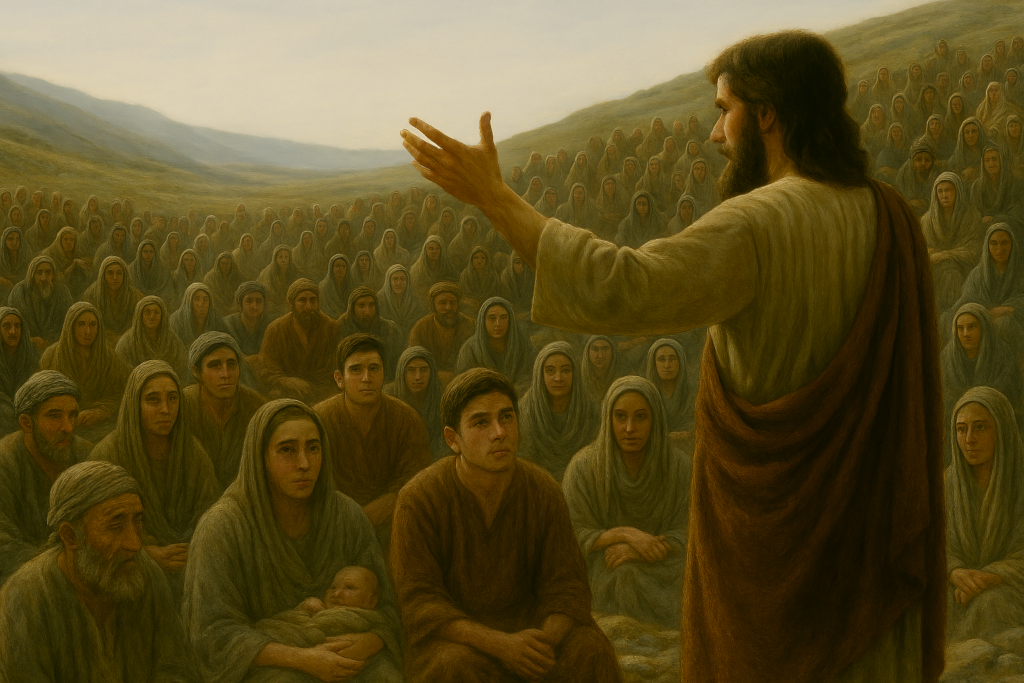
The Sermon on the Mount (16), cares and worries

The article explores Jesus' Sermon on the Mount, emphasising faith over material concerns through teachings drawn mainly from Matthew and Luke, and explaining how Jesus urged his disciples to trust God.

6 min faith seriousness Jesus God material needs 7 verses 3 books

Resources

Biblical texts

Matthew
Matthew 6.25-34 (King James Version)

Therefore I say unto you, Take no thought for your life, what ye shall eat, or what ye shall drink; nor yet for your body, what ye shall put on. Is not the life more than meat, and the body than raiment?

Behold the fowls of the air: for they sow not, neither do they reap, nor gather into barns; yet your heavenly Father feedeth them. Are ye not much better than they?

Which of you by taking thought can add one cubit unto his stature?

And why take ye thought for raiment? Consider the lilies of the field, how they grow; they toil not, neither do they spin:

And yet I say unto you, That even Solomon in all his glory was not arrayed like one of these.

Wherefore, if God so clothe the grass of the field, which to day is, and to morrow is cast into the oven, shall he not much more clothe you, O ye of little faith?

Therefore take no thought, saying, What shall we eat? or, What shall we drink? or, Wherewithal shall we be clothed?

(For after all these things do the Gentiles seek:) for your heavenly Father knoweth that ye have need of all these things.

But seek ye first the kingdom of God, and his righteousness; and all these things shall be added unto you.

Take therefore no thought for the morrow: for the morrow shall take thought for the things of itself. Sufficient unto the day is the evil thereof.

Mark
Mark (King James Version) not cited in the book
Luke
Luke 12.22-34 (King James Version)

And he said unto his disciples, Therefore I say unto you, Take no thought for your life, what ye shall eat; neither for the body, what ye shall put on.

The life is more than meat, and the body is more than raiment.

Consider the ravens: for they neither sow nor reap; which neither have storehouse nor barn; and God feedeth them: how much more are ye better than the fowls?

And which of you with taking thought can add to his stature one cubit?

If ye then be not able to do that thing which is least, why take ye thought for the rest?

Consider the lilies how they grow: they toil not, they spin not; and yet I say unto you, that Solomon in all his glory was not arrayed like one of these.

If then God so clothe the grass, which is to day in the field, and to morrow is cast into the oven; how much more will he clothe you, O ye of little faith?

And seek not ye what ye shall eat, or what ye shall drink, neither be ye of doubtful mind.

For all these things do the nations of the world seek after: and your Father knoweth that ye have need of these things.

But rather seek ye the kingdom of God; and all these things shall be added unto you.

Fear not, little flock; for it is your Father’s good pleasure to give you the kingdom.

Sell that ye have, and give alms; provide yourselves bags which wax not old, a treasure in the heavens that faileth not, where no thief approacheth, neither moth corrupteth.

For where your treasure is, there will your heart be also.

John
John (King James Version) not cited in the book

Technical details

Bar chart for the year 31

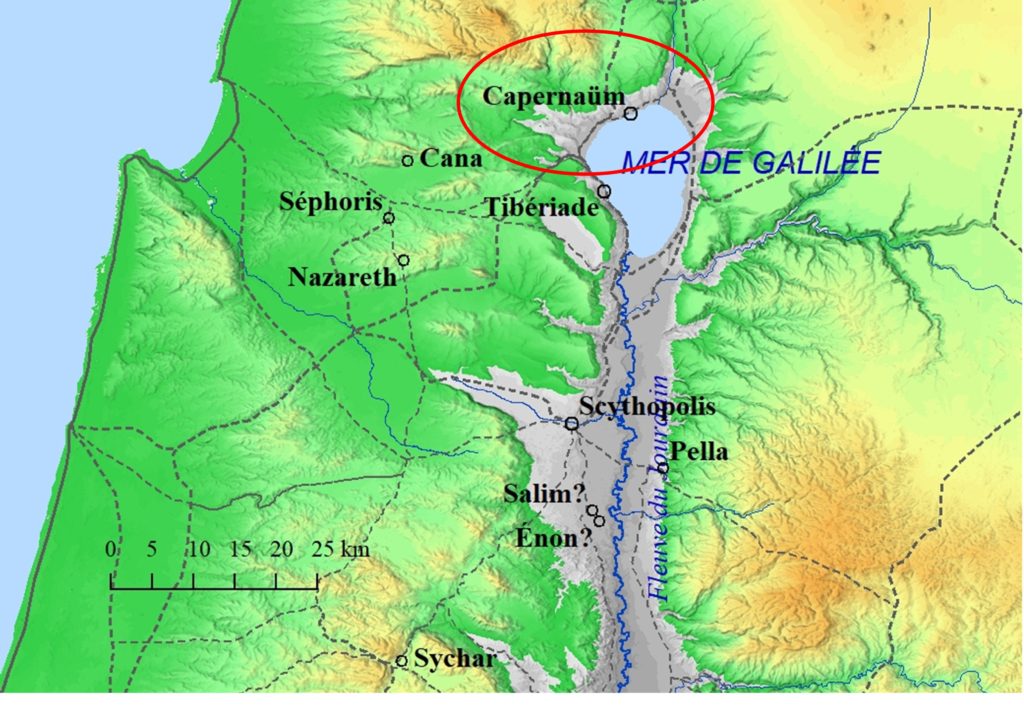
Location: On the plateau below a mountain near Capernaum in Galilee

Date: After the Passover pilgrimage to Jerusalem on April 5, AD 31

Method: We will continue with Matthew, although Luke also addresses this subject

Note on the approach: Matthew and Luke recount this passage about faith and worries.

Capernaum

Faith and worries as addressed by Jesus the Messiah.

The Sermon on the Mount: cares and worries

Sermon

Comments

We are examining the Sermon on the Mount, divided into 21 sections.

Jesus the Messiah addresses the principle of faith here.

This therefore concerns faith, the trust that God meets material needs. Those who devote themselves to divine work do so at the expense of earnings from their own employment. This illustrates the preceding principle: one cannot serve God and Mammon simultaneously!

For the person serving God, Jesus the Messiah uses birds and lilies of the field as examples to show that God watches over his disciples. Aware of human nature, Jesus repeats three times that they should not worry and mentions worry once.

This way of life may seem unusual, but Jesus the Messiah assures us that a true disciple will never be in need (Psalms 37.25). Furthermore, Jesus the Messiah indicates here that worry reflects insufficient faith. He will repeatedly reproach his disciples for this (Matthew 8.26, Matthew 14.31, Matthew 16.8).

This principle directly follows the previous theme concerning money, and the message is clear: devote yourselves diligently to advancing God's kingdom. You will consequently not have to worry about your own needs, because God promises to meet them.

Jesus the Saviour leaves nothing unclear and resolutely addresses every implication of his disciples' commitment.

From now on, the disciple relies on faith and therefore no longer needs to worry about other matters. The disciple must focus solely on their work and leave their Teacher to take care of the rest.

Luke 12.22-34 addresses this theme at a different point in Jesus the Messiah's ministry. Clearly, the apostles must have questioned the Teacher at length and frequently on this subject, since from childhood they had been accustomed to meeting all their needs themselves and now had to entrust that responsibility to God.

This change represents a significant challenge that may cause anxiety.