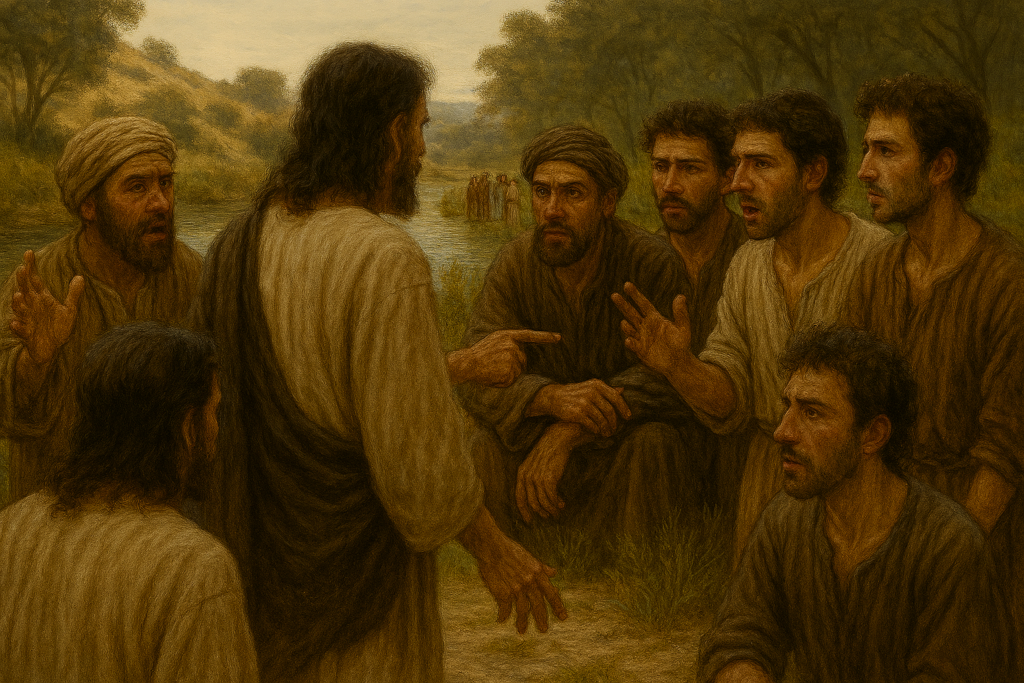

John highlights the growing tension between John the Baptist’s disciples and Jesus the Messiah’s disciples. As some chose to leave John the Baptist for this new master, those who remained loyal to John viewed the transition unfavourably, regarding these departures as betrayals.
Jesus the Messiah’s growing success intensified these frictions, especially because many had not yet understood that he was the Messiah foretold by the prophecies.
To calm matters, John the Baptist emphasised the transitional nature of his role, affirming that Jesus the Messiah was the true guide to follow. His disciples did not find this easy to accept.
The end of John the Baptist’s ministry was near; having announced the Messiah’s coming, he had to give way. This transition, clear to John and Jesus, was difficult for some disciples to accept.
When Jesus the Messiah ministered near John, he had no political objective. His intention was to prepare the way for his own mission rather than take over John’s disciples.
John the Baptist’s message was clear: ‘After me comes the one I announce.’ Thus Jesus’ era as the royal Messiah began, establishing him as the sole spiritual guide. This period in Judea was intended to help John’s disciples grasp the divine plan.
This event probably takes place at Aenon near Salim, although its exact location remains uncertain. After parting from John the Baptist, Jesus will consequently go to Bethany beyond the Jordan.