

PER347

The various abuses and the flogging

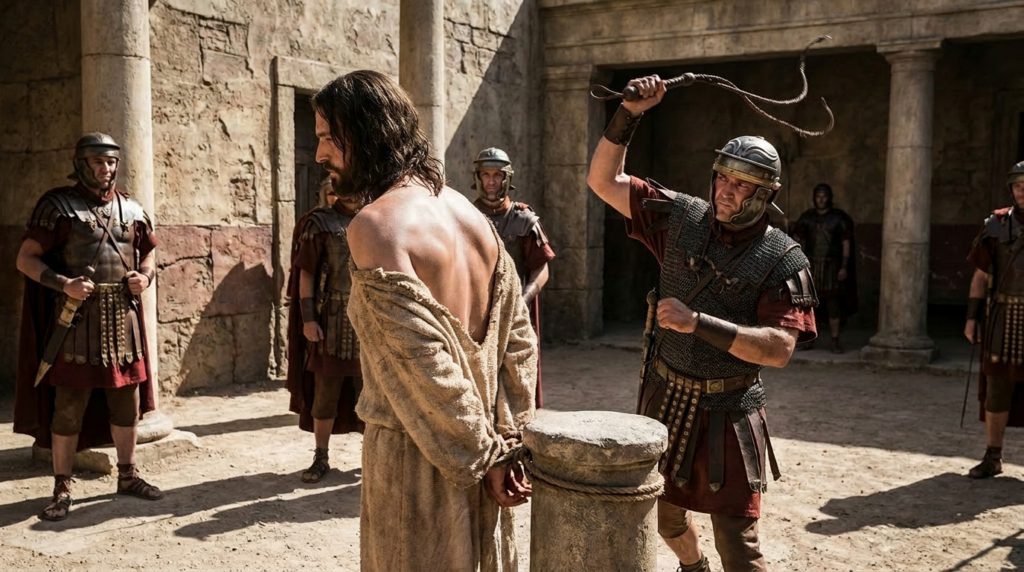
PER347 analyzes the scourging and the abuse inflicted on Jesus in the praetorium of Pontius Pilate, on the Friday morning of the Passion. A standardized Roman practice preceding crucifixion, this punishment is accompanied by the soldiers’ mockery (crown of thorns, purple robe). The article compares the accounts of Matthew, Mark, Luke and John in a synoptic approach, highlighting Roman institutional violence and the dignity Jesus retained despite the outrages.

11 min scourging abuses Passion of Jesus praetorium Pontius Pilate 18 verses 4 books

Resources

Biblical texts

Matthew
Matthew 27.26-31 (King James Version)

Then released he Barabbas unto them: and when he had scourged Jesus, he delivered him to be crucified.

Then the soldiers of the governor took Jesus into the common hall, and gathered unto him the whole band of soldiers.

And they stripped him, and put on him a scarlet robe.

And when they had platted a crown of thorns, they put it upon his head, and a reed in his right hand: and they bowed the knee before him, and mocked him, saying, Hail, King of the Jews!

And they spit upon him, and took the reed, and smote him on the head.

And after that they had mocked him, they took the robe off from him, and put his own raiment on him, and led him away to crucify him.

Mark
Mark 15.16-20 (King James Version)

And the soldiers led him away into the hall, called Prætorium; and they call together the whole band.

And they clothed him with purple, and platted a crown of thorns, and put it about his head,

And began to salute him, Hail, King of the Jews!

And they smote him on the head with a reed, and did spit upon him, and bowing their knees worshipped him.

And when they had mocked him, they took off the purple from him, and put his own clothes on him, and led him out to crucify him.

Luke
Luke 23.23-25 (King James Version)

And they were instant with loud voices, requiring that he might be crucified. And the voices of them and of the chief priests prevailed.

And Pilate gave sentence that it should be as they required.

And he released unto them him that for sedition and murder was cast into prison, whom they had desired; but he delivered Jesus to their will.

John
John 19.1-4 (King James Version)

Then Pilate therefore took Jesus, and scourged him.

And the soldiers platted a crown of thorns, and put it on his head, and they put on him a purple robe,

And said, Hail, King of the Jews! and they smote him with their hands.

Pilate therefore went forth again, and saith unto them, Behold, I bring him forth to you, that ye may know that I find no fault in him.

Technical details

Year AD 33

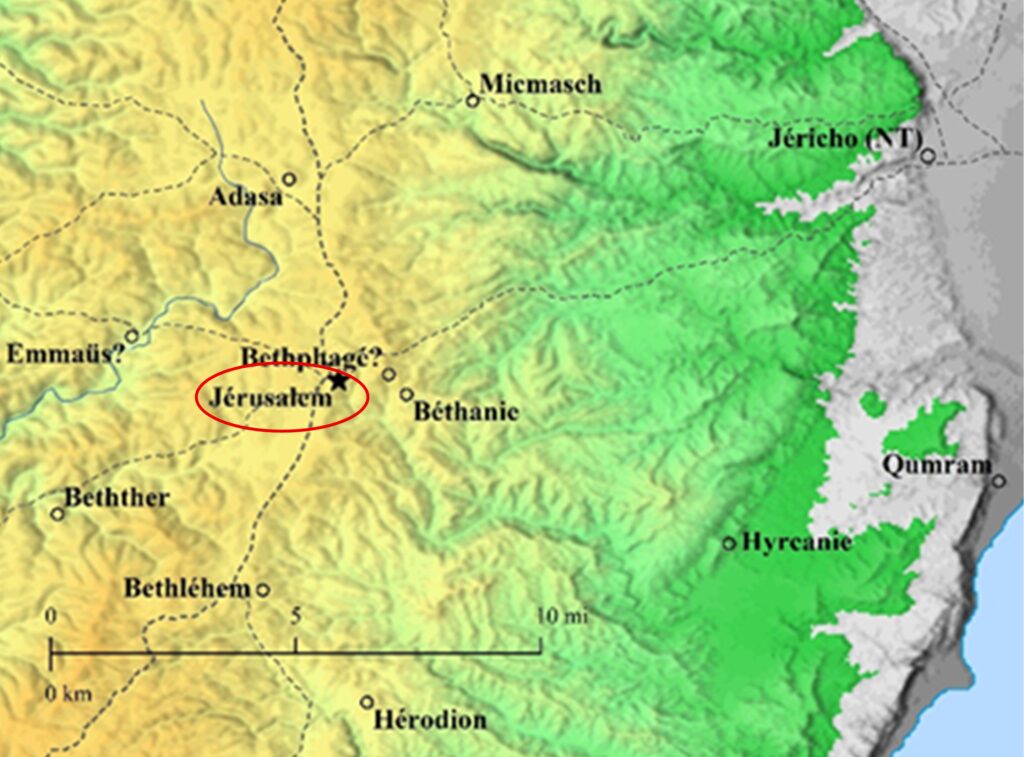
Location: The city of Jerusalem, the praetorium in front of Pilate’s palace

Date: Friday, April 1, early in the morning

Method: We now follow Mark

Note on the method: Matthew and John take up this information

Map of Jerusalem and its region
Friday bar graph

Pontius Pilate orders that Jesus be scourged, no doubt hoping that the religious authorities would be satisfied with this punishment.

Chronological details, according to our conclusions:

_20 The return to Pontius Pilate takes place around 8 a.m. Mark 15.6-19; Matthew 27.15-30; Luke 23.13-25; John 18.39-40; John 19.1-16.

_21 The crowd, gathered in front of Pontius Pilate’s palace, demands the crucifixion. Matthew 27.22 ; Mark 14.11-15 ; Luke 23.23 ; John 19.15.

You can consult the complete chronology in the study ANN026 : The hour of the crucifixion.

Commentary:

The scourging inflicted on Jesus belongs to the Roman practices reserved for those condemned to crucifixion. This punishment, extremely violent, generally preceded the execution and considerably weakened the condemned man, who would die more quickly on the cross; some even succumbed before reaching the cross. It was not an isolated excess, but a procedure accepted and made commonplace by the soldiers (Matthew 27.26; John 19.1).

After the scourging, the soldiers add a deliberate humiliation to the physical suffering. They clothe Jesus in a robe, place a crown of thorns on his head and mock him by hailing him as “king of the Jews” (Mark 15.17-19; John 19.2-3). This gesture ironically underscores the reason for his condemnation, ridiculed by the very men who are carrying out the execution.

Far from a mere punishment, this abuse reflects a will to degrade and to annihilate. Yet, despite the intensity of the blows and the outrages, Jesus remains conscious and in control of himself. The Gospel accounts show that he retains the ability to speak and to interact up to the moment of the crucifixion, which underscores both the harshness of the torture and his exceptional endurance (John 19.4).