

The detail given in John 12.1 is particularly important. Jesus the Messiah and his disciples finish settling in at Bethany on Friday, just before the start of the , which begins at 5:50 p.m. This moment marks a halt in travel and activity, in accordance with the requirements of the .
Counting the six days mentioned in John 12.1, we arrive at Thursday around 6 p.m., which corresponds to the beginning of the Passover festival.
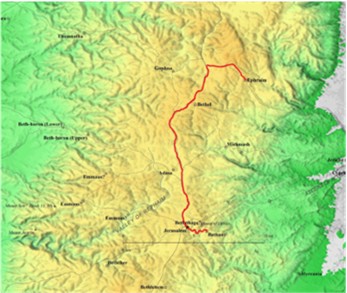
Bethany lies about three kilometers east of Jerusalem, on the other side of the . Given the crowds, it was impossible for to take everyone in at their home.
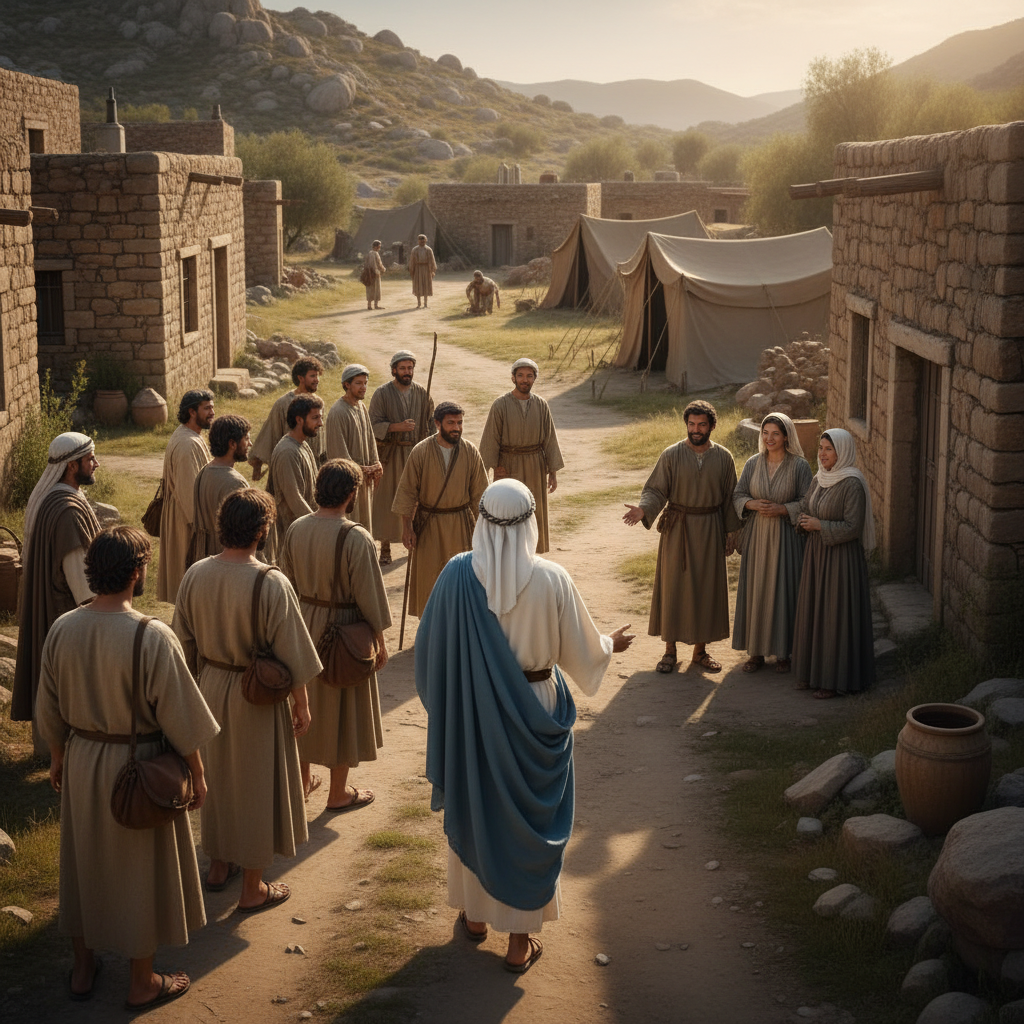
The travelers therefore set up camp near the village of Bethany. The was probably already occupied by many pilgrims who had come for the festival.
The tranquility that reigned in this area contrasted sharply with the agitation and bustle of Jerusalem.
For a week, Jesus the Messiah, accompanied by his disciples and especially the apostles, went back and forth between Bethany and Jerusalem every day. Each evening they returned to rest in Bethany, perhaps in the house of Martha, Mary and the risen Lazarus.
This verse from John 12.1 marks a decisive transition in the Gospel, for it places Jesus the Messiah six days before the Passover, underlining that everything that follows takes place in the nearness of his hour, the one in which he will fully accomplish his mission.
The return to Bethany is no trivial detail, for it is the place where he raised Lazarus, and this mention recalls that the life he gives becomes the starting point of the conflict that will lead to his death. The in the home of his friends also shows that, in the midst of growing tension, he remains in a space of faithfulness and welcome, as if the light were still looking for a place to rest before confronting the darkness.
The meal prepared for him expresses the recognition and gratitude of those who have seen his work of life, while the atmosphere of the account already lets us sense that this simple, familiar moment is charged with a deeper meaning.
By placing Jesus the Messiah in Bethany in this way, the evangelist prepares the reader to understand that the Passion does not begin in violence but in intimacy, in a setting where love and memory intermingle, as if the life given to Lazarus foreshadowed the life that Jesus is about to offer to the whole world.
This verse, brief but dense, thus opens a scene where the tenderness of friendship, the gravity of the approaching hour and the sovereign freedom of Jesus the Messiah meet, as he advances toward the Passover knowing what it means.