
PER274

Plot against the Messiah Jesus, who withdraws to Ephraim

This article describes the plot of the Jewish authorities against Jesus after the resurrection of Lazarus. Faced with the threat they perceive in Jesus’ miracles, they decide to kill him. Jesus withdraws to Ephraim in anticipation of the crucifixion, while the plot paradoxically aligns with the divine plan.

4 min Jesus plot resurrection religious 3 verses 3 books

See also

Bible texts

Matthew
Matthew 26.1-5 (King James Version)

And it came to pass, when Jesus had finished all these sayings, he said unto his disciples,

Ye know that after two days is the feast of the passover, and the Son of man is betrayed to be crucified.

Then assembled together the chief priests, and the scribes, and the elders of the people, unto the palace of the high priest, who was called Caiaphas,

And consulted that they might take Jesus by subtilty, and kill him.

But they said, Not on the feast day, lest there be an uproar among the people.

Mark
Mark 14.1-2 (King James Version)

After two days was the feast of the passover, and of unleavened bread: and the chief priests and the scribes sought how they might take him by craft, and put him to death.

But they said, Not on the feast day, lest there be an uproar of the people.

Luke
Luke (King James Version) not mentioned in the book
John
John 11.47-57 (King James Version)

Then gathered the chief priests and the Pharisees a council, and said, What do we? for this man doeth many miracles.

If we let him thus alone, all men will believe on him: and the Romans shall come and take away both our place and nation.

And one of them, named Caiaphas, being the high priest that same year, said unto them, Ye know nothing at all,

Nor consider that it is expedient for us, that one man should die for the people, and that the whole nation perish not.

And this spake he not of himself: but being high priest that year, he prophesied that Jesus should die for that nation;

And not for that nation only, but that also he should gather together in one the children of God that were scattered abroad.

Then from that day forth they took counsel together for to put him to death.

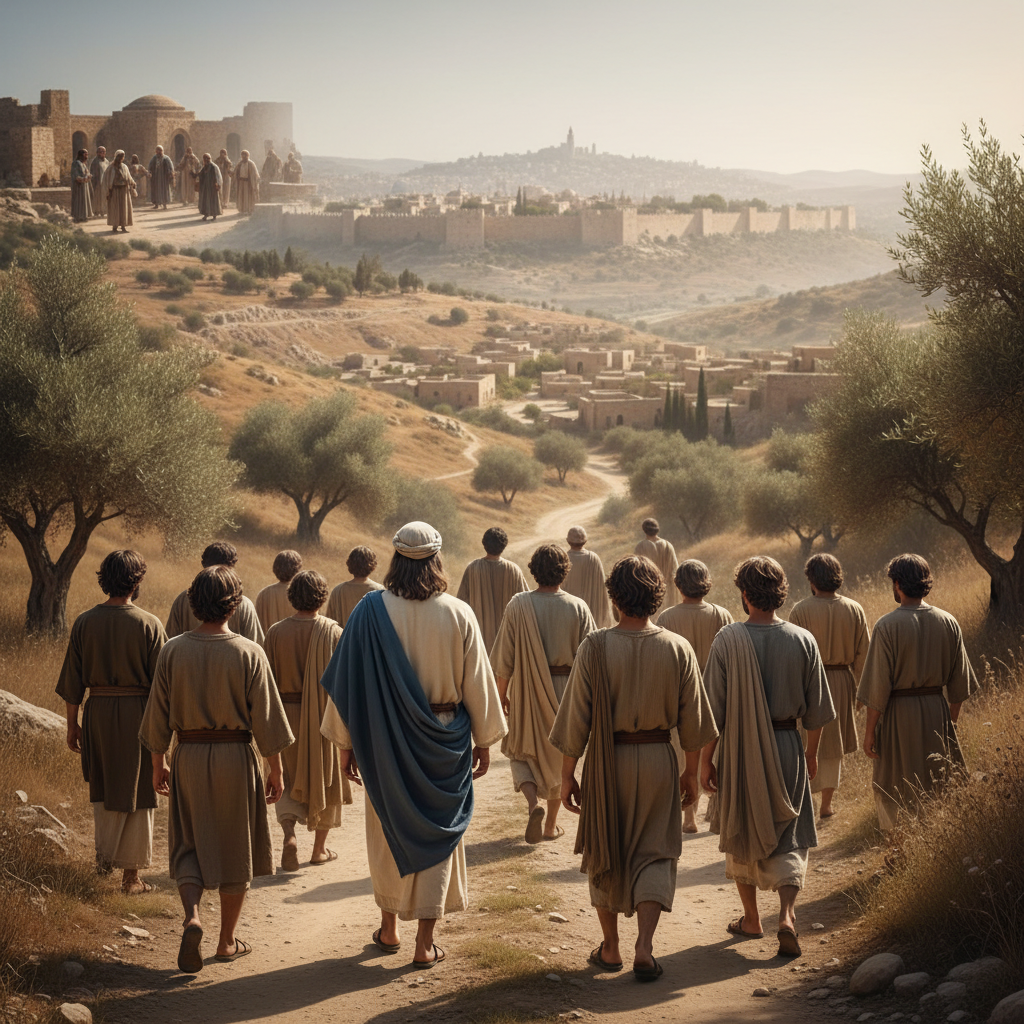
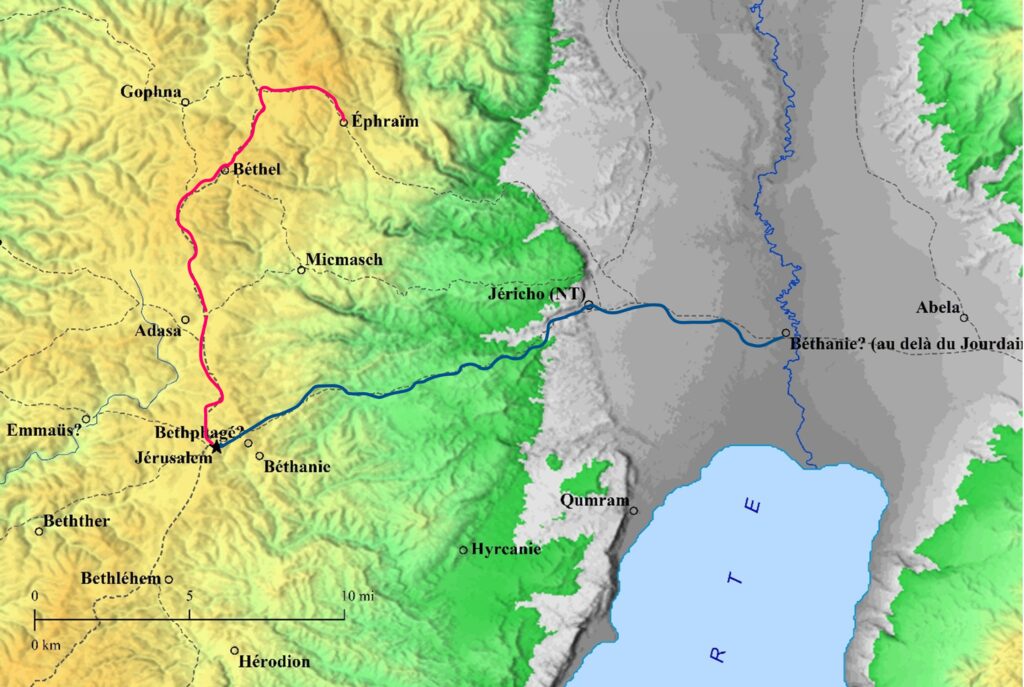
Jesus therefore walked no more openly among the Jews; but went thence unto a country near to the wilderness, into a city called Ephraim, and there continued with his disciples.

And the Jews’ passover was nigh at hand: and many went out of the country up to Jerusalem before the passover, to purify themselves.

Then sought they for Jesus, and spake among themselves, as they stood in the temple, What think ye, that he will not come to the feast?

Now both the chief priests and the Pharisees had given a commandment, that, if any man knew where he were, he should shew it, that they might take him.

Technical details

AD 33

Location: Road to Ephraim in Samaria

Date: Late February or early March AD 33

Method: We continue with Mark

Note on the method: Matthew and John confirm this information

Journey to Ephraim

Tension is growing, and the religious leaders in Jerusalem are making every preparation to kill the Messiah Jesus.

Commentary

In this passage, the reaction of the to the sign performed by the Messiah Jesus reveals a deep tension between the evident manifestation of life and the fear of losing power. The religious leaders implicitly acknowledge the reality of the works of the Messiah Jesus, since they admit that “this man performs many signs,” but instead of seeing the action of God in them, they perceive a threat to their political and religious stability.

Their reasoning shows that they are seeking not the truth but the preservation of their position, fearing that the people will believe in Jesus the Messiah and that the will intervene to destroy their nation. This fear, presented as concern for the common good, in reality masks a self-centered anxiety.

The intervention of Caiaphas, who proposes that one man die for the people, illustrates the sacrificial and political logic that dominates their thinking, but the evangelist stresses that, without intending it, he prophesies the universal scope of the death of the Messiah Jesus, meant to gather together the scattered children of God.

Thus this plot against the Messiah Jesus paradoxically becomes the fulfillment of the divine purpose. The decision to put the Messiah Jesus to death marks a turning point in the Gospel, showing that the light arouses not only faith but also the most radical hostility.

The Messiah Jesus, aware of this hostility, withdraws for a time, not out of fear but because his “hour” has not yet come. The mention of the approaching Passover prepares the reader to understand that the death of the Messiah Jesus is part of the framework of salvation, while the active search for his arrest reveals the hardening of those who refuse the life he brings.

The passage as a whole highlights the contrast between human strategy, founded on fear and manipulation, and the divine plan, which turns even unjust decisions into a path of redemption.