
We have considered a change in the policy of the Jewish religious authorities. They evidently no longer want a popular lynching but a formal arrest, with a trial and a death sentence. The objective would therefore now be to gather evidence that would be decisive for the judgment.
It should be remembered that, although some religious leaders were considering a swift execution, not all the shared this view. A significant number of them insisted on the application of the law (see John 7.51). In this context, it is quite likely that a change of strategy was adopted, while maintaining the initial goal of putting Jesus the Messiah to death.
The dialogue takes on an accusatory tone when the Master expresses his point of view. Some of the participants react (Luke 7.45) and feel concerned by his words.
What was the Master's objective?
This may well have been the only opportunity these people had to hear this message. Several listeners were perhaps struck by the words of Jesus the Messiah.
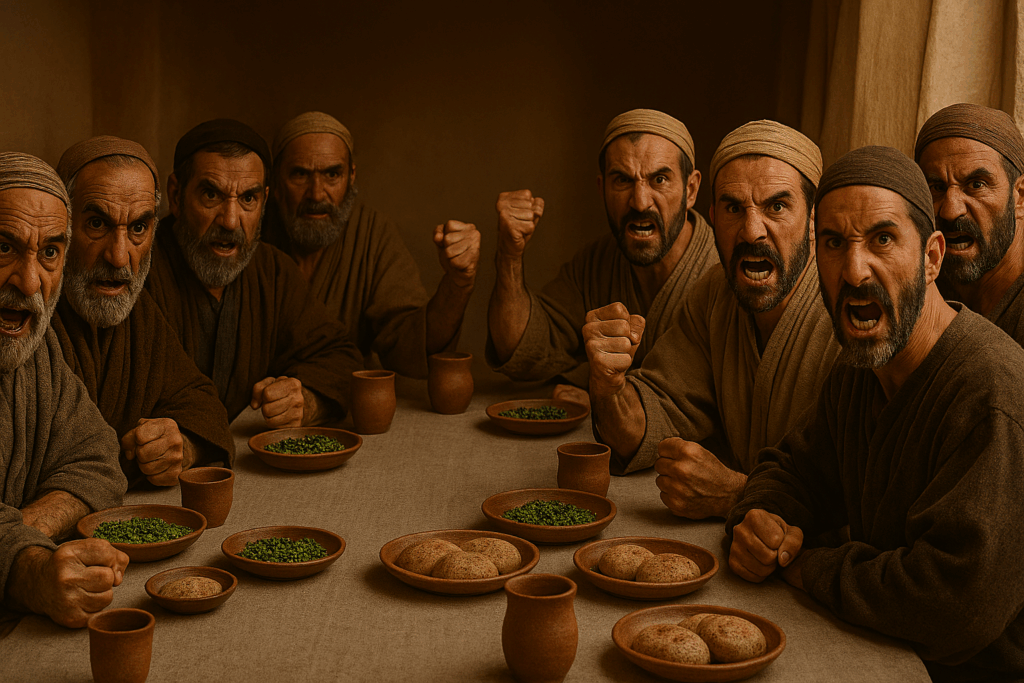
The slightest detail becomes the subject of an accusation and a debate. This is by no means a friendly meal such as we might have imagined. Everything centers on the person of Jesus the Messiah, and the and the teachers of the law seek to establish evidence capable of condemning him.
Luke 11.53 makes it clear that the atmosphere turns bitter, because these men evidently cannot find any evidence that would allow them to bring an accusation.
The
We note that Jesus the Messiah uses these moments to warn these men, and that these words, which may seem harsh and cutting, are a call to change. But do these men, blinded by hatred, want that? We can imagine that some witnesses of these exchanges may have thought that no man ever spoke like this man (John 7.46). The end of the meal reveals the true feelings that motivated these and these teachers of the law, blinded by their pride.
These men considered themselves the guardians of knowledge and spiritual wisdom. So how could a humble man like Jesus the Messiah claim to instruct and correct them?