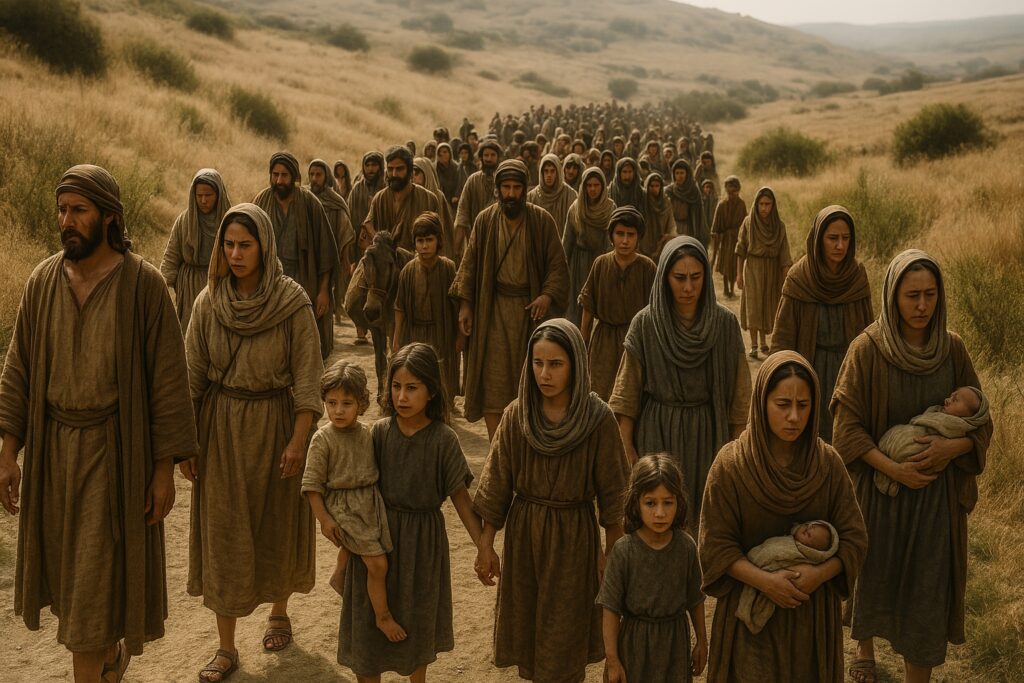

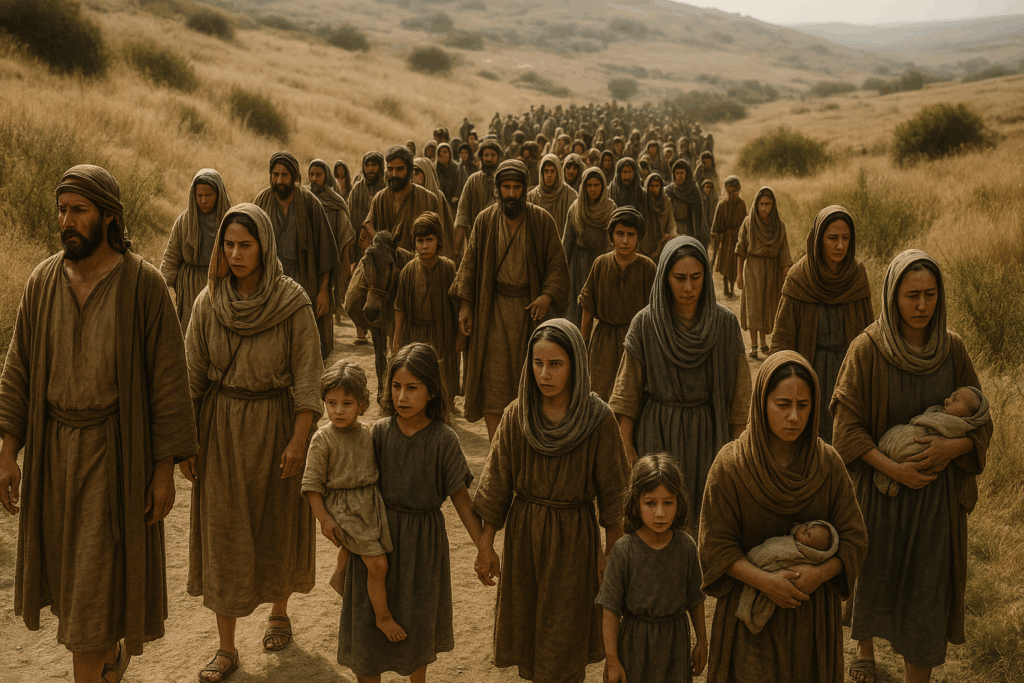
As indicated earlier, the group leaves Galilee for good on Sunday, October 3, AD 32. According to John 7.9-10, he will not arrive at the beginning of the feast but will be delayed. The family of the Messiah Jesus has also gone to Jerusalem for this celebration. They have already been there for three to four days. Moreover, it is established that the Messiah Jesus and his disciples will remain in the region of Jerusalem for six months, until the feast of Passover on April 1, AD 33.
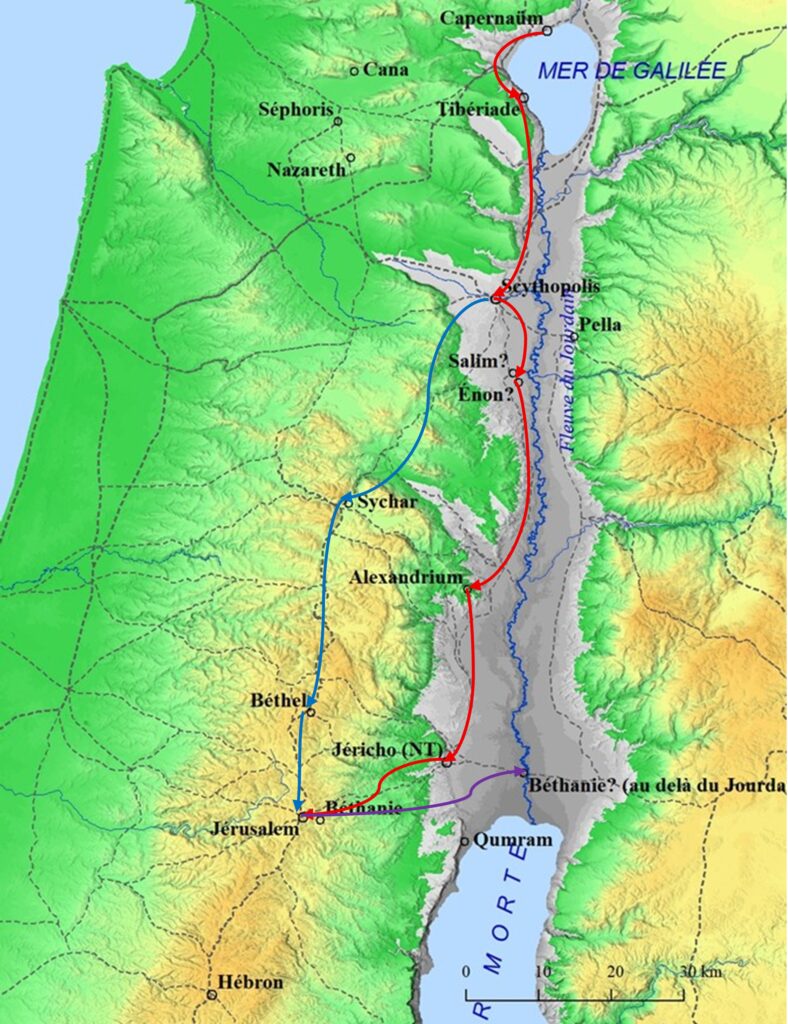
The traditional route for Jews traveling from Galilee to Jerusalem generally followed the Jordan River. Those who chose not to take that road crossed Samaria, a region where they ran the risk of being attacked by a hostile population.
According to Luke's writings, Jesus chose to take the shorter road that crosses Samaria. Given the group that accompanied the Messiah Jesus, he was not in great danger. Shortly after the feast, the Messiah Jesus sent 70 disciples to evangelize the region. It seems that these people were part of the group that crossed Samaria with the Messiah Jesus.
The Messiah Jesus had sent messengers to prepare for his arrival in certain villages, where he planned to stop and rest with his companions. The answer of these is clear and final: they refuse to welcome the Messiah Jesus.
It is obvious that the messengers explained well to these people who the Messiah Jesus was and, above all, what he came to do, but to no avail.
We will see that some villages agreed to receive the Messiah Jesus and his disciples (Luke 9.56).
The