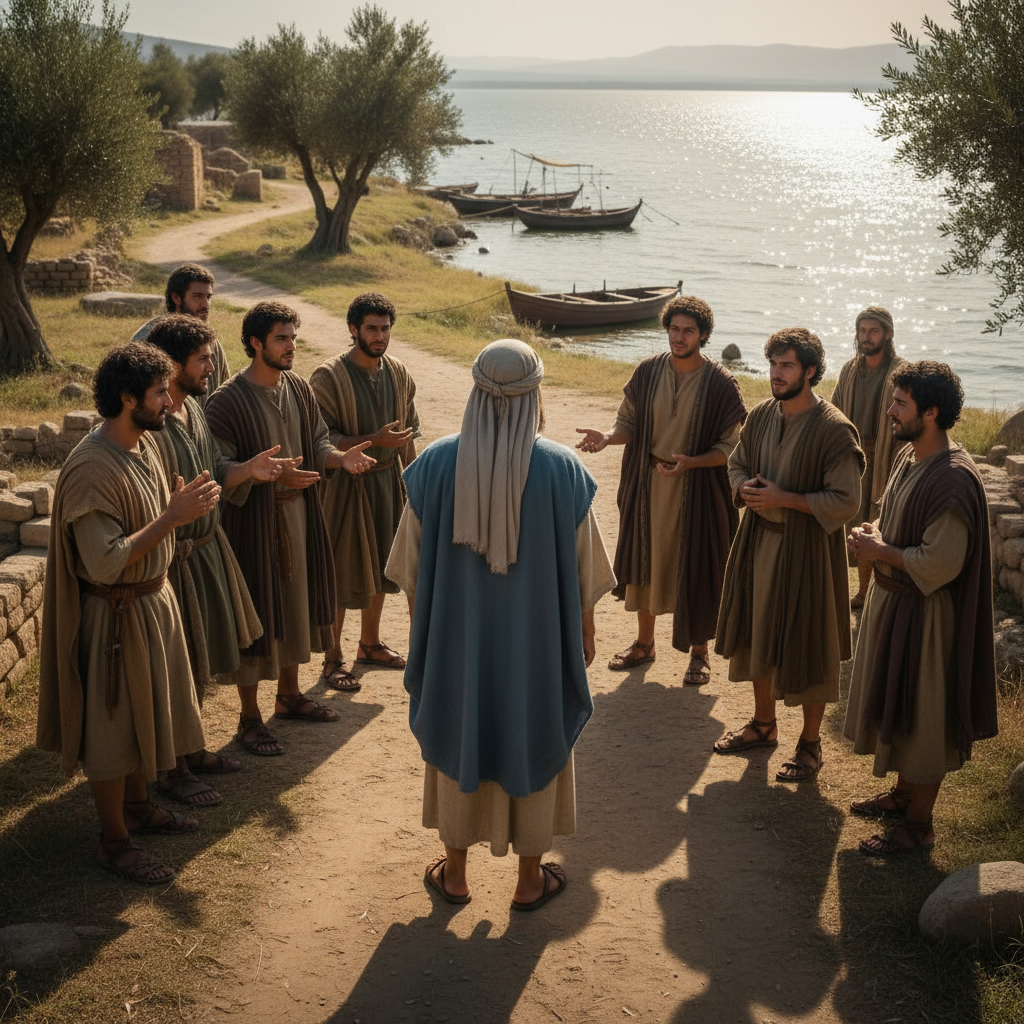

After sending out his apostles two by two (PER162) to proclaim the kingdom of God, they are now back. It is clear that Jesus the Messiah had given them precise instructions, including the date of their return.
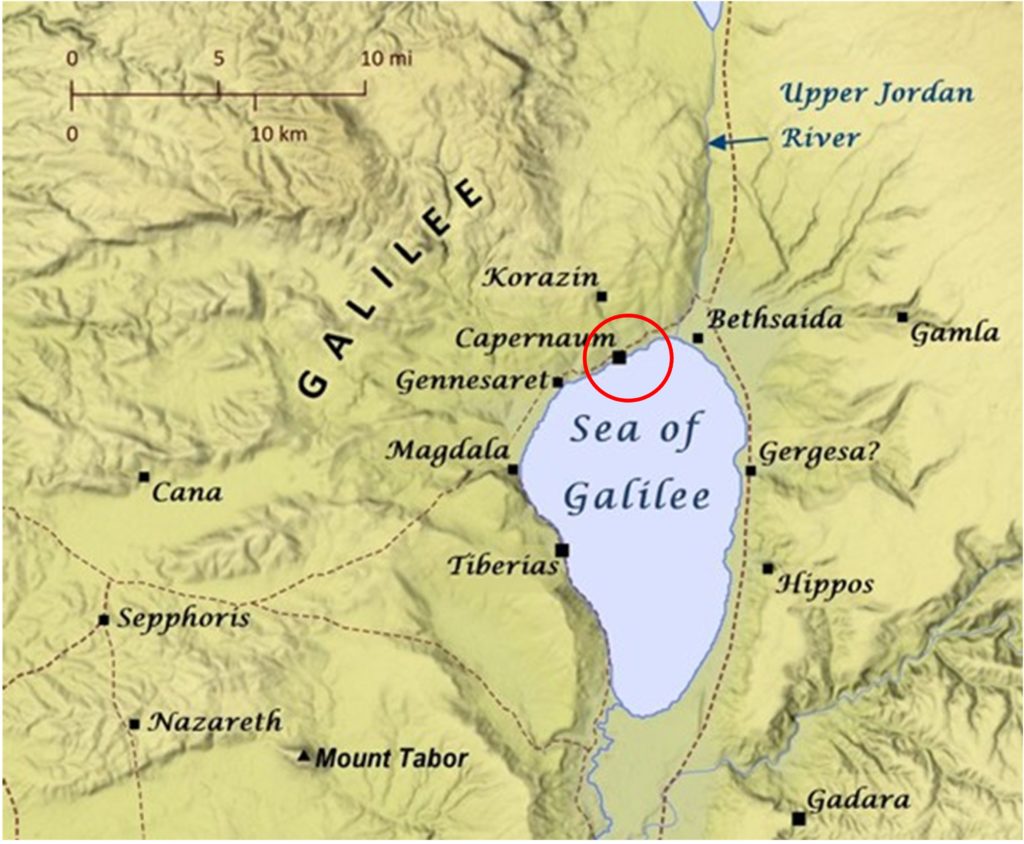
Luke specifies the place where they go aside to rest, toward Bethsaida.
Analysis of the two texts:
Context
Mark 6.30-31 and Luke 9.10 relate the return of the apostles after their mission of teaching and healing, and Jesus' reaction to their return.
Narrative content
Mark 6.30-31: The apostles return to Jesus the Messiah and report to him everything they had done and taught. Jesus then tells them to come away by themselves to a desolate place and rest a while, for many people were coming and going, and they did not even have time to eat.
Luke 9.10: The apostles return and tell Jesus the Messiah everything they had done. He then takes them with him and withdraws privately to a town called Bethsaida.
Textual differences
Place of retreat: Mark mentions a "desolate place" without specifying an exact location, whereas Luke specifies that the place of retreat was near the town of Bethsaida.
Detail about the apostles' activity: Mark stresses that the apostles did not even have time to eat because of the constant stream of people. This detail is not mentioned by Luke.
Motive for the withdrawal: In Mark, the withdrawal is motivated by the apostles' need for rest and the context of their intensive work. Luke simply mentions that Jesus takes them with him, without stressing the need for rest.
Theological implications
Importance of Rest : The passage in Mark highlights the importance of rest even for those engaged in active ministry, underscoring the human aspect of weariness and the need to recharge one's strength.
Influence of Jesus the Messiah: In both passages, Jesus the Messiah shows concern for the well-being of his apostles, which highlights his compassion and his role as an attentive guide.
Significant Place: Luke's mention of Bethsaida may carry additional theological significance, since Bethsaida is the site of several of Jesus' miracles and of the calling of some of his disciples.
Conclusion
In conclusion, although Mark 6.30 and Luke 9.10 report similar events concerning the return of the apostles and the withdrawal of Jesus the Messiah with them, they offer different nuances. Mark emphasizes the need for rest and the demands of ministry, while Luke provides a precise geographical context by mentioning Bethsaida. These variations enrich our overall understanding of the story and of the actions of Jesus the Messiah and his disciples.