
This is the last pericope of this period entitled “From the second to the third Passover festival”. This event takes place just before the , which is supposed to have occurred after Jesus' return from Jerusalem, where he should have gone with his disciples for the Passover pilgrimage.
Given the group's intensive activity, it is unlikely that they had time to make this pilgrimage to Jerusalem. Indeed, the crowd is so pressing that the apostles and Jesus no longer even have time to eat.
The disciples return about a week before Passover, since it takes five days of walking to reach Jerusalem from Capernaum. Because of the length and fatigue of this journey, Jesus advises his apostles to rest. It is likely that the original plan was disrupted by the crowd, which gave them no respite. According to the text of John and the conclusions we can draw from it, it seems unlikely that the Messiah Jesus and his apostles had time to make the Passover pilgrimage, even if it had been planned at the outset.
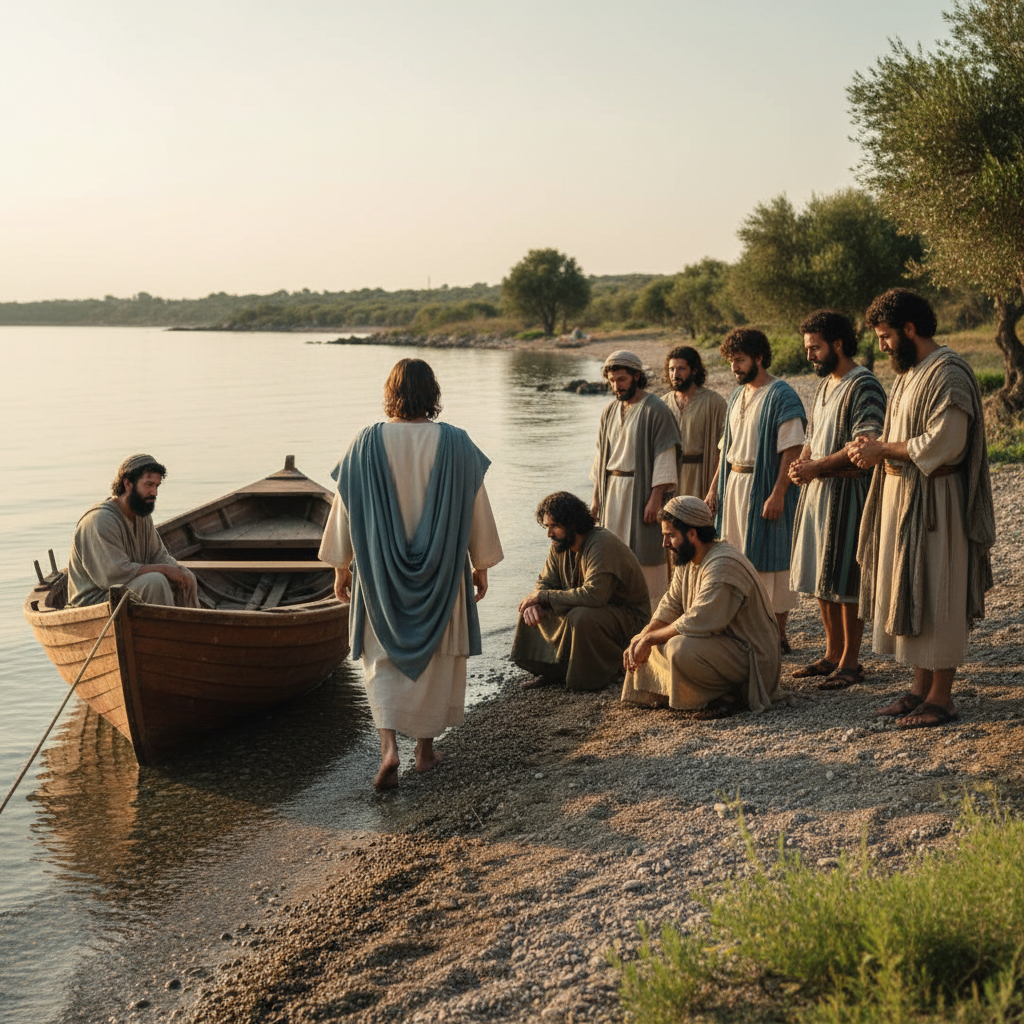
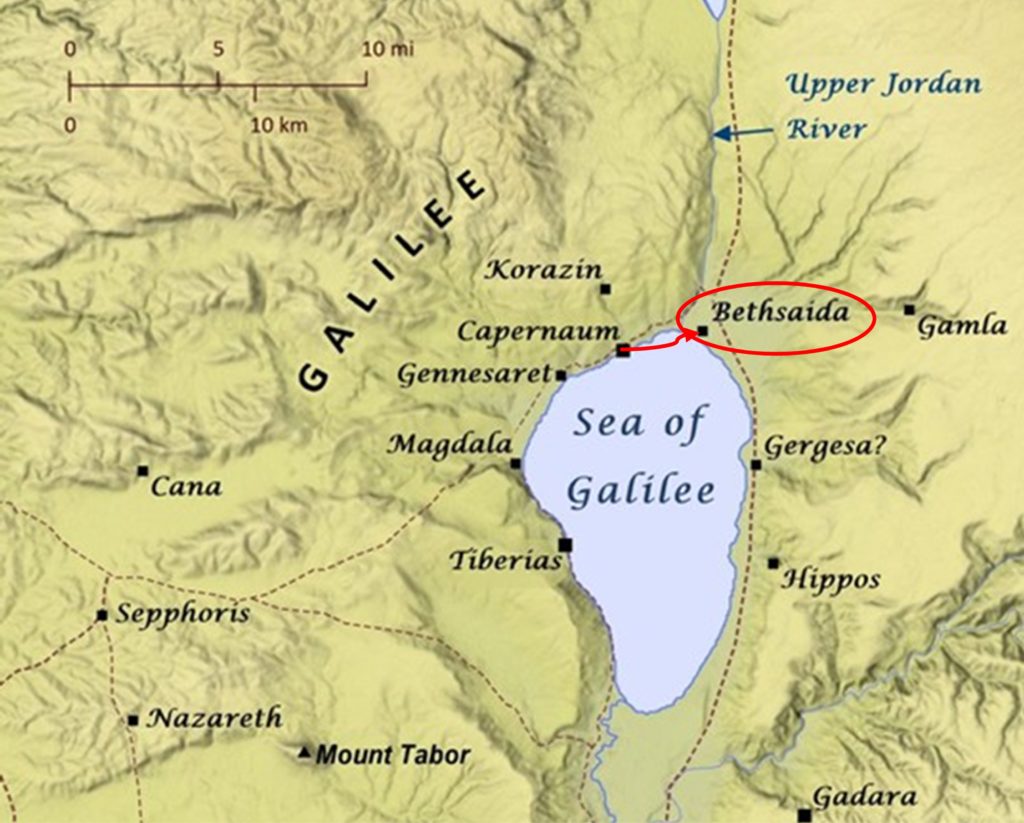
According to Matthew and Mark, the group accompanying the Messiah Jesus withdrew by boat to seek seclusion and rest. Luke and John simply mention this seclusion without any reference to the boat. It appears that the crowd was able to follow the boat with their eyes and quickly locate the place where Jesus and his disciples wished to rest. They are on a mountain in the region of , but this rest will be short-lived, because the crowd begins to converge on them.
In our chronology, these events are placed around the Passover festival of April 12, AD 32, which marks the beginning of spring.
Do these texts refer to the same event?
Matthew 14.13-14 :
Context : After learning of the death of John the Baptist, the Messiah Jesus withdraws by boat to a deserted place to be alone. The crowds, hearing of this, follow him on foot from the towns.
Event: When he sees the crowds, Jesus is moved with compassion and heals their sick.
Mark 6.31-32 :
Context: The apostles return from their mission and tell Jesus everything they had done and taught. Jesus tells them to come away to a deserted place to rest a while.
Event: They set off by boat for a deserted place.
Luke 9.10-11 :
Context: The apostles return from their mission and tell Jesus everything they had done. Jesus takes them with him and withdraws privately to a town called .
Event: The crowds find out and follow him. The Messiah Jesus welcomes them, speaks to them about the kingdom of God and heals those who need healing.
John 6.1-4 :
Context: After this, the Messiah Jesus crosses to the other side of the (of Tiberias). A great crowd follows him, because they had seen the miracles he performed on the sick.
Event: The Messiah Jesus goes up on a mountain and sits down there with his disciples. The Passover, the festival of the Jews, is near.
Analysis and comparison
Matthew 14.13-14, Mark 6.31-32 and Luke 9.10-11:
All these passages describe a moment when Jesus withdraws with his disciples after a period of intense activity. They also show the response of the crowds, who follow Jesus despite his desire to withdraw.
Matthew and Luke mention that Jesus heals the sick among the crowds, whereas Mark emphasizes the disciples' need for rest.
John 6.1-4 :
This passage also takes place in a context where Jesus withdraws with his disciples and is followed by a great crowd. However, John specifies that the event takes place just before the Passover, providing an important indication of time.
Conclusion
It therefore seems very probable that the four passages speak of the same event: the withdrawal of Jesus and his disciples to a secluded place after a period of active ministry, followed by the crowds. Each evangelist provides unique details and a slightly different perspective, but the general context and the actions of Jesus are consistent across the accounts.