
PER110

The healing of the Roman officer’s servant

The article explores Jesus’ healing of a Roman officer’s servant in Capernaum, a demonstration of extraordinary faith and of Jesus’ authority over all peoples.

4 min healing Roman officer Jesus Capernaum Gospels 3 verses 3 books

Resources

Biblical texts

Matthew
Matthew 8.5-13 (King James Version)

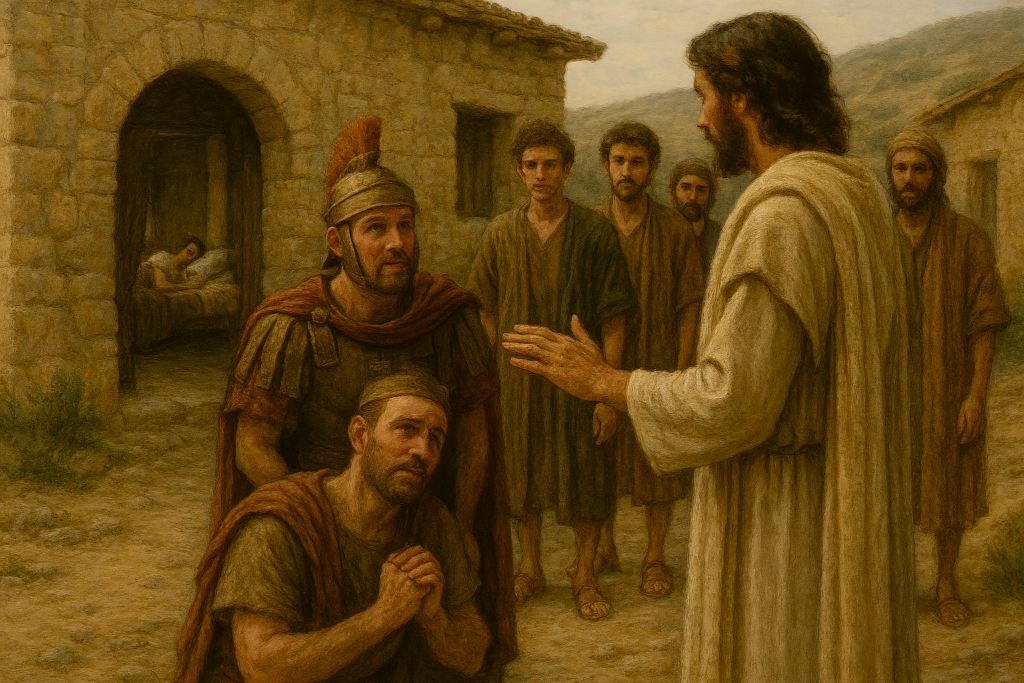
And when Jesus was entered into Capernaum, there came unto him a , beseeching him,

And saying, Lord, my servant lieth at home sick of the palsy, grievously tormented.

And Jesus saith unto him, I will come and heal him.

The answered and said, Lord, I am not worthy that thou shouldest come under my roof: but speak the word only, and my servant shall be healed.

For I am a man under authority, having soldiers under me: and I say to this man, Go, and he goeth; and to another, Come, and he cometh; and to my servant, Do this, and he doeth it.

When Jesus heard it, he marvelled, and said to them that followed, Verily I say unto you, I have not found so great faith, no, not in Israel.

And I say unto you, That many shall come from the east and west, and shall sit down with Abraham, and Isaac, and Jacob, in the kingdom of heaven.

But the children of the kingdom shall be cast out into outer darkness: there shall be weeping and gnashing of teeth.

And Jesus said unto the , Go thy way; and as thou hast believed, so be it done unto thee. And his servant was healed in the selfsame hour.

Mark
Mark (King James Version) not cited in the book
Luke
Luke 7.1-10 (King James Version)

Now when he had ended all his sayings in the audience of the people, he entered into Capernaum.

And a certain ’s servant, who was dear unto him, was sick, and ready to die.

And when he heard of Jesus, he sent unto him the elders of the Jews, beseeching him that he would come and heal his servant.

And when they came to Jesus, they besought him instantly, saying, That he was worthy for whom he should do this:

For he loveth our nation, and he hath built us a .

Then Jesus went with them. And when he was now not far from the house, the sent friends to him, saying unto him, Lord, trouble not thyself: for I am not worthy that thou shouldest enter under my roof:

Wherefore neither thought I myself worthy to come unto thee: but say in a word, and my servant shall be healed.

For I also am a man set under authority, having under me soldiers, and I say unto one, Go, and he goeth; and to another, Come, and he cometh; and to my servant, Do this, and he doeth it.

When Jesus heard these things, he marvelled at him, and turned him about, and said unto the people that followed him, I say unto you, I have not found so great faith, no, not in Israel.

And they that were sent, returning to the house, found the servant whole that had been sick.

John
John (King James Version) not cited in the book

Technical details

Bar chart for the year 31

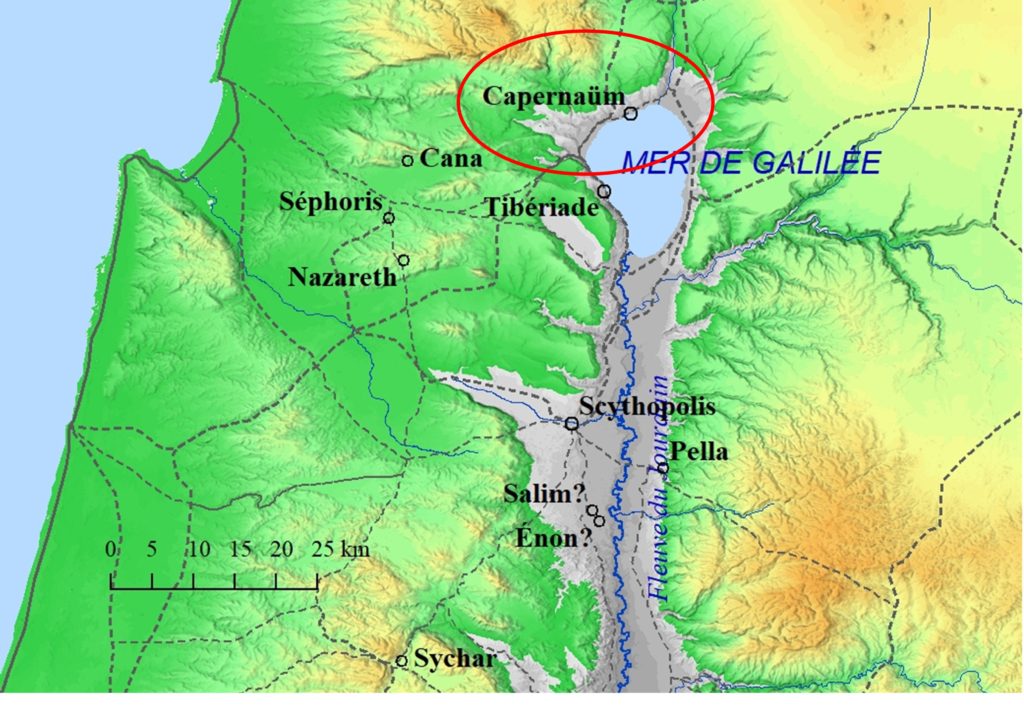
Location: The entrance to Capernaum in Galilee

Date: After the Passover pilgrimage to Jerusalem on April 5, AD 31

Method: We will continue with Matthew

Note on the method: Matthew continues his account

Capernaum

On his arrival in Capernaum, a Roman officer sought the Messiah Jesus’ help.

The healing of the Roman officer’s servant

The healing of the Roman officer’s servant

Comments

Matthew and Luke recount a healing that is surprising in several respects.

It is a foreigner, but not just any foreigner—a Roman occupier—who seeks Jesus’ help.

He asks for healing for his servant, and refuses to have the Messiah Jesus come to his home because he considers himself unworthy of such an honor.

Matthew chose to cite this extraordinary example at the risk of shocking his Jewish readership. Indeed, this soldier symbolizes the occupation of the land of Israel.

It appears that Matthew is trying to portray Jesus’ authority and influence as the Messiah, which are not confined to the Jewish people but also extend to society’s leaders, including foreigners.

The man in question is not acting out of self-interest, but solely out of compassion for his slave, which is surprising for a soldier of his standing.

Jesus did not avoid soldiers. For example, in , an officer had asked for his help to heal his son (John 4.46-54). This account by John, dating from the end of the first century, no longer raises the same questions as those that arose when Matthew was written around AD 44, according to our analysis.

What is most surprising, however, is what happens next. The officer refuses to have the Master come to his home, considering himself unworthy to receive him under his roof. Like the preceding leper, he calls Jesus "Master" and recognizes his authority over disease. Matthew paints the portrait of an exceptional man of great faith, who asks only for a word from the Messiah to command his slave’s healing.

Jesus expressed his admiration for the officer, an observation very rare in the Gospels. Luke notes this remark following his research, while Matthew simply mentions that the servant was healed immediately. Luke also adds that the officer was accompanied by other servants who confirmed the facts on the spot.

One might wonder why Matthew did not mention the Messiah Jesus’ admiration for this officer. Perhaps it was because he was a soldier, a foreigner, and an occupier, and there were no equally remarkable examples in Israel.