ANN112

The Prophecy of Saint Malachy

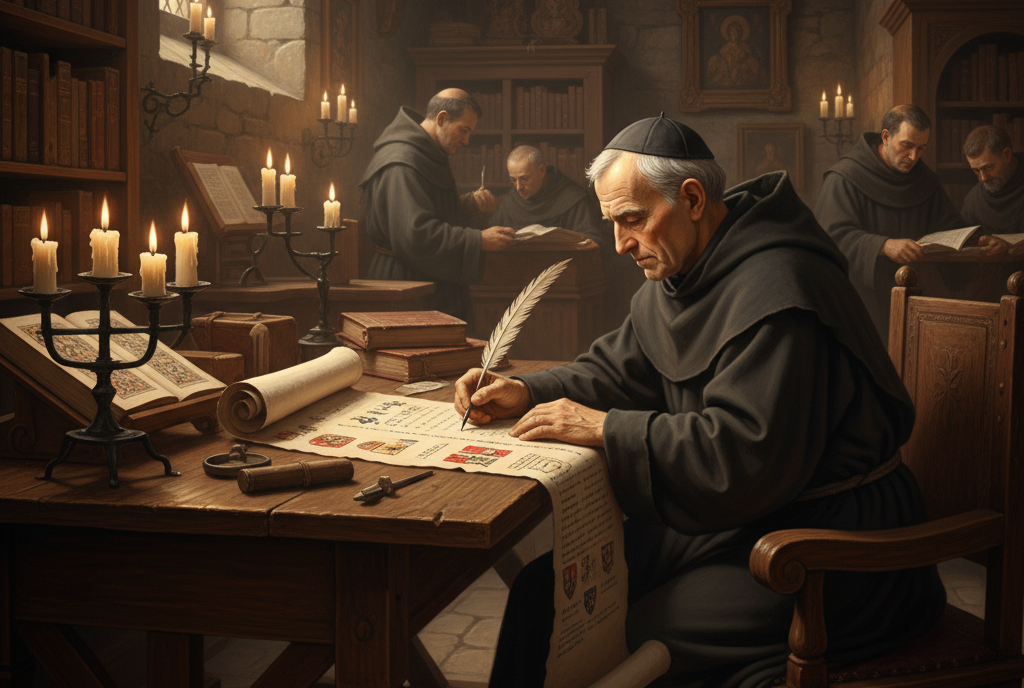
This article explores the prophecy of Saint Malachy, which claims to foretell the 112 future popes. Although disputed, it continues to attract interest because of its symbolic mottos, published by the monk Arnold Wion. It raises debates about its authenticity and its potential influence on papal elections.

10 min prophecy Saint Malachy popes Catholic Church simony

Further information

Introduction

The death of Pope Francis on 21 April 2025, Easter Monday, at the age of 88, after a pontificate of 12 years, provoked an international reaction. Many heads of state attended his burial, reflecting the importance of his person.

This text examines the reference some journalists made to the prophecy of Saint Malachy, also known as the "prophecy of the popes". Readers of the Bible have often made the connection with the Jewish prophet whose book appears at the end of the Old Testament, although this story of the popes does not appear in the biblical texts.

We therefore carried out research on this enigmatic text.

I. The “prophecy of the popes”

The journalists presented this text as the revelation of extraordinary events, which aroused our curiosity. This story does not concern the biblical prophet, but an Irish archbishop of the 12th century named Malachy.

Malachy of Armagh was reportedly born in 1094 and died in 1148. During a visit to Rome in 1139, he is said to have had a vision enabling him to draw up the list of the 112 popes to come.

The pope in 1139 was Innocent II (Gregorio Papareschi), whose pontificate lasted from 1130 to 1143. That year he convened the Second Council of the Lateran, which, among other things, condemned the schism of Anacletus II and addressed issues such as simony and abuses in the Church.

Simony is a condemned religious practice that consists in buying or selling spiritual goods, sacraments, ecclesiastical offices or sacramental graces in exchange for money or other material advantages. The term comes from Simon the Magician, a biblical figure who tried to buy the spiritual power of the apostles Peter and John. Simony was particularly widespread in the Middle Ages and was regularly denounced by the Church.

Thus, Archbishop Malachy of Armagh is said to have drawn up a list of 112 future popes.

II. The data contained in this list

In reality, this list of 112 popes is not made up of names but of Latin mottos that are often enigmatic and symbolic. These mottos may refer to aspects such as the origin, the coat of arms or the pontificate of the popes, or even to notable events of their reign.

For example:

  • *De labore solis* (From the labor of the sun) has been interpreted as applying to John Paul II, born on the day of a solar eclipse and known for his many journeys.
  • *Gloria olivae* (The glory of the olive tree) has been attributed to Benedict XVI, in connection with the Order of Saint Benedict, of which the olive tree is a symbol.

These mottos were first published in 1595 by Arnold Wion, a Benedictine monk, and their interpretation remains a matter of debate.

We invite you to consult the following link to discover the various mottos as well as the interpretations that the Catholic Church has made of them.

https://www.projet22.fr/le-phenomene-religieux/christianisme/liste-des-devises-de-la-prophetie.html

III. The list of Malachy of Armagh and history

The list, published at the end of the 16th century by the Benedictine monk Arnold Wion, is disputed as to its authenticity. Some think it was intended to influence a papal election. It nevertheless continues to captivate, especially in times of crisis within the Catholic Church. The Latin mottos allow broad interpretations, leaving everyone free to draw their own conclusions.

Let us focus on the last five most famous popes of our time.

List of the popes and their mottos:

108. Paul VI

  • Pontificate: 21 June 1963 - 1978
  • Motto: *Flos florum* (The flower of flowers)
  • Details: Giovanni Battista Montini (John the Baptist Montini). The lily, nicknamed "the flower of flowers", is the symbol of the city of Florence, from which this pope came. Moreover, his coat of arms was made up of three lilies.

109. John Paul I

  • Pontificate: 26 August 1978 - 1978
  • Motto: *De mediate lunae* (From the half of the moon)
  • Details: Albino Luciani, born in Canale d’Agordo, near Belluno. Elected during the half-moon, John Paul I died 33 days later.

110. John Paul II

  • Pontificate: 16 October 1978 - 2 April 2005
  • Motto: *De Labore solis* (From the labor of the sun)
  • Details: Born on the day of a solar eclipse, he was buried on 8 April 2005, a day of eclipse.

111. Benedict XVI

  • Pontificate: 19 April 2005 - 28 February 2013
  • Motto: *De gloria olivae* (From the glory of the olive)
  • Details: See the article to learn more.

112. Francis

  • Pontificate: From 13 March 2013 - 21 April 2025
  • Motto: *Peter *
  • Details: Jorge Mario Bergoglio, the first pope from South America.

You will find all this information on the following site: https://www.projet22.fr/le-phenomene-religieux/christianisme/liste-des-devises-de-la-prophetie.html

We now turn to the question of the succession of the last pope mentioned in the prophecy of Malachy of Armagh. According to this prophecy, after the 111th pope, his successor, nicknamed "Peter ", the Catholic Church would go through a period of great tribulations. This last pope would be responsible for guiding his flock through these difficulties. Then the "city of seven hills" (interpreted as Rome) would be destroyed, and the "dreadful Judge" would come to judge humanity. This would represent the end times and the Last Judgment.

However, it should be stressed that this prophecy is widely regarded as , and its authenticity is disputed by many historians and theologians. It nevertheless remains an interesting subject of study for those interested in religious mysteries and apocalyptic predictions.

IV. What is the total number of popes who have existed to date?

The Catholic Church recognizes the apostle Peter as the first pope. From Peter to Francis, elected on 13 March 2013, the Church has counted:

  • 39 antipopes (self-proclaimed popes not elected by the college of cardinals),
  • 266 popes,
  • 3 short-lived popes.

This gives us a total of 308 popes.

According to the "prophecy of Saint Malachy", if it begins in 1590 with the choice of Urban VI (15 September 1590-1590) or of Gregory XIV (5 December 1590 to 15 October 1591), Pope Francis would be the 37th or the 38th pope. In this logic, there would still be 74 or 73 popes before the last prophesied pope. To obtain a more precise calculation, it would be necessary to change the starting reference and take another pope as the starting point.

V. A surprising point

In the interpretation of the list of Malachy of Armagh, it is observed that the number of popes foreseen corresponds to the present times. The authors specify the following elements:

  • The list of the 111 mottos includes:
  • 12 antipopes, of which 1 is not counted (Benedict XIV) because no information is given in the list, making 11 antipopes.
  • 1 short-lived pope (Gregory XI), also not counted (having reigned for one day).
  • 100 popes.

This breakdown illustrates how the prophecy applies to our time.

To obtain this precise count, it is necessary to take Pope Celestine II (1143 to 8 March 1144) as the initial reference. His motto would be "Ex castro Tiberis", meaning "from a castle on the Tiber". This pontiff, who had welcomed Malachy of Armagh during his journey to Rome, conferred on him the title of legate of the Pope.

Consequently, the starting point of this list is determined by the meeting between Malachy of Armagh and the 165th pope, Celestine II, who thus serves as the reference for the compilation of this list.

This analysis is likely to surprise some, because according to historians, Malachy of Armagh would not be the author of this work, which could in reality have been produced by anonymous individuals in 1590.

VI. The 112th pope

The list of Malachy of Armagh enumerates 111 popes preceding a 112th. Pope Francis, who died on 21 April 2025, is identified as this last pope, according to the Latin motto "Peter ". The exact interpretation of this motto, in relation to his name, is complex and could be clarified by an in-depth analysis of his life as well as by detailed research.

What is particularly interesting is what this "prophecy" specifies. It ends with a 112th motto, according to the 1595 edition, concerning Peter , successor of Pope Benedict XVI, who is therefore Pope Francis since 13 March 2013. Here is the text translated into English:

"In the final persecution of the Holy Roman Church there will sit Peter , who will feed his sheep amid many tribulations. When these tribulations are past, the city of seven hills will be destroyed and the dreadful judge will judge his people."

Conclusion

We observe with the death of the 112th pope, Francis, that this "prophecy" has not come true and that Rome, the city of seven hills, has not been destroyed. It is important to note that as long as this "prophecy" remains vague, it can be interpreted in various ways with a little imagination. However, when it is formulated precisely, its errors become obvious. This explains why many Catholics do not regard these words as authentic.

We have examined "the prophecy of the popes", a text attributed to Malachy of Armagh, written in 1139 and first published in 1595 by Arnold Wion, a Benedictine monk. This analysis is prompted by its current relevance linked to the death of Pope Francis, representative of the Catholic Church.

The various references contained in this text, often called "The Prophecy of Malachy", are examined. This analysis leads us to regard this information as uncorroborated. It is crucial to note that this text is not unanimously accepted by Catholics and is generally perceived as an text. Moreover, the various Latin mottos presented can be applied to a multitude of individuals.

Furthermore, the choice of the reference so that the count of this "prophecy of the popes" comes out correct seems based on our present knowledge. It therefore has no prophetic character.

The biblical texts of the Apocalypse mention Jerusalem as well as Babylon, interpreted in some contexts as being Rome. To understand the events associated with the end times, the Bible recommends paying attention to Jerusalem, regarded as a worldwide indicator of time.

The information concerning the Latin mottos mentioned in this text lacks precision, which allows a very broad interpretation. As for the number, it is necessary to examine the origin of this chronology in light of knowledge of contemporary history. The announcements concerning the 112th pope proved false. We therefore regard this text as unfounded information, rather than a genuine prophecy.