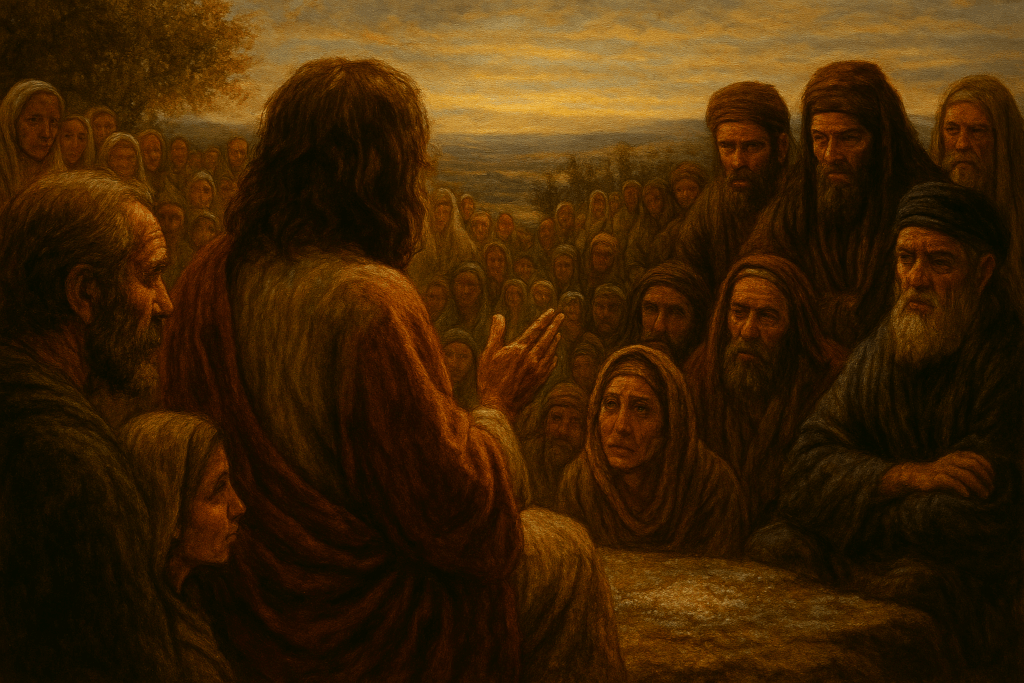


This observation by Luke 15.1-2 seems to be the conclusion of various events. Indeed, it appears difficult, during a gathering, to make this distinction, all the more so since some and teachers of the law seem to have been touched at one point by the words of the Messiah Jesus (John 7.46).
Luke therefore offers a concise analysis of the impact of the teachings of the Messiah Jesus on the population. A notable finding emerges: it is not the individuals traditionally expected to respond to this call who do so, but the common people, and more particularly the poorest and most marginalized.
Indeed, when one considers all the facts, it clearly appears that the people, those whom the regarded as sinners, notably the most destitute and the marginalized such as tax collectors, were more disposed to follow the Messiah Jesus. By contrast, the religious authorities, often led by leaders driven by excessive zeal, continually opposed the Master.
These did not openly proclaim their position because of their fear of a reaction from the people; they murmured, thus nurturing within their group a hatred toward the Messiah Jesus.
This problem had already been raised by the disciples of John the Baptist, and the words of the Messiah Jesus are significant:
The criticisms made by the against the Messiah Jesus clearly illustrate the tension and the toxic climate that dominated their relations. These religious authorities, constantly seeking to catch him at fault and to discredit his teaching, harbored a latent hostility toward him.
This attitude showed itself notably in murmurings and veiled accusations, revealing a persistent opposition within their group. Thus, the relationship between Jesus and the was marked by deep distrust, fueled by the fear of losing their authority and their influence over the people.
Toward the end of his third year of ministry, the Messiah Jesus faces the open opposition of the , who seek to turn the crowd against him.
John the Baptist, known for his strictness and his refusal to associate with people of ill repute, was nevertheless not listened to by the . Despite his irreproachable conduct and his voluntary distance from circles deemed unclean, these religious authorities chose to reject his message. This refusal underscores the closed-mindedness of the , who remained unmoved even in the face of a model of asceticism and piety such as John.
In contrast, the Messiah Jesus adopted a radically different approach. He did not hesitate to go to the outcasts and sinners, thus showing a closeness and compassion that was not expected of a religious teacher. Yet this open and inclusive attitude did not win over the any more.
Far from being touched by this approach full of grace, they persisted in their refusal to believe, demonstrating once again their inability to recognize the scope of the message addressed to them, whatever its form.