
PER218

The Messiah Jesus is the light of the world

At the Feast of Sukkot in Jerusalem, Jesus proclaims himself the ‘light of the world’ (John 8.12-58), drawing on the symbolism of the great illuminations of the Temple. He gradually reveals his divine identity through debates with the Pharisees, culminating in the statement ‘Before Abraham was, I AM’, an explicit affirmation of his pre-existence and his divinity. To believe in him is to enter into the light, the truth and eternal life.

9 min light of the world Jesus the Messiah Feast of Sukkot JE SUIS John 8 9 verses 2 books

Resources

Biblical texts

Matthew
Matthew (King James Version) not cited in the book
Mark
Mark (King James Version) not cited in the book
Luke
Luke (King James Version) not cited in the book
John
John 8.12-58 (King James Version)

Then spake Jesus again unto them, saying, I am the light of the world: he that followeth me shall not walk in darkness, but shall have the light of life.

The Pharisees therefore said unto him, Thou bearest record of thyself; thy record is not true.

Jesus answered and said unto them, Though I bear record of myself, yet my record is true: for I know whence I came, and whither I go; but ye cannot tell whence I come, and whither I go.

Ye judge after the flesh; I judge no man.

And yet if I judge, my judgment is true: for I am not alone, but I and the Father that sent me.

It is also written in your law, that the testimony of two men is true.

I am one that bear witness of myself, and the Father that sent me beareth witness of me.

Then said they unto him, Where is thy Father? Jesus answered, Ye neither know me, nor my Father: if ye had known me, ye should have known my Father also.

These words spake Jesus in the treasury, as he taught in the temple: and no man laid hands on him; for his hour was not yet come.

Then said Jesus again unto them, I go my way, and ye shall seek me, and shall die in your sins: whither I go, ye cannot come.

Then said the Jews, Will he kill himself? because he saith, Whither I go, ye cannot come.

And he said unto them, Ye are from beneath; I am from above: ye are of this world; I am not of this world.

I said therefore unto you, that ye shall die in your sins: for if ye believe not that I am he, ye shall die in your sins.

Then said they unto him, Who art thou? And Jesus saith unto them, Even the same that I said unto you from the beginning.

I have many things to say and to judge of you: but he that sent me is true; and I speak to the world those things which I have heard of him.

They understood not that he spake to them of the Father.

Then said Jesus unto them, When ye have lifted up the Son of man, then shall ye know that I am he, and that I do nothing of myself; but as my Father hath taught me, I speak these things.

And he that sent me is with me: the Father hath not left me alone; for I do always those things that please him.

As he spake these words, many believed on him.

Then said Jesus to those Jews which believed on him, If ye continue in my word, then are ye my disciples indeed;

And ye shall know the truth, and the truth shall make you free.

They answered him, We be Abraham’s seed, and were never in bondage to any man: how sayest thou, Ye shall be made free?

Jesus answered them, Verily, verily, I say unto you, Whosoever committeth sin is the servant of sin.

And the servant abideth not in the house for ever: but the Son abideth ever.

If the Son therefore shall make you free, ye shall be free indeed.

I know that ye are Abraham’s seed; but ye seek to kill me, because my word hath no place in you.

I speak that which I have seen with my Father: and ye do that which ye have seen with your father.

They answered and said unto him, Abraham is our father. Jesus saith unto them, If ye were Abraham’s children, ye would do the works of Abraham.

But now ye seek to kill me, a man that hath told you the truth, which I have heard of God: this did not Abraham.

Ye do the deeds of your father. Then said they to him, We be not born of fornication; we have one Father, even God.

Jesus said unto them, If God were your Father, ye would love me: for I proceeded forth and came from God; neither came I of myself, but he sent me.

Why do ye not understand my speech? even because ye cannot hear my word.

Ye are of your father the devil, and the lusts of your father ye will do. He was a murderer from the beginning, and abode not in the truth, because there is no truth in him. When he speaketh a lie, he speaketh of his own: for he is a liar, and the father of it.

And because I tell you the truth, ye believe me not.

Which of you convinceth me of sin? And if I say the truth, why do ye not believe me?

He that is of God heareth God’s words: ye therefore hear them not, because ye are not of God.

Then answered the Jews, and said unto him, Say we not well that thou art a Samaritan, and hast a devil?

Jesus answered, I have not a devil; but I honour my Father, and ye do dishonour me.

And I seek not mine own glory: there is one that seeketh and judgeth.

Verily, verily, I say unto you, If a man keep my saying, he shall never see death.

Then said the Jews unto him, Now we know that thou hast a devil. Abraham is dead, and the prophets; and thou sayest, If a man keep my saying, he shall never taste of death.

Art thou greater than our father Abraham, which is dead? and the prophets are dead: whom makest thou thyself?

Jesus answered, If I honour myself, my honour is nothing: it is my Father that honoureth me; of whom ye say, that he is your God:

Yet ye have not known him; but I know him: and if I should say, I know him not, I shall be a liar like unto you: but I know him, and keep his saying.

Your father Abraham rejoiced to see my day: and he saw it, and was glad.

Then said the Jews unto him, Thou art not yet fifty years old, and hast thou seen Abraham?

Jesus said unto them, Verily, verily, I say unto you, Before Abraham was, I am.

Technical details

Year AD 32

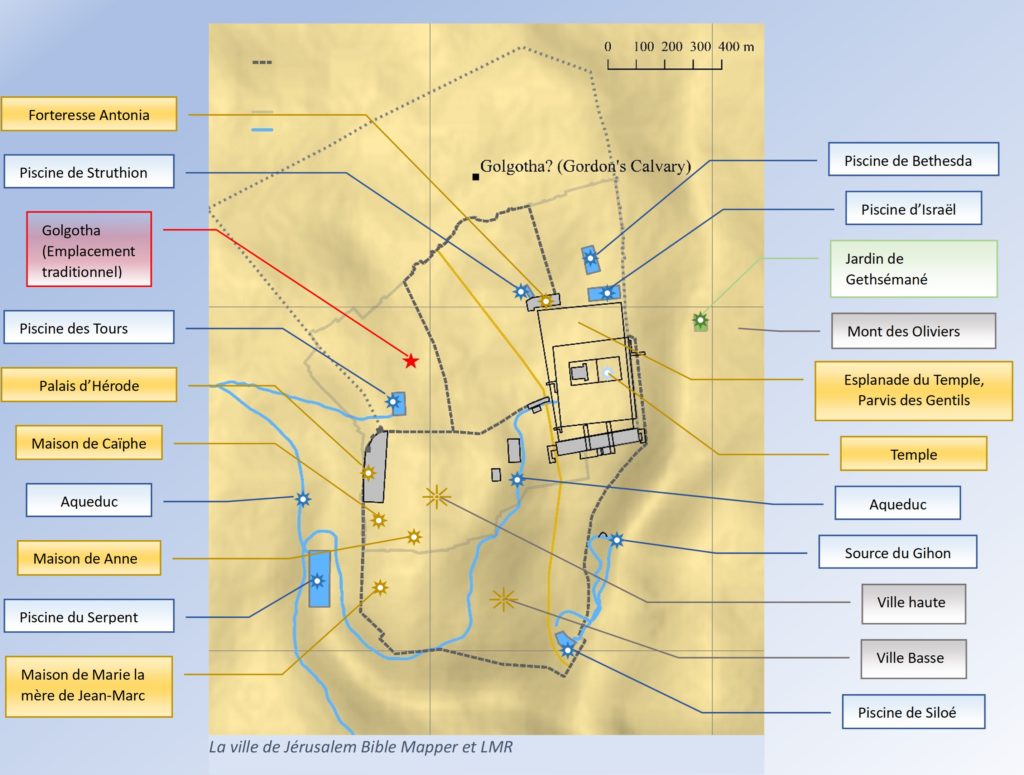
Location: The Temple Mount esplanade in Jerusalem

Date: Wednesday, October 13 of the year 32 is the last day of the feast. This event could have taken place the day before

Method: We continue with John

Note on the method: John is the only one to speak of this feast in Jerusalem

Announcement of the birth of John the Baptist

The Messiah Jesus gradually reveals that to believe in him is to enter into the light, the truth and eternal life.

The Messiah Jesus is the light of the world

The light of the world

Here is a summary of this long text:

The theme addressed here is the light of the world. After delivering his discourse on the water of life, directly linked to the Feast of , on the last day of the feast, here is now a second discourse, on light.

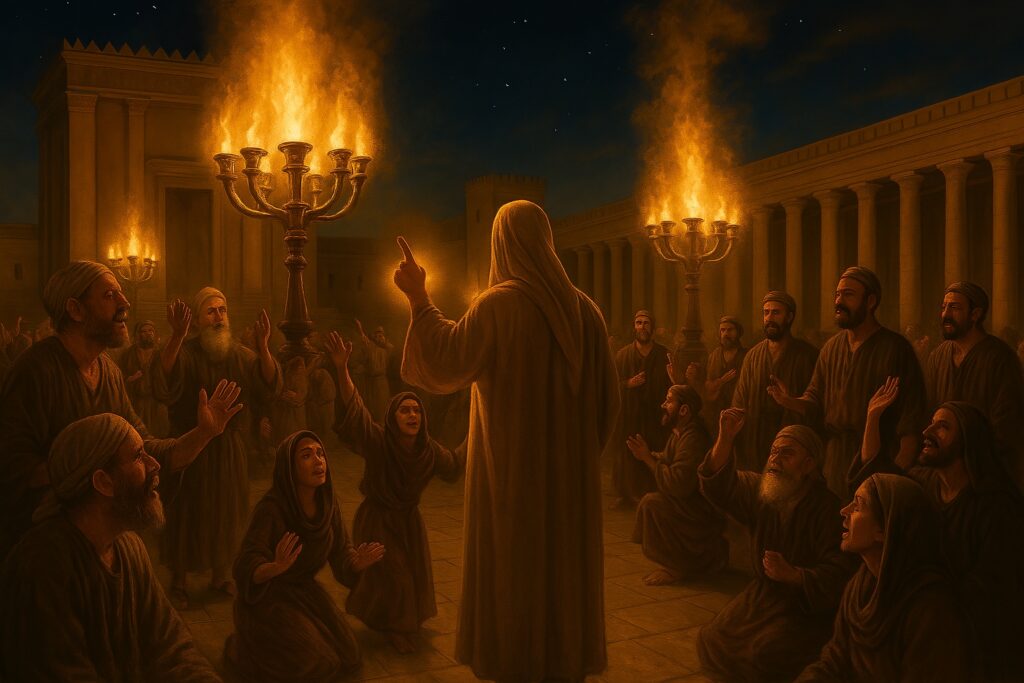
Every evening, during the Feast of , the Temple was lit by great candelabra placed in the Court of the Women, casting a light visible throughout Jerusalem. The wicks were made from worn-out garments belonging to the priests. During this period of illumination, the participants sang and danced. This light was meant to recall how, according to the biblical text (Numbers 9.15-23), God guided his people through the wilderness at night.

The text draws an explicit parallel between these torches and the person of the Master, declaring that he is the light of the world. In this way it shows, through the principles evoked during these celebrations, that these elements are the shadow of future events, whereas as Messiah he gives a spiritual dimension to each of these manifestations.

For the Jewish audience listening to Jesus’ discourses, it was possible to draw connections between the various religious celebrations and the figure of the Messiah, which made these correspondences easier to remember and understand.

We also notice that these discourses were interrupted by outside interventions. People, and here in particular the , do not fail to make remarks.

Here is a summary of this long text:

The Messiah Jesus, light of the world (John 8.12): The Messiah Jesus declares himself to be the light of the world, promising life to those who follow him. This echoes the luminous symbols of and introduces a discourse of revelation.

Debate with the (John 8.13-20): The challenge his authority. Jesus affirms that his testimony is valid because it comes from the Father. He insists: to know the Messiah Jesus is to know God.

Announcement of his destiny (John 8.21-30): The Messiah Jesus announces his departure (an allusion to his death and glorification). He warns: to refuse to believe in him is to die in one’s sins. He declares himself to be “I AM”, a direct allusion to divinity. Many believe in him.

Freedom and truth (John 8.31-36): The Messiah Jesus promises that the truth sets free. He denounces the slavery of sin. Only the Son (himself) can truly set free.

The true heritage of Abraham (John 8.37-47): The Messiah Jesus challenges the notion that his listeners are children of Abraham. He affirms that their attitude (their desire to kill him) shows that they have another father. He declares that they cannot hear his word because they are not of God.

Final accusations and revelations (John 8.48-58): The authorities accuse Jesus of being possessed. Jesus proclaims that whoever keeps his word will never die.

Climax (the essential point, the most intense moment of the account) John 8.58: he reveals himself through the divine formula “Before Abraham was, I AM”, an explicit affirmation of his pre-existence and his divinity.

In summary:

This passage highlights the confrontation between Jesus and the religious authorities over his identity, his divine origin, and the salvation he offers. It gradually reveals that to believe in him is to enter into the light, the truth and eternal life.