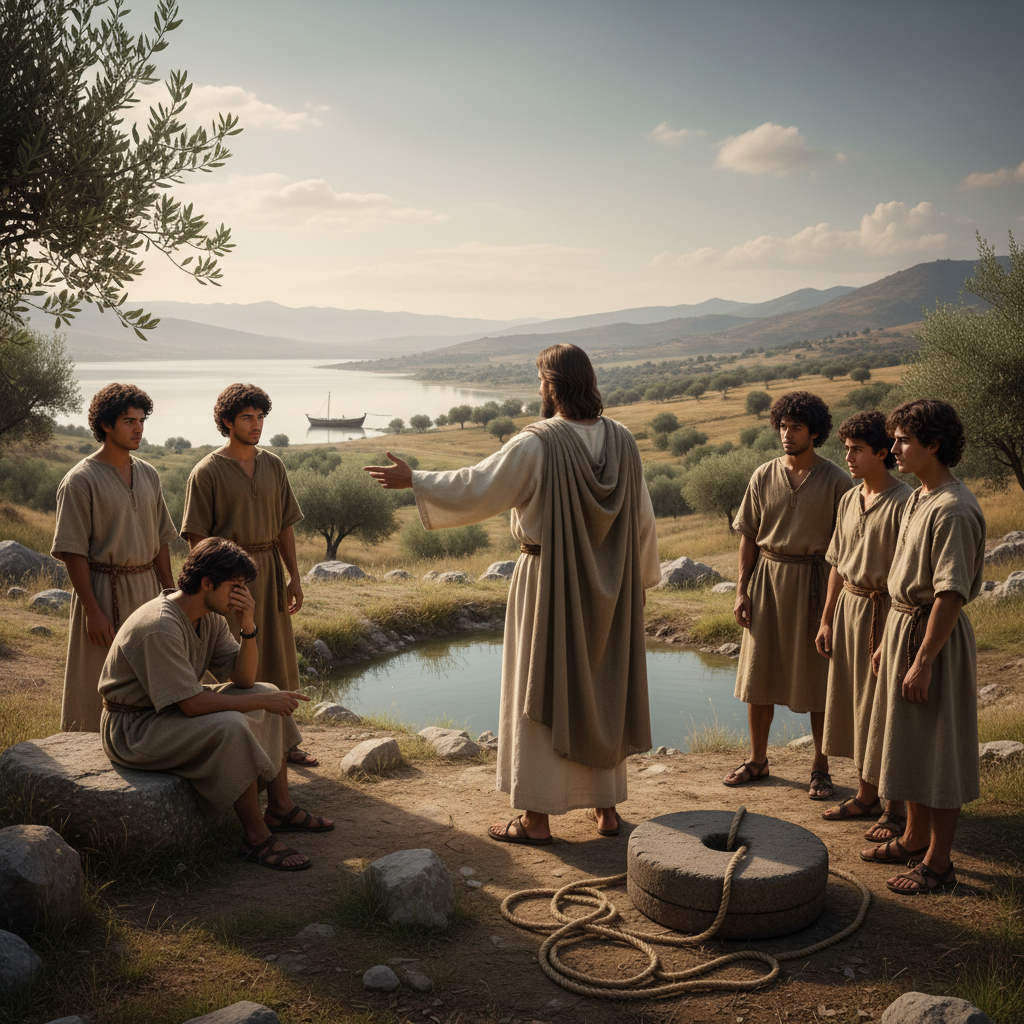

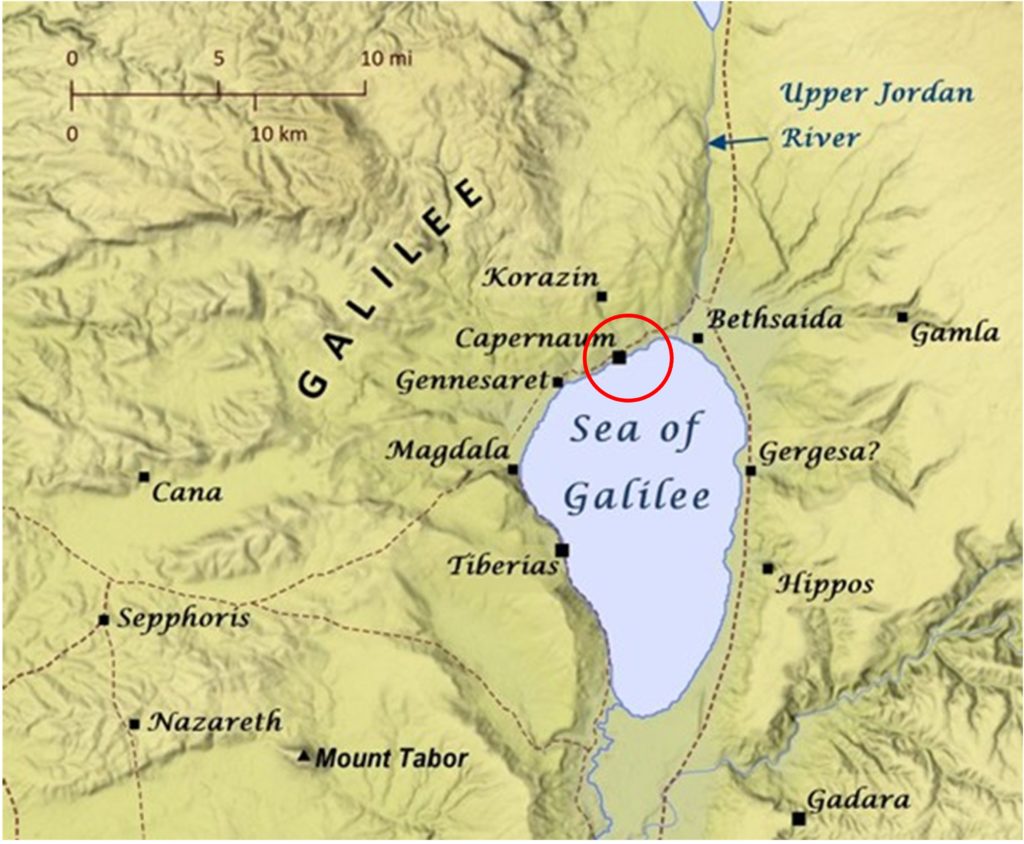
This teaching is intended specifically for the apostles and disciples. It is not a public proclamation but a message addressed to converts. This instruction was given in the house at Capernaum in the presence of the apostles as well as some members of their families (Matthew 18.2, Mark 9.36).
It is essential to clearly distinguish the two examples put forward in this teaching. The first concerns individuals who are the source of the offense, who lead other people, Christians, into a gradual departure from the faith. The expression “these little ones” seems to refer to new converts who are not yet firmly established in their spiritual commitment.
The second point concerns Christians confronted with a weakness that leads them to sin against God. They must identify its cause and deal with it so as no longer to succumb to sin. This passage of Matthew 18.8-9 uses particularly strong language to stress the importance of turning away from sin. The Messiah Jesus does not call for physical mutilation, but uses a radical image to insist on the need to eliminate everything that draws a person toward evil, even if this requires a significant sacrifice.
The literal interpretation of the of the body used by Jesus Christ requires careful analysis. The Scriptures state that the origin of sin lies in the (Matthew 15.19, Romans 5.12, James 1.14-15, and Proverbs 4.23). It is therefore wrong to assume that a blind or disabled person would be free from sin.
Explanation:
The symbolism of the parts of the body : The hand, the foot and the eye represent aspects of our life that can lead us into sin—our actions, our paths and our desires.
The idea of sacrifice : the Messiah Jesus teaches that giving up what drives us to sin is better than suffering eternal condemnation.
The fire : It evokes separation from God and the consequences of sin that has not been abandoned.
Following the precepts of the Messiah Jesus necessarily involves sacrifices in the life choices we make. The future reward, that is, a place in the kingdom of God, is by far more beneficial for man. Nothing that man can give up here below has a value comparable to life in the kingdom of God.
These three passages address the theme of offenses and the consequences for those who cause others to stumble in their faith.
- Matthew 18.7-9 : The Messiah Jesus warns against occasions for stumbling and stresses the gravity of causing a believer to fall. He uses strong images, such as the idea that it is better to get rid of a part of the body if it leads to sin than to be thrown into the fire.
- Mark 9.42-48 : This passage takes up the idea of offense and insists on the need to get rid of everything that pushes toward sin. It evokes hell with striking images, such as the fire that is not quenched and the worm that does not die.
- Luke 17.1-2 : Luke is more concise and emphasizes the inevitability of occasions for stumbling, but also the gravity of causing a “little one” to fall. He uses the image of the millstone hung around the neck and thrown into the sea.
Comparison:
- Matthew and Mark insist on the idea of getting rid of what pushes toward sin, whereas Luke remains more general.
- Mark is the most explicit about the consequences of sin, with images of hell.
- Luke and Matthew mention the millstone as a punishment for those who cause others to fall.