
PER200

Discourse on humility

The article analyzes Jesus’ discourse on humility to his apostles, stressing the importance of humility and service in the Kingdom of God, as described in the Gospels of Matthew, Mark and Luke.

8 min humility service Kingdom of God Jesus 10 verses 3 books

See also

Bible texts

Matthew
Matthew 18.1-6 (King James Version)

At the same time came the disciples unto Jesus, saying, Who is the greatest in the kingdom of heaven?

And Jesus called a little child unto him, and set him in the midst of them,

And said, Verily I say unto you, Except ye be converted, and become as little children, ye shall not enter into the kingdom of heaven.

Whosoever therefore shall humble himself as this little child, the same is greatest in the kingdom of heaven.

And whoso shall receive one such little child in my name receiveth me.

But whoso shall offend one of these little ones which believe in me, it were better for him that a millstone were hanged about his neck, and that he were drowned in the depth of the sea.

Mark
Mark 9.33-50 (King James Version)

And he came to Capernaum: and being in the house he asked them, What was it that ye disputed among yourselves by the way?

But they held their peace: for by the way they had disputed among themselves, who should be the greatest.

And he sat down, and called the twelve, and saith unto them, If any man desire to be first, the same shall be last of all, and servant of all.

And he took a child, and set him in the midst of them: and when he had taken him in his arms, he said unto them,

Whosoever shall receive one of such children in my name, receiveth me: and whosoever shall receive me, receiveth not me, but him that sent me.

And John answered him, saying, Master, we saw one casting out devils in thy name, and he followeth not us: and we forbad him, because he followeth not us.

But Jesus said, Forbid him not: for there is no man which shall do a miracle in my name, that can lightly speak evil of me.

For he that is not against us is on our part.

For whosoever shall give you a cup of water to drink in my name, because ye belong to Christ, verily I say unto you, he shall not lose his reward.

And whosoever shall offend one of these little ones that believe in me, it is better for him that a millstone were hanged about his neck, and he were cast into the sea.

And if thy hand offend thee, cut it off: it is better for thee to enter into life maimed, than having two hands to go into hell, into the fire that never shall be quenched:

Where their worm dieth not, and the fire is not quenched.

And if thy foot offend thee, cut it off: it is better for thee to enter halt into life, than having two feet to be cast into hell, into the fire that never shall be quenched:

Where their worm dieth not, and the fire is not quenched.

And if thine eye offend thee, pluck it out: it is better for thee to enter into the kingdom of God with one eye, than having two eyes to be cast into hell fire:

Where their worm dieth not, and the fire is not quenched.

For every one shall be salted with fire, and every sacrifice shall be salted with salt.

Salt is good: but if the salt have lost his saltness, wherewith will ye season it? Have salt in yourselves, and have peace one with another.

Luke
Luke 9.46-50 (King James Version)

Then there arose a reasoning among them, which of them should be greatest.

And Jesus, perceiving the thought of their heart, took a child, and set him by him,

And said unto them, Whosoever shall receive this child in my name receiveth me: and whosoever shall receive me receiveth him that sent me: for he that is least among you all, the same shall be great.

And John answered and said, Master, we saw one casting out devils in thy name; and we forbad him, because he followeth not with us.

And Jesus said unto him, Forbid him not: for he that is not against us is for us.

John
John (King James Version) not mentioned in the book

Technical details

Year 32 AD

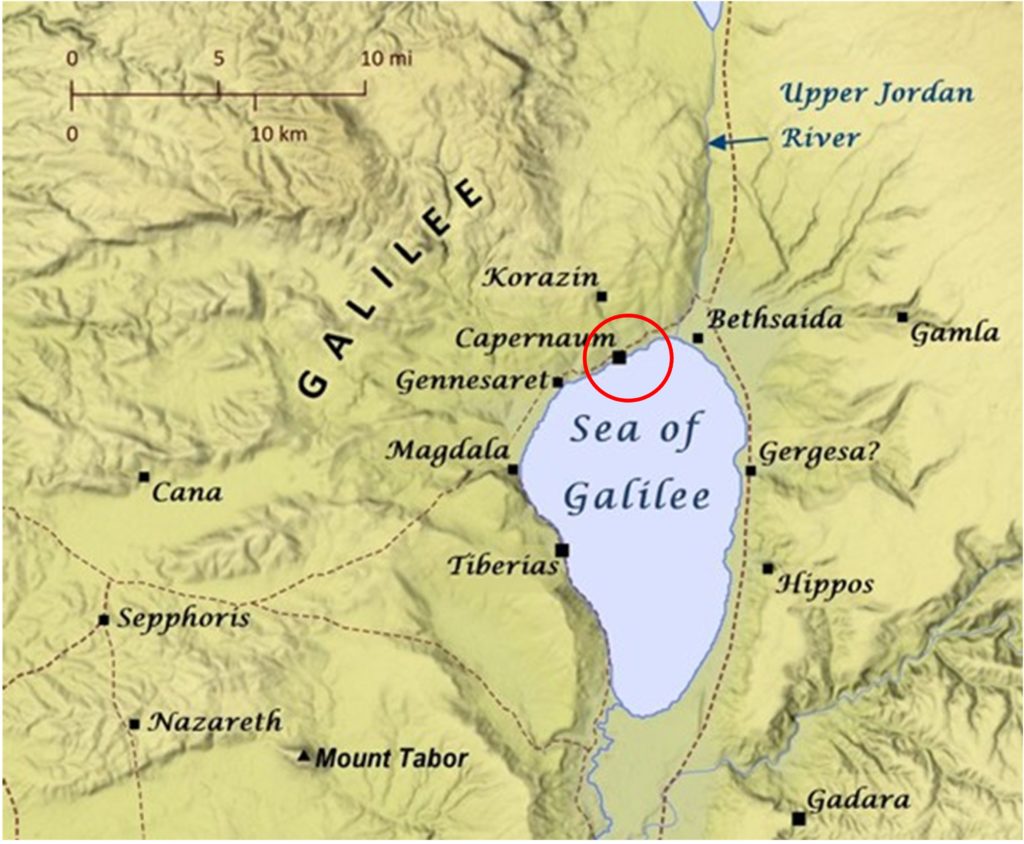
Location: Capernaum in Galilee

Date: September 32

Method: We return to Mark

Note on the method: Matthew and Luke also record this event

Map of Capernaum

The Messiah Jesus plans to instruct his apostles in a private and confidential setting.

Discourse on humility

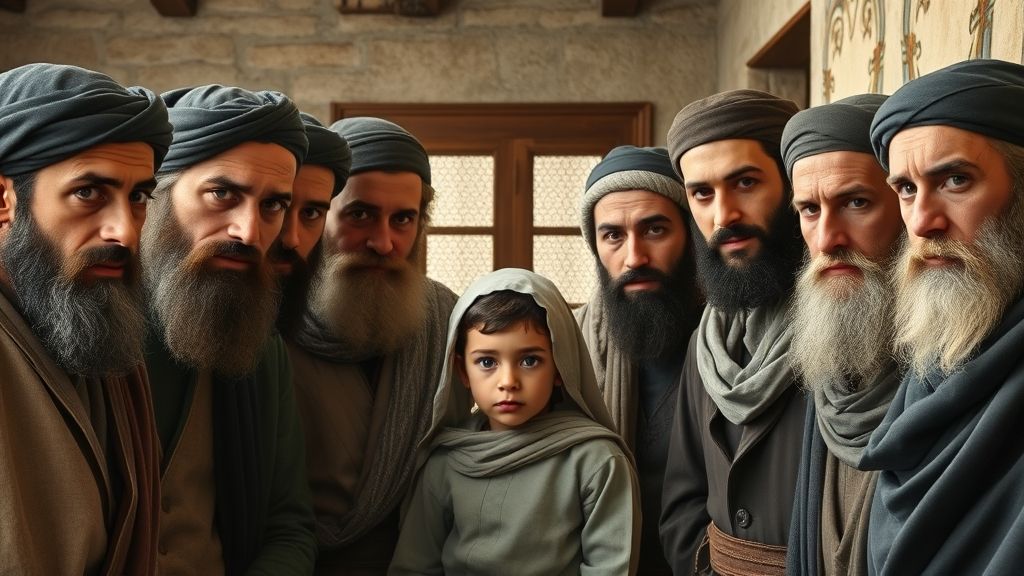
Child in the midst of the disciples

Summary

This teaching, intended only for the apostles, takes place in Capernaum, in the house that serves as their headquarters. The families were partly present (Luke 9.47). This meeting took place before October 3, AD 32, the date on which the group leaves Galilee for good.

The Messiah Jesus was seeking to prepare his apostles for his approaching death, while they were arguing about which of them held the most important place. We think this meeting is held on a different day from the one when the master had announced his approaching death, since the subject is no longer raised here (PER198 : The Messiah Jesus announces his death once again).

These three passages, Matthew 18.1-6, Mark 9.33-50 and Luke 9.46-50, deal with humility and true greatness in the Kingdom of God. Here is a detailed comparative analysis:

Summary

Matthew 18.1-6 :

The disciples ask the Messiah Jesus who is the greatest in the Kingdom of heaven.

The Messiah Jesus answers by taking a little child as an example and teaches that humility is essential to enter the Kingdom.

He warns against offenses and occasions for stumbling, affirming that whoever causes one of the “little ones” to stumble deserves a severe punishment.

Mark 9.33-50 :

The disciples argue among themselves about who is the greatest.

The Messiah Jesus teaches them that whoever wants to be first must be last and the servant of all.

He takes a child and explains that welcoming him in his name amounts to welcoming God himself.

He also addresses tolerance toward those who perform miracles in his name, even if they are not part of the group of disciples.

He concludes with a warning against occasions for stumbling, using the image of salt to illustrate the need to preserve spiritual purity.

Luke 9.46-50 :

The disciples debate about who is the greatest.

Jesus answers by placing a child beside him and teaches that the one who is least is the greatest.

John mentions a man who drives out demons in the name of the Messiah Jesus without being among the disciples, and the Messiah Jesus answers him: “Whoever is not against you is for you,” underlining the inclusiveness of the Kingdom.

Synthesis

These three passages converge toward a theology of humility and service. Matthew insists on the seriousness of offenses, Mark develops the notion of service and purity, while Luke highlights inclusiveness. Together, they offer a complete vision of spiritual authority according to Jesus: not based on power, but on humility and the welcoming of the weakest.

These texts are fundamental for understanding the dynamics of the Kingdom of God and the way in which the Messiah Jesus overturns traditional human values. They invite deep reflection on the nature of power and greatness from a Christian perspective.